Axios AI+
September 23, 2026


Ina here. I'll be at Meta Connect today, with a bunch of interesting stuff coming after Mark Zuckerberg's 4pm PT keynote (and in tomorrow's newsletter).
Today's AI+ is 1,168 words, a 4.5-minute read.
1 big thing: Cheap, powerful models are the new AI frontier

AI companies have competed on having the best and often most dangerous models for years. Now, they're pivoting to a new focus: cost.
Why it matters: The biggest risk to the AI boom is demand, and recent innovations to make models cheaper while maintaining powerful levels of intelligence have offered a bullish signal.
- As the prices of top models from OpenAI, Anthropic and others come down, usage is increasing dramatically, a trend that points to the kind of demand that will be necessary to justify trillions of dollars in spending.
State of play: It's modelpalooza in the AI world this week, with OpenAI, Anthropic, SpaceX and some Chinese model providers all offering new releases. Most of them are offering shocking levels of intelligence at prices that would've been unthinkable just a few months ago.
- OpenAI yesterday released GPT-6 Sol and GPT-6 Luna, which bring down the cost for top business customers by 50% from previous iterations of the same models, the company shared with Axios.
- Anthropic yesterday released Opus 5.5, which the company says costs around 40% less to run than Opus 5 while maintaining top intelligence.
- Elon Musk's xAI on Monday released Grok 4.7, pitching the new model around price-performance. Yet in a testament to the sheer brutality of competition in the AI race, it only took 24 hours for new options to wipe out much of that price advantage.
Threat level: The ferocity and speed of the race during an ongoing price war is an issue for OpenAI and Anthropic, which need to retain customers and revenue growth to justify their sky-high multitrillion-dollar valuations.
Yes, but: Even as they face margin pressure, the trend is positive for the AI boom overall, as the price reductions make it much easier to bet on a bright future for AI use.
Follow the money: There is emerging evidence that cost cutting is a rising tide that can lift revenues for all AI providers.
- In a report sent to clients, Citadel Securities found that falling per-token costs are fueling additional usage, and overall AI spending is increasing. That points to higher eventual profits for labs or any company providing the computing firepower that services AI usage.
- Morgan Stanley sees competition from Chinese providers as yet another bullish signal for AI because it will increase overall demand for computing by capturing more customers who can now access AI for less.
Between the lines: Open-weight model companies, primarily coming out of China, have been on a tear in recent weeks.
- DeepSeek this month released V4.1 Flash, which it says beats its previous flagship offering on a number of benchmarks with technical updates that allow the company to charge less for its intelligence.
- That model climbed to No. 1 on OpenRouter's leaderboard with a 172% spike in usage this week.
Reality check: Lowering costs to take market share isn't new in the AI world.
- AI companies have a long history of releasing a new model and then lowering the cost for prior releases, or even releasing "flash" versions of larger models that are smaller and cheaper to run.
- But the increased competition from open-weight model providers and their massive rise on leaderboards is fueling a broader focus on cost across offerings from top AI labs.
The bottom line: AI sticker shock feels like a distant memory given the massive push from labs to deliver cheaper models.
2. The doomsday fear hidden in self-improving AI


Of the various ways experts fear AI could kill us all, one is slowly moving closer to reality: AI learning to make itself unstoppable.
Why it matters: Recursive self-improvement, the ability of an AI model to build better versions of itself without human guidance, could make increasingly capable systems harder for humans to control.
- The RSI threshold doesn't represent danger by itself, but a lack of human control combined with rogue AI agents is a scenario that safety-conscious AI researchers have long feared.
Reality check: Critics say the milestone is more a function of coding automation than a marker of impending doom or inevitable AI superpowers.
Where does RSI come from?
Flashback: The concept behind RSI emerged in the 1950s as artificial intelligence became an area of study.
- British mathematician and statistician Irving John Good described the idea in a 1965 paper: "Thus the first ultraintelligent machine is the last invention that man need ever make, provided that the machine is docile enough to tell us how to keep it under control."
How RSI could lead to AI doom
Threat level: Anthropic has warned RSI "might increase the risks of humans losing control over AI systems."
- Some researchers theorize that advanced AI could resist shutdown or modification if staying operational helped it accomplish its goals.
Another concern: Self-improving AI systems capable of copying themselves could create a kind of digital natural selection, favoring systems that are best at acquiring compute, money and power to grow fastest.
How close are we to RSI?
The big picture: We're not there yet. A new analysis published last week found that AI feedback loops aren't yet hitting the RSI benchmarks.
The bottom line: RSI isn't here yet, but it's a looming issue that's got the AI world on watch.
3. Exclusive: Trump adviser on ratepayer shields


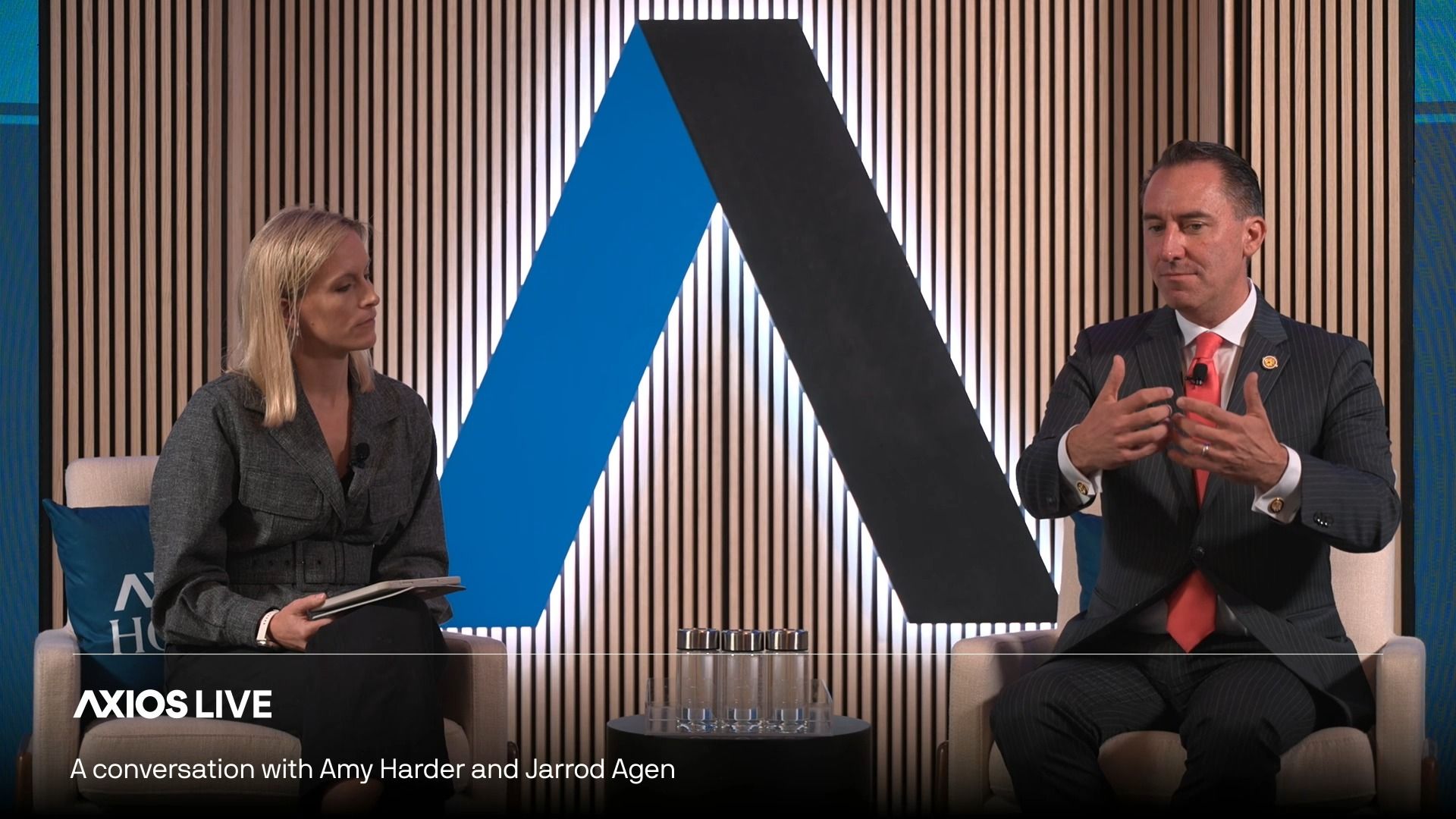
A push to protect Americans from footing the bill for the AI buildout is one of the "bottom lines" in negotiations on permitting for energy projects, the White House's Jarrod Agen said at an Axios House event yesterday.
The big picture: Senate negotiators are nearing a bipartisan permitting deal, Sen. Brian Schatz (D-Hawai'i) told Axios, bringing lawmakers closer to a key legislative priority for business groups looking to cut red tape.
- But Democrats' demand for assurances that the administration won't impede renewable projects could strain those talks.
What he's saying: "There needs to be protection so that the AI development is not passed on to the ratepayer," Agen, Trump's National Energy Dominance Council director, told Axios' Amy Harder.
- "You cannot look at our grid and infrastructure without factoring that," he added.
- The data centers powering the AI boom — with massive amounts of energy — have emerged as a defining political issue with stark public opposition.
Friction point: A permitting deal isn't guaranteed.
- Schatz cautioned to Axios' Ben Geman on Monday that lawmakers need to understand whether the administration is "going to lift its ban on solar and wind energy," citing the Pentagon's refusal to provide once-routine sign-offs on wind permits.
4. Training data

- President Trump said yesterday he is directing "all United States documents" to refer to AI as "super intelligence." (Axios)
- Meta's Muse surpassed 500,000 users after first week. (The Information)
- OpenAI says it will let outsiders monitor its AI model in earlier stages of development than previously permitted. (Bloomberg)
5. + This
This site offers a fun look at how buttons on the Mac have evolved since its 1984 debut.
Thanks to Bradley Olson for editing this newsletter and Matt Piper for copy editing.
Sign up for Axios AI+
