Axios AI+
January 13, 2026

And here I thought I had a lot of stuffed animals. Today's AI+ is 1,260 words, a 5-minute read.
1 big thing: Microsoft says it will pay its bills

Microsoft today made a series of commitments regarding future data centers, including a pledge that it will pay its property taxes and electricity bills and minimize water use.
Why it matters: A growing number of communities are opposing data centers arguing that the relatively few jobs they create aren't worth the higher utility bills and cost to the environment.
The big picture: Microsoft's five-point plan is designed to address the most common local concerns around data centers. As part of the plan, Microsoft says it will:
- Pay its fair share of electricity bills, asking local authorities to set its rates high enough to cover the costs of both adding infrastructure and the ongoing utility operations.
- Minimize its water use and replenish more water than its data centers use.
- Create jobs that go to the community, including by training residents in the skills needed for the ongoing operation roles at the data centers.
- Add to the local property tax base by not asking for or accepting tax reductions, ensuring that money goes to needed infrastructure including schools and health care.
- Strengthen the community by investing in local AI training and nonprofits.
Driving the news: Yesterday, President Trump hinted at Microsoft's announcement in a post on Truth Social while stressing the importance of data centers in the race to be the global leader in AI.
- "I never want Americans to pay higher Electricity bills because of Data Centers," Trump wrote.
- Trump says his team has been working with Microsoft, insisting that "the big Technology Companies who build [data centers] must 'pay their own way.'"
What they're saying: "We're not asking taxpayers to subsidize our electricity costs," Microsoft president Brad Smith said in an interview with Axios. "We're definitely not asking consumers to pay through their electricity bills for our electricity usage."
- Although the scale of the data center boom may be unprecedented, Smith said that other innovations have presented similar societal challenges.
- "Every technology that has required a major infrastructure expansion has involved precisely the kinds of questions that we're facing here," he said. "Private companies cannot solve all the issues by themselves, but they can make it easier when they take a high road."
Between the lines: Local communities have been growing more resistant to data center projects, with some politicians calling for a moratorium on new construction until guidelines can be established for responsible building.
- New York Gov. Kathy Hochul (D) demanded that tech companies that want to build data centers in her state ensure they aren't driving up utility rates. "We must grow responsibly, ensuring affordability comes first and those profiting from data growth pay their fair share," Hochul said.
- Other Democrats have also called for tighter rules to govern new facilities. Electricity costs have been a particular sticking point, with rates rising across the country.
The promise of jobs — especially after the construction phase is over — is also a big open question for these communities.
- For his part, Smith noted that the construction phase often extends beyond the initial build-out. "We can end up with 10 or 15 years of a few thousand people working on these sites as the sites are expanded over time," he said.
- And while the jobs operating a data center are fewer, he said, it can still be a significant source of local employment, "especially when we're talking about jobs in less populous counties."
2. Apple picks Google to make Siri smarter

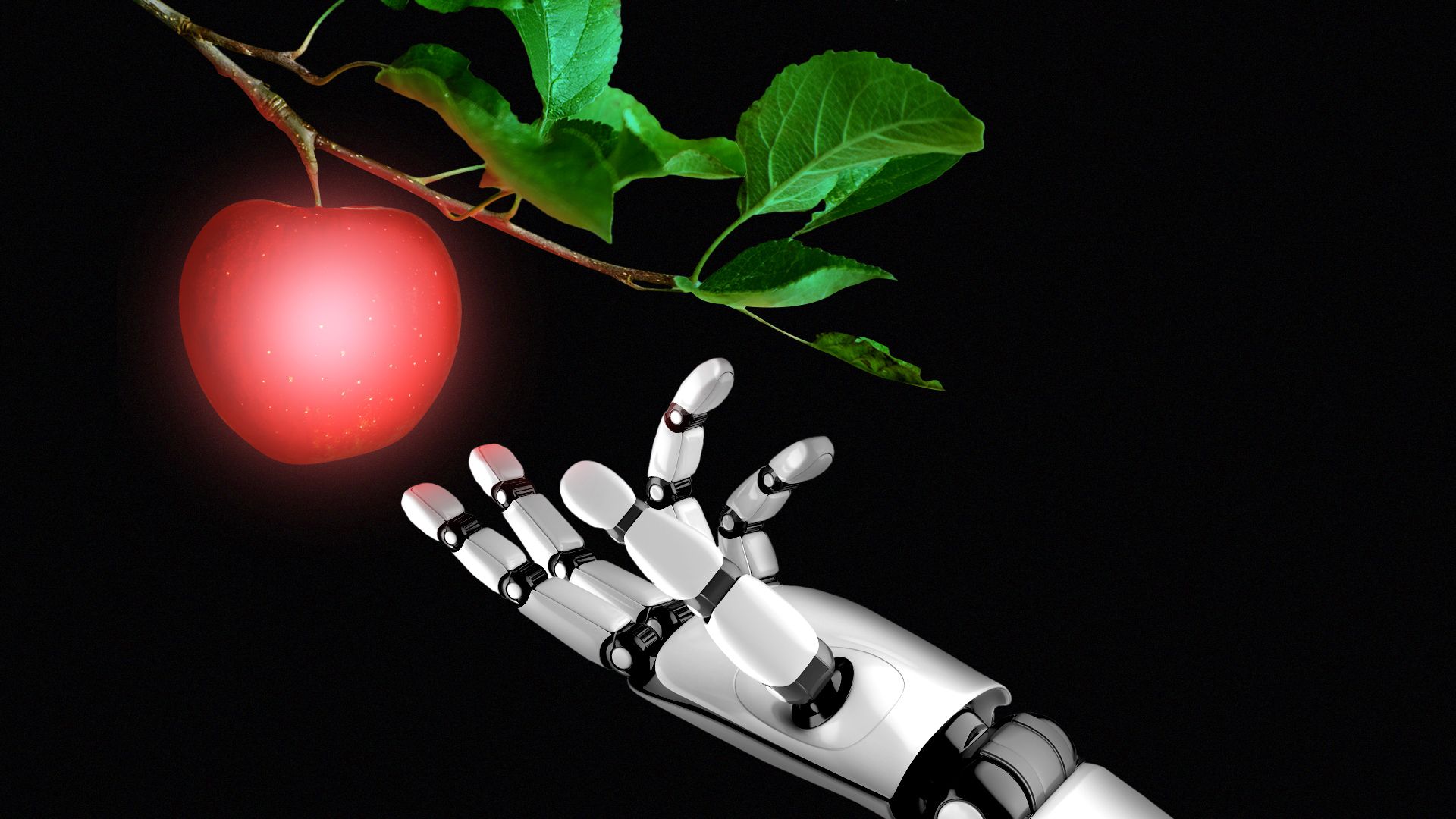
Apple and Google announced a multiyear deal yesterday for Gemini models to power Siri and other Apple Intelligence features.
Why it matters: The move fills a clear need for Apple, the tech giant that has struggled the most to deliver on the AI promises it made back in 2024.
Driving the news: Apple and Google confirmed the deal in a statement provided to Axios.
- The next generation of Apple's foundation models will be based on Gemini models and cloud technology, the companies said.
- "These models will help power future Apple Intelligence features, including a more personalized Siri coming this year," per the statement.
Between the lines: The arrangement had been in the works since last year and follows months of delays for the improved Siri and hints that Apple might look outside its own labs for frontier models.
- Bloomberg said in November that Apple could end up paying on the order of $1 billion per year to use Google's models.
- "After careful evaluation, Apple determined that Google's Al technology provides the most capable foundation for Apple Foundation Models," Apple and Google said in its statement.
Zoom in: Apple says Google's models will run either on-device or from its own servers in order to preserve Apple's privacy standards.
- It's not yet clear what — if any — access Google will have to Apple customers' data.
The intrigue: The partnership follows years of antitrust scrutiny over a prior arrangement that has seen Google paying billions of dollars annually to Apple to be its default search engine provider.
- Google was found to hold an illegal monopoly in online search in 2024.
- The company was spared from the most dramatic possible remedies last fall when U.S. District Judge Amit Mehta ruled it must share its search data with rivals and put restrictions on its exclusive deals.
- Those restrictions include barring Google from entering any multiyear agreements with other companies, including for generative AI products.
The bottom line: It's not exactly clear how this deal squares with the recent ruling.
- The deal does not relate to Search or Gemini app distribution, which Mehta's order concerns, a source familiar with the matter told Axios.
- The deal is also not exclusive, the source said.
3. Anthropic's Claude moves into the cubicle

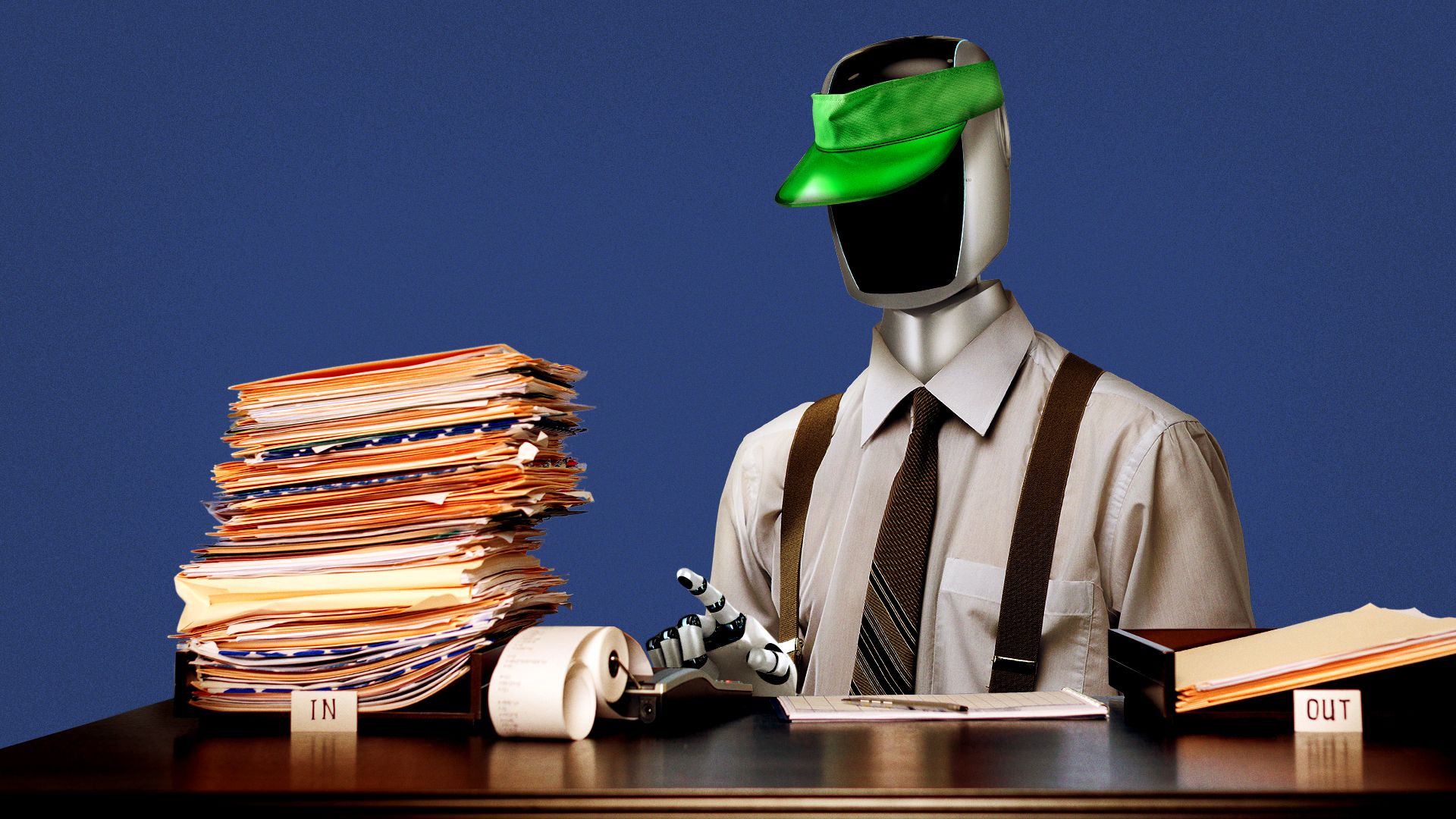
Anthropic yesterday unveiled Cowork, a new AI product designed to handle everyday office work with the same autonomy as its Claude Code vibe coding tool.
Why it matters: AI companies are racing to sell agentic software that promises to simplify information work, even as data continues to show that companies are still struggling to see productivity benefits.
How it works: Cowork lets users give Claude access to a specific folder on their computer.
- From there, the system plans and executes tasks on its own — reading, editing and creating files while updating the user on its progress, rather than waiting for step-by-step prompts.
The big picture: Anthropic frames Cowork as a shift away from conversational AI toward delegating work to an agent.
- Once a task is set, Cowork makes a plan and carries it out with far more agency than users would see in a regular Claude conversation, according to the company.
Reality check: Workers and managers alike say many AI tools reduce productivity, creating mistake-riddled work that requires more time to correct.
4. Training data
- The U.K.'s online safety watchdog is officially investigating X for potential violations of the Online Safety Act. (Axios)
- OpenAI said it acquired Torch, a health tech startup that unifies lab results, medications and visit recordings. (Axios)
- Meta named Dina Powell McCormick, a prominent banking executive and former Republican official, as president and vice chair, reporting to CEO Mark Zuckerberg. (Axios)
- Meanwhile, Meta is said to be preparing to cut thousands of jobs in Reality Labs, the unit that houses its metaverse efforts, as it increases its focus on AI. (NYT)
- Salesforce is upgrading its Slackbot feature to include generative AI. (CNBC)
5. + This
Lego on Monday debuted its initial lineup of Pokémon sets, including an Eevee, a Pikachu, and a 6,838-piece set that incudes a Venusaur, Charizard and Blastoise.
Thanks to Megan Morrone for editing this newsletter and Matt Piper for copy editing.
Sign up for Axios AI+
