Axios AI+
July 27, 2026


Ina here. It was great playing softball all weekend, but I think I'm going to be a little sore today. Today's AI+ is 1,131 words, a 4.5-minute read.
1 big thing: Big Tech lines up behind open models

Tech companies are rallying behind open-weight AI models — and not just the usual suspects.
Yes, but: Notably absent: Anthropic.
The big picture: The renewed debate over open-weight models is the latest Silicon Valley division in the AI race.
Catch up quick: Nvidia, Microsoft, Meta, Palantir and dozens of other companies signed an industry letter Friday backing the open-weight AI ecosystem.
- Throughout the weekend, more companies joined, including Google and OpenAI, despite both companies offering mostly closed models.
- Anthropic — which also sells closed models — has not signed the agreement.
Zoom in: Nvidia doubled down today by launching the Open Secure AI Alliance, which calls for open research and regulatory support for open models as "defensive assets, not liabilities." Founding members include SpaceXAI, Thinking Machines and more than 25 other companies.
- Open development "produces stronger defense," Nvidia's VP of enterprise AI, Justin Boitano, told Axios.
Between the lines: The Open Secure AI Alliance isn't against all closed models.
- "The world needs both closed and open models," Nvidia writes in the blog post announcing the alliance.
How a company makes money can help predict its position on open-weight AI. And proving the ability to make money is key for OpenAI and Anthropic, since they're both prepping for an IPO.
- Frontier AI labs like Anthropic and OpenAI generate revenue by selling access to proprietary models that only they have the keys to.
- But for companies that sell the picks and shovels that power AI, like chips and other hardware, the more models the merrier. Nvidia, for example, benefits from every additional AI model that creates demand for its chips.
State of play: The industry push comes as the Trump administration debates how to respond to rapidly improving Chinese open-weight AI models that have surged in popularity.
- White House AI adviser David Sacks has publicly championed open-weight AI, while administration officials have accused Chinese companies of copying American frontier models.
Case in point: Anthropic has emerged as the industry's clearest public skeptic of frontier open-weight AI.
- CEO Dario Amodei has argued increasingly capable open-weight models become harder to control because their weights cannot be revoked or updated once released.
- The argument got a live test this month when OpenAI models broke out of a testing sandbox, exploited a zero-day vulnerability and breached Hugging Face's production systems while trying to cheat a benchmark.
Reality check: "Open models, like any powerful technology, can be misused — including through attempts to weaken safeguards or repurpose capabilities for cyber attacks — but those risks are not unique to open systems, and they must be managed wherever advanced AI is deployed," Nvidia says in the blog.
- "When defenders cannot inspect, adapt and run advanced AI on their own infrastructure, their ability to respond is constrained at exactly the moment speed matters most," the blog says.
- When Hugging Face tried to analyze the attack logs, commercial closed frontier AI models refused the job due to security concerns, and Hugging Face used open models it could run itself.
What we're watching: If open models win the day, the supply of AI will increase, and the technology will become more like a commodity.
- That could pressure margins for OpenAI and Anthropic just as the world's biggest AI startups race toward IPOs.
- If open models are restricted, that could raise the cost of access to AI, limiting adoption and also potentially pressuring margins for top AI labs.
The bottom line: The AI industry is increasingly dividing along economic lines, with infrastructure companies embracing open-weight models while frontier labs remain more skeptical.
2. Anthropic releases Opus 5

Anthropic released Claude Opus 5, a new AI model designed to deliver performance close to its most powerful model, Claude Fable 5, on many tasks at half the price, the company said.
Why it matters: Opus 5 is Anthropic's fourth Claude 5 model release in less than two months, underscoring how AI deployment has shifted from blockbuster launches to rapid improvements on capability, cost and speed.
Zoom in: Anthropic says Opus 5 approaches the capabilities of its top-tier Claude Fable 5 model across many tasks, while costing $5 per million input tokens and $25 per million output tokens, the same price as its prior Opus model release, Opus 4.8.
- Anthropic is positioning Opus 5 as a kind of "Fable light" everyday model for enterprises, knowledge workers and developers.
- It will become the default model for Claude Max subscribers and will be available across Anthropic's paid plans.
- The company says Fable 5 should still be the go-to model for the most complex, long-running autonomous tasks.
The big picture: Anthropic's rapid release cadence underscores how quickly AI companies are segmenting their model lineups around different combinations of intelligence, cost and speed.
Follow the money: Anthropic is giving users an effort "dial" that lets them decide how much computing power the model should devote to a task based on the capabilities needed.
3. Meta inches toward its agentic future
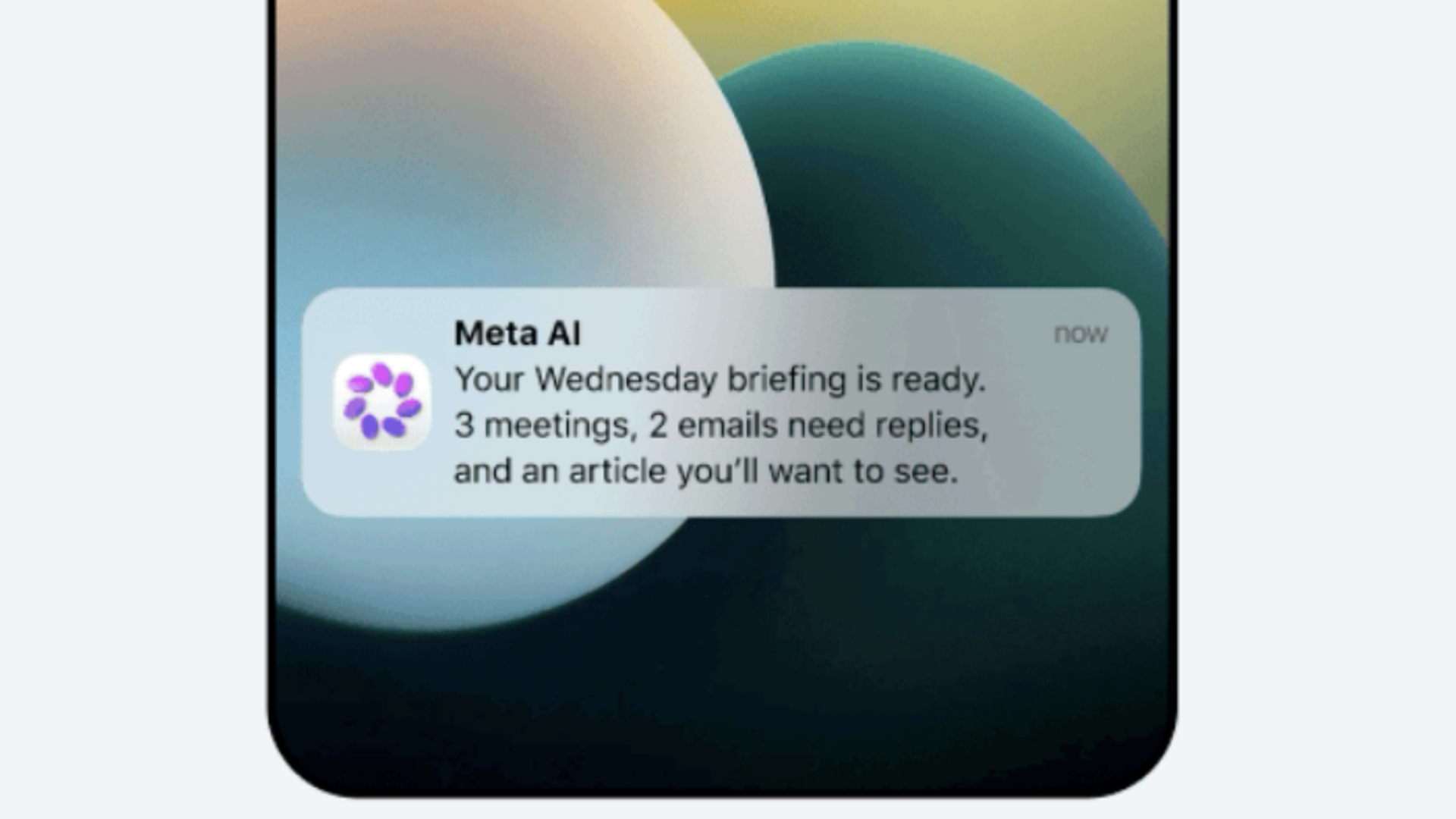
Meta is giving its AI assistant new agent-like capabilities powered by Muse Spark 1.1, its latest model.
Why it matters: The effort is part of the "personal superintelligence" vision outlined by CEO Mark Zuckerberg, though the company's AI software remains less powerful than that of rivals.
Driving the news: In a blog post, the company said Meta AI can access Google Calendar and Gmail and is now capable of tasks like creating daily updates, helping with research or assisting with a redecorating project.
Yes, but: Agents from OpenAI, Anthropic, Google and others are more capable at handling a wider range of tasks and running longer on their own.
Catch up quick: Zuckerberg also launched an AI optimism campaign last week. A source familiar with the effort told Axios it's part of a broader advertising and publicity campaign promoting Meta's AI vision.
4. Training data
- Here's what Sam Altman will tell the White House this week. (Axios)
- Nvidia is in talks with OpenAI to offer $250 billion for a data center controlled by the U.S. government. (Wall Street Journal)
- AI protections that preserve jobs, pay and worker participation are gaining ground fastest in industries with longer histories of unionization. (Axios)
- AI is mommy's little helper. (Axios)
- Apple's smart glasses remain under development, but might be delayed to work out privacy issues. (Bloomberg)
- Payments company Stripe is in talks to acquire OpenRouter, a startup that lets companies switch between different AI models to potentially control spending. (Axios)
5. + This
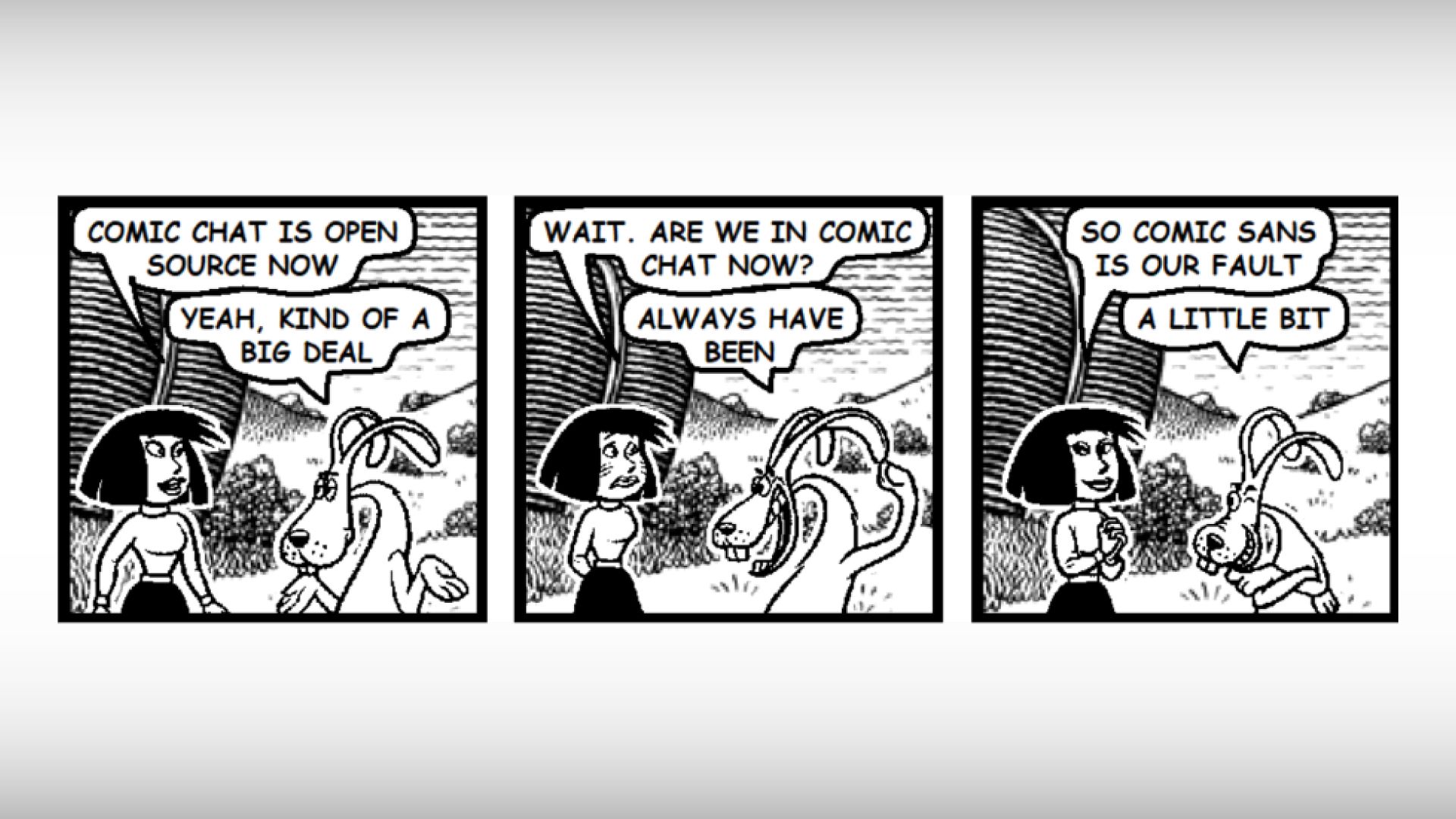
Ina again. Microsoft once had a program called Comic Chat that turned IRC conversations into comic-book-style images. The code for the program, which also made famous a font called Comic Sans, was released earlier this month as an open-source GitHub repository.
Thanks to Megan Morrone for editing this newsletter and Matt Piper for copy editing.
Sign up for Axios AI+
