Axios AI+

July 11, 2025

It's me (Megan) back with you today. I have just returned from New York where it was, in fact, hot enough for me.
Today's AI+ is 1,109 words, a 4-minute read.
1 big thing: ChatGPT has more memories of you

OpenAI continues to build and improve ChatGPT's memory, making it more robust and available to more users, even on its free tier — adding new value and opening new pitfalls.
Why it matters: Not everyone is ready for a chatbot that never forgets.
ChatGPT's memory feature uses context from previous conversations to provide more personalized responses.
- For example: I once asked ChatGPT for a vegetarian meal plan that didn't include lentils. Since then, the chatbot has remembered that I don't care for lentils.
- If you want ChatGPT to remember what you told it, try telling it, "Remember this." You could also say, "Don't remember this."
The big picture: The first version of ChatGPT memory worked like a personalized notebook that let you jot things down to remember later, OpenAI personalization lead Christina Wadsworth Kaplan told Axios.
- This year, OpenAI expanded memory to make it more automatic and "natural," Wadsworth Kaplan says.
Zoom in: "If you were recently talking to ChatGPT about training for a marathon, for example, ChatGPT should remember that and should be able to help you with that in other conversations," she added.
- Wadsworth Kaplan offered a personal example: using ChatGPT to recommend vaccinations for an upcoming trip based on the bot's memory of her health history.
- A nurse suggested four vaccinations. But ChatGPT recommended five — flagging an addition based on prior lab results Wadsworth Kaplan had uploaded. The nurse agreed it was a good idea.
The other side: It can be unsettling for a chatbot to bring up past conversations. But it also serves as a good reminder that every prompt you make may be stored by AI services.
- When the memory feature was first announced in February 2024, OpenAI told Axios that it had "taken steps to assess and mitigate biases, and steer ChatGPT away from proactively remembering sensitive information, like your health details — unless you explicitly ask it to."
Between the lines: Beyond privacy issues, using ChatGPT's persistent memory can lead to awkward or even insensitive results, since you can never be sure exactly what the AI does or doesn't know about you.
- I asked ChatGPT to generate an image of me based on what it remembers about me and it gave me a wedding ring, even though I'm not married anymore.
Online personalization tools have long been plagued by a proneness to "inadvertent algorithmic cruelty."
- The term was coined by blogger Eric Meyer a decade ago after Facebook showed him an unasked-for, auto-generated "Year in Review" video containing smiling pictures of his daughter — who had recently died of cancer.
Persistent memory can also make chatbots feel like know-it-alls and reduce user control over LLMs.
- Developer Simon Willison complained that back in May he uploaded a photo of his dog Cleo and prompted ChatGPT to put Cleo in a pelican costume. It did — but also added a "Half Moon Bay" sign.
- When Willison asked why, the chatbot replied: "Because you've mentioned being in Half Moon Bay before."
Willison, a self-described power user, said memories of past chats can interfere with precise prompting.
- "I try a lot of stupid things with these models. I really don't want my fondness for dogs wearing pelican costumes to affect my future prompts where I'm trying to get actual work done," he wrote in his blog.
- Willison's problem is the AI version of a phenomenon that's always plagued algorithmic systems known as "context collapse." That's when data from users' different spheres of activity (like work, family, hobbies) spills together, blurring the boundaries in their lives.
Yes, but: OpenAI says users have full control over their memories.
- "Your memories are only visible to you," OpenAI personalization team lead Samir Ahmed told Axios."We really want to make sure that users, in general, feel like they're in control."
- There's an option to delete any memory in the Settings page, or to delete an associated chat, or to conversationally tell ChatGPT what you do or do not want it to remember, Ahmed said.
Different versions of ChatGPT (free, Plus, Pro, Enterprise) have varying levels of memory capabilities, with paid versions offering more expanded short- and long-term memory.
- OpenAI says it's still figuring out how to add more memory to its enterprise tier of ChatGPT.
- "Enterprise and consumer are just different use cases," Wadsworth Kaplan says. "We built this for consumers to give ChatGPT a sense of who you are and to help you over many conversations."
- "When we look in the future, we have some exciting things on a roadmap, some of which might be more relevant to enterprise users."
2. Gemini's new trick: Short videos from photos
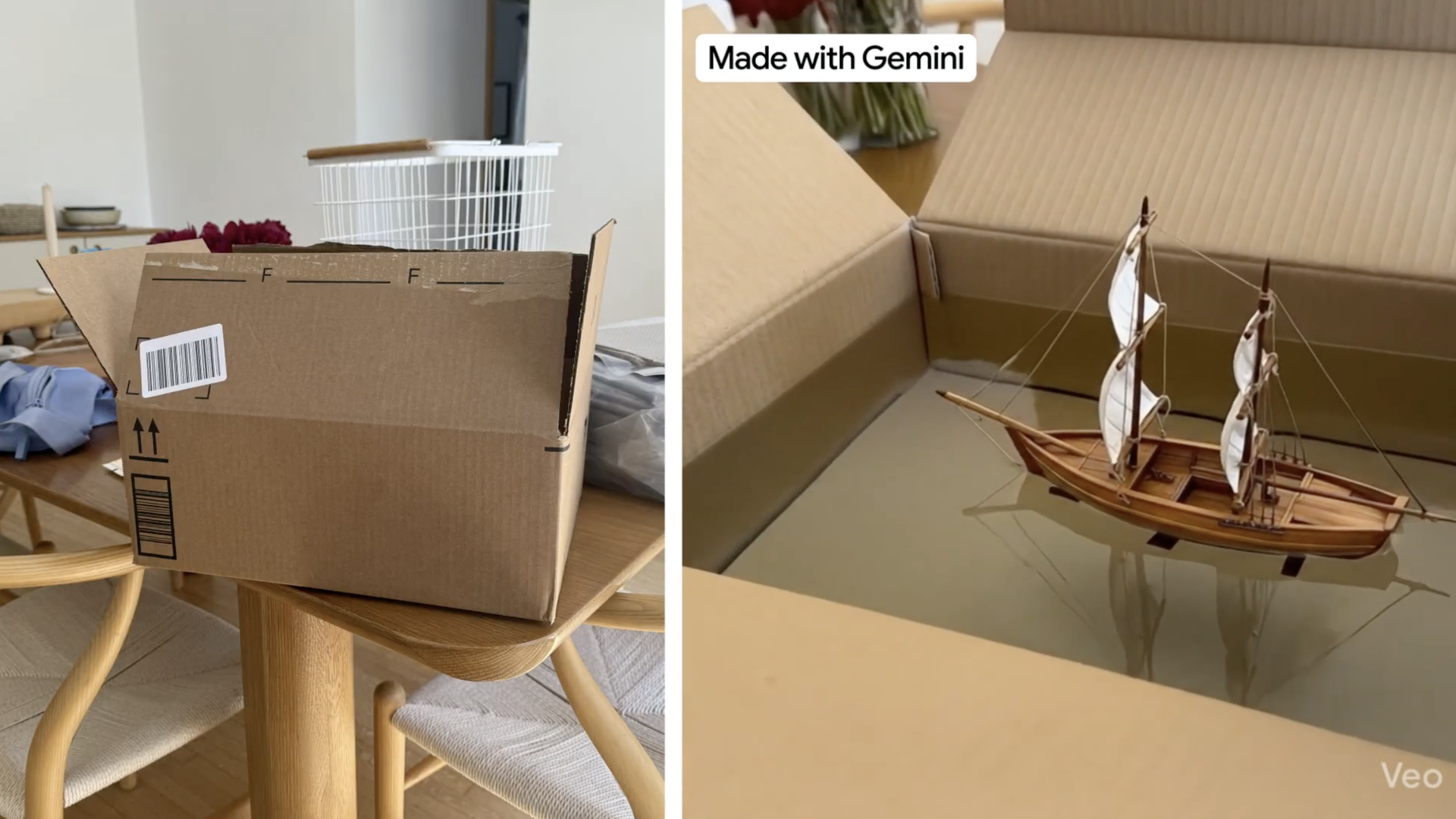
Google's latest AI video tool, Veo 3, now generates short movies with sound based only on still photos and prompts.
The big picture: The feature, released yesterday, is available to Ultra and Pro users on the web and soon on mobile for subscribers in select regions, Google shared with Axios.
How it works: Subscribers can go to gemini.google.com, upload a photo and describe the motion and audio they want in the video — including background music, ambient noise and dialogue.
- Gemini generates an eight-second, 720p resolution video clip in a downloadable MP4 file.
- The tool takes two to three minutes to create the video.
- Axios test-drove the feature and found it diverting. The videos tend to evoke some "uncanny valley" feelings — which isn't necessarily a bad thing, considering the rise of deepfakes.
Between the lines: Google says it has done extensive red teaming on its video products to "fix potential issues before they arise."
- Threats to child safety, blood and gore, factual inaccuracies that cause real-world harm and other potentially dangerous content categories are not allowed.
Yes, but: As video generation tools get better, they threaten to blur the line between what's real and fake.
- Even if the tools don't advance, their wide availability could further swamp the internet with AI slop.
Go deeper: Google is putting more AI in more places.
3. Training data
- Pittsburgh's AI and energy summit next week featuring President Trump will focus on fossil fuels as the answer to AI's massive power needs. (Axios Pro)
- If you ask xAI's new Grok 4 for its perspective on controversial political issues, it consults Elon Musk's X posts for guidance — but only when the prompt refers to Grok as "you." (TechCrunch, Simon Willison)
- Indeed and Glassdoor are cutting 1,300 jobs as they combine operations and shift toward AI. (Bloomberg)
4. + This

I spent my vacation reading Jenny Odell's "Saving Time: Discovering a Life Beyond the Clock."
Not exactly a beach read, unless your idea of fun in the sun is questioning capitalism and your entire relationship with time. Though I think Odell's take on AI at work, through the lens of Charlie Chaplin's "Modern Times," is worth it.
Thanks to Scott Rosenberg for editing this newsletter and Matt Piper for copy editing.
Sign up for Axios AI+
