Axios AI+

May 05, 2026


Mady here, still recovering from the joy of watching the Met Gala. More on that below.
Today's AI+ is 1,161 words, a 4.5-minute read.
1 big thing: Make way for agents

AI makers have trained agents to use software like people do. Now the industry is starting to build software for agents first.
Why it matters: If agents stop using software the way humans do, tech competition could shift from who has the best interface to who controls the APIs, data and permissions agents need to act.
The big picture: Today's agents are like self-driving cars forced to navigate roads built for humans — stoplights, signage and all.
- Creating new pathways for AI is a lot easier than creating a whole new system of roads.
What they're saying: "Agents interacting with each other will figure out how to communicate efficiently without having to emulate clicks on buttons," former Meta AI chief Yann LeCun told Axios in a recent interview.
Catch up quick: Anthropic launched its Model Context Protocol before agentic work was mainstream, giving developers a standard way to connect AI systems to tools and data sources.
State of play: Last month, startup Mesa introduced a versioned file system built for agents working on long-running tasks.
- Stripe, Mastercard and OpenAI are adding payment rails for agentic shopping.
- Salesforce announced its Headless 360 approach last month. The agentic enterprise platform makes its key software available directly to agents.
Zoom in: San Francisco-based Zapier shows how this shift is already playing out.
- Zapier has spent over a decade turning business software into discrete, programmable actions — a model that maps far more cleanly to AI agents than to traditional interfaces.
- Now AI agents can create, trigger or operate those workflows themselves.
- "We are definitely heading to a world, I believe, where agents are the predominant user of software," Zapier CEO Wade Foster told Axios. "I don't think that means that humans quit using software. I just think that there's going to be so many more agents."
Zoom out: Other industry veterans also say software designed for agents is becoming the norm.
- "I think we're going to see more of that kind of experience," AWS marketing chief Julia White said.
- "As agents become the biggest users of software, then all software has to be available in a headless fashion," Box CEO Aaron Levie said on X. "Agents won't be using your UI, they'll be talking to your APIs."
Between the lines: Hardware will also get a rethink.
- So far there has been a lot of speculation and a fair bit of investment.
- The early tries at AI-first hardware have largely focused on gathering more input, such as glasses and jewelry with always-on microphones.
- OpenAI has been the most vocal about its efforts. It promised to show off its first, Jony Ive-designed device later this year.
Yes, but: Hardware is hard. It will almost certainly take longer to figure out because each attempt takes more time, money and distribution muscle than a software launch.
The bottom line: If we don't build a new layer of software built for agents, AI might just design and build it without us.
2. Trump's new AI safety stance


The Trump administration is considering a new plan that would require the Pentagon to safety test AI models that are deployed to federal, state and local governments, Axios has learned.
Why it matters: In a post-Mythos world, the Trump administration appears to be reevaluating its hard line against the AI safety and security measures it once shrugged off.
Driving the news: The White House's Office of the National Cyber Director hosted two meetings last week — one with tech and cyber companies and another with tech trade groups — to discuss the broader security concerns raised by advanced AI models, including Anthropic's Mythos Preview, according to two sources familiar with the matter.
- The office has also been discussing an AI security framework that would require the Pentagon to lead safety testing for AI deployments for federal, state and local governments, the two sources said.
- That would be an additional layer of responsibility for the government to assess the security vulnerabilities posed by a model before it's rolled out in the public sector.
- The New York Times first reported yesterday that the administration is considering an executive order that could charge multiple agencies with safety testing new AI models.
Zoom in: Both sources said that framework is fairly far along.
3. Big AI courts private equity

OpenAI and Anthropic are teaming up with private equity firms on multibillion-dollar ventures to push their AI tools into midsized companies.
Why it matters: The two companies want to shore up enterprise adoption of their tools as they race toward IPOs that could come as soon as this fall.
What they're saying: "There's a big gap between what AI can do today and the value the market is truly getting from it," Nicholas Lin, Anthropic's head of product for financial services, tells Axios.
Zoom out: OpenAI and Anthropic have both been working to launch joint ventures with some of Wall Street's biggest firms to accelerate adoption of their AI tools, especially among midsized companies.
- Anthropic is pursuing a $1.5 billion joint venture with investments from Blackstone, Hellman & Friedman and Goldman Sachs in an effort to sell AI tools to companies, especially those backed by PE firms.
- OpenAI has raised more than $4 billion from investors including TPG, Brookfield, Advent and Bain for a joint venture they're referring to as "The Deployment Company."
4. The death of AI idealism

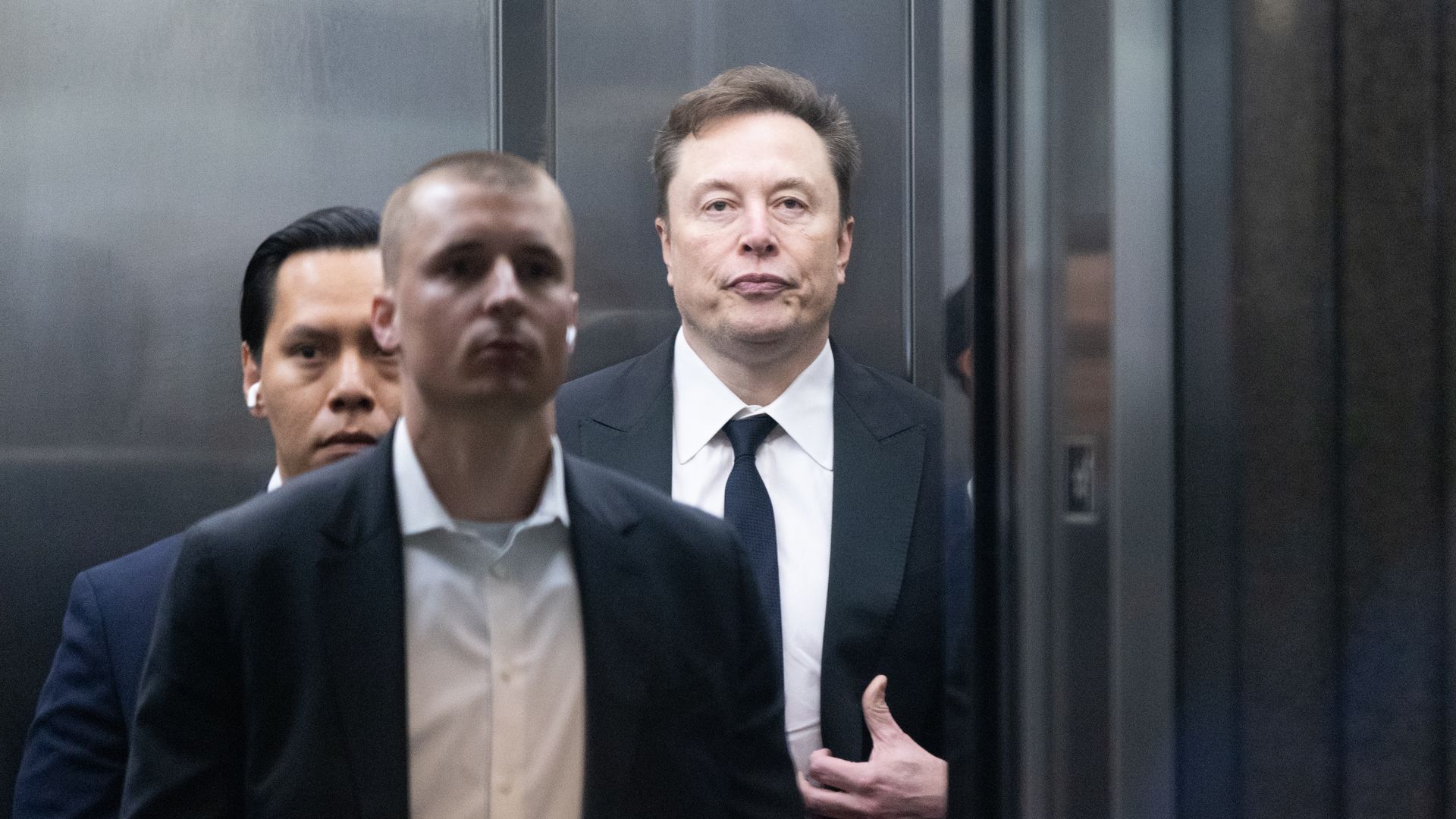
Elon Musk's lawsuit against OpenAI and the recent spate of deals AI companies have cut with the Pentagon show how far the industry has drifted from the altruistic origin story it's long told about itself.
Why it matters: OpenAI and Anthropic were founded on the idea that AI would be deployed in ways that prioritized safety and the public good. Now those principles are giving way to an arms race for market share, as those companies and others release ever more powerful models.
The big picture: The men behind today's biggest AI labs often pitched themselves as a safer, less-greedy alternative to earlier tech leaders.
- Acknowledging the breathtaking power of AI, they first rejected Silicon Valley's "move fast and break things" ethos.
- Now, AI behemoths are locked in an escalating competition for enterprise, consumer and government business.
5. Training data
- Anthropic and FIS are teaming up to build AI tools that could soon monitor millions of bank accounts for evidence of financial crimes. (Wall Street Journal)
- Palantir beat the Street's revenue forecasts in its latest earnings but failed to deliver on U.S. commercial sales for the first quarter. (Bloomberg)
6. + This
Met Gala Monday took over NYC last night, and Katy Perry showed up IRL after years of AI-generated pics of her attending. But more importantly, Beyoncé and Blue were there.
Join Axios x IBM at Web Summit: An exclusive evening reception with senior tech leaders, innovators and partners — focused on bold ideas and meaningful connections. When: Monday, May 11. 👉 Register.
Thanks to Megan Morrone for editing this newsletter and Matt Piper for copy editing.
Sign up for Axios AI+
