Axios AI+
August 04, 2026


Mady here, looking forward to the first earnings report from SpaceX later this afternoon. Today's AI+ is 1,147 words, a 4.5-minute read.
Situational awareness: Apple filed a motion for a preliminary injunction in its trade-secret lawsuit against OpenAI. Then OpenAI fired back, calling the lawsuit "careless, aggressive and oddly personal."
1 big thing: Exclusive — College AI use spikes


The share of business students regularly using AI has increased from 6.2% to 29% over the past three years, according to research from American University's Kogod School of Business, shared first with Axios.
Why it matters: The chorus of AI boos at college graduations last spring doesn't tell the whole story: Students increasingly see AI as a critical job skill but want more guidance on using it responsibly.
The big picture: Those commencement jeers aimed at AI boosterism captured real anxiety about the future. But most students aren't fully avoiding the technology.
- Undergraduate and graduate business students want "more structured preparation to use AI effectively, ethically, and competitively in the workplace," per the study.
- "We haven't encountered a lot of resistance," Kogod interim dean Casey Evans tells Axios. "We're very intentional," she says, as opposed to forcing AI on students with no choice. "They are really using AI as one of many tools in their toolbox."
By the numbers: Kogod's survey suggests AI has moved from a novelty to a routine part of student life, with more than 80% of college students using AI academically in the past six months.
- Nearly a third of students are now using it 11 or more times a week for school or work-related tasks.
- Some professors are still putting blanket bans on AI. But employers are not: The share of job interviews that included AI-related questions has jumped from 11.6% to 42.6% over the past three years.
Caveat: The survey's three-year span gives it a rare longitudinal view of changing student behavior, though it reflects just 483 business students at Kogod and may not generalize to all colleges.
Yes, but: Other studies reflect similar findings. According to an Inside Higher Ed flash survey of 1,038 two- and four-year students, 85% said they used generative AI for coursework in the past 12 months.
- Similarly, a Gallup poll from April found that more than half (57%) of U.S. college students use AI "at least weekly" and 1 in 5 say they use it daily.
Students do have concerns, however. One of those is AI dependence, with 40% of students in the Inside Higher Ed survey saying they're concerned that AI is reducing their and their peers' ability to think independently.
- Over half of Kogod students, meanwhile, say they're concerned about academic integrity and the use of AI.
Between the lines: American University's report shows that students say they want clearer norms around AI use, ethics and how to preserve their own thinking alongside use of tools.
- Kogod's business school is already teaching students how to use AI responsibly, Evans says.
- When ChatGPT first came out, Evans says, faculty focused on academic integrity, fighting against AI and making sure all assignments were "AI-proof."
- "We've moved on pretty quickly from that," she says. "We've accepted that this is something that students will use," which means faculty members completely reevaluating their role in the classroom and what the classroom looks like.
- "We'll drop an assignment into AI and say, 'What you just got back is a C. Now let's talk about how you get to an A,'" Evans says.
What we're watching: The report says the most popular use case for AI in college over the past three years has been brainstorming.
- But brainstorming with AI could also stifle creativity: Last year Wharton found that people came up with a broader range of creative ideas when they used their own thoughts and web searches, compared with when they used ChatGPT.
- Idea variance can come from using ChatGPT to generate ideas, while also brainstorming your own ideas and collecting original ideas from others.
The bottom line: Students may not love the AI-shaped future awaiting them, but they know that they need to prepare for it.
2. White House keeps new AI framework under wraps

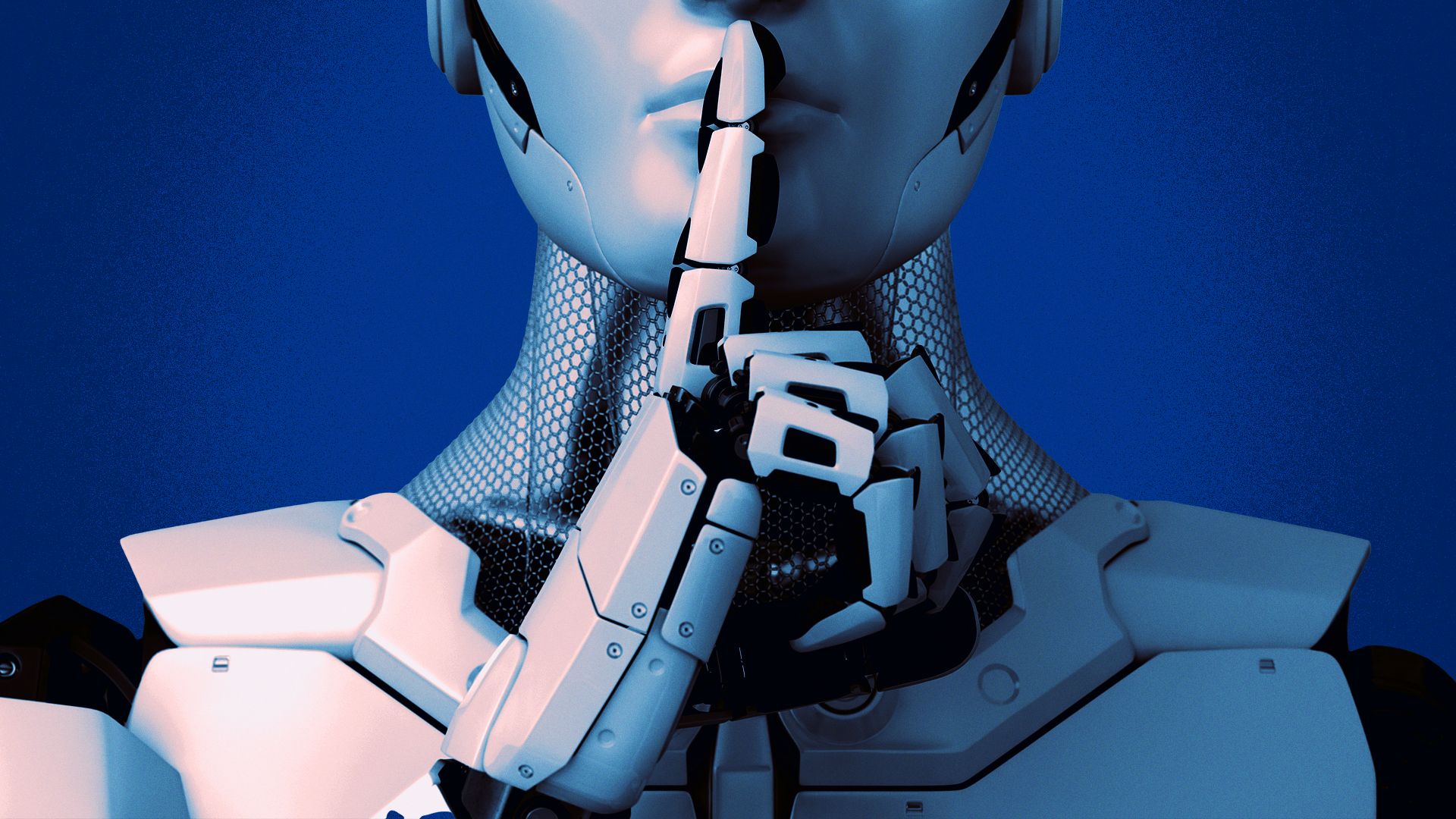
The White House has met its deadline to establish a voluntary framework for evaluating advanced AI models — but it won't say what the framework contains, who's seen it or when companies will start using it.
Why it matters: The framework is being closely watched beyond the industry players it directly applies to.
- Policymakers, AI safety advocates and U.S. allies have been waiting to see what the rules for the most powerful models in the world look like.
What they're saying: "The voluntary framework outlined in the June 2nd executive order was complete by the deadline," a White House official said.
- "Discussions with industry about next steps are underway," the official said, adding that the administration is engaging with "many more" industry partners than just Anthropic, OpenAI and Google.
- Leading up to the deadline, the three labs gave the administration feedback on a draft of the framework.
What's inside: The framework is meant to give AI developers a structure for engaging the government to determine whether models under development would be covered.
- The framework is supposed to spell out the confidentiality, cybersecurity, insider-risk, intellectual-property protection, use and nondisclosure requirements that would apply when the government gets access to models for up to 30 days before they're released.
- The framework should also include which "trusted partners" will have early access to models.
Zoom in: The executive order explicitly says the benchmarking process to assess advanced cyber capabilities of AI models will be classified.
- The threshold for which models are covered under the order is also classified and will only be shared with AI developers and researchers "as appropriate."
- The order does not similarly designate the voluntary framework as classified, and policymakers and other observers expected to see details.
Between the lines: Companies are seeking clarity early so they know whether models under development are likely to fall under the framework.
- "Just because things are unclassified that doesn't mean we are going to broadcast them to everyone," the White House official said.
What's next: The White House will hold a staff-level meeting with companies today to review the framework, a source familiar said.
3. Training data
- Palantir's earnings soared amid a surge in AI sales. (Axios)
- Former OpenAI executive Fidji Simo talked about her new startup and her battle with POTS. (Fortune)
- Cybersecurity conference DEF CON has banned attendees from wearing "Meta-style glasses with recording capabilities" during this weekend's show. (The Register)
4. + This
Calling all IMAX 70 mm retirees, "The Odyssey" needs you. This profile on Pat Caldwell getting called back to work to run the projection of Christopher Nolan's film was a delightful treat.
Thought bubble: So many mentors of mine tell me they fear AI is making their expertise irrelevant. Maybe your expertise is so relevant, your industry won't even let you retire.
Thanks to Megan Morrone for editing this newsletter and Matt Piper for copy editing.
Sign up for Axios AI+
