Axios AI+
September 29, 2025

I know lots of y'all are enamored with how much time this AI thing can save. But I have to say, the AI news is taking up nearly all of my time these days.
Today's AI+ is 1,260 words, a 5-minute read.
1 big thing: Microsoft launches "vibe working" tools

Workers will be able to whip up documents, spreadsheets and presentations in Microsoft Office by simply telling an AI helper what they want, using new features the company is announcing today.
Why it matters: "Vibe coding" is already upending the software world, and Microsoft describes its new Office features as "vibe working," suggesting a similarly broad impact.
- The vision is that workers can now roughly define what they need and let AI handle the heavy lifting of finding the data and building the document.
State of play: Microsoft is offering two ways into the new capabilities.
- "Agent Mode" in Excel and Word lets people get AI assistance inside each app, with PowerPoint support coming soon.
- "Office Agent" in Copilot creates PowerPoint presentations and Word documents, with Excel support coming soon.
- The new features are available first on the web-based versions of Office, with plans to add the features to desktop apps.
The big picture: Microsoft wants to focus AI features on productivity, its core business.
- Other AI chatbots offer the ability to create or edit various documents within the app. Earlier this month, Anthropic added the ability to use Claude to create and edit Office files and PDFs.
- With the new releases, Microsoft makes the case that a more native understanding of Office apps and their capabilities provides a better experience.
- "Productivity is in our DNA," Microsoft corporate VP Sumit Chauhan told Axios. "Others can try and replicate it, but there's no substitute for the real thing."
Between the lines: Chatbots can draft a wide range of tasks, from generating an image to creating a chart or table, but they often struggle with editing.
- For image generation, chatbots typically regenerate new images from feedback, often introducing new flaws even as they fix old ones.
The intrigue: Microsoft is using Anthropic to power Copilot's Office Agent feature, while OpenAI's models are behind Agent Mode in Excel and Word.
How it works: In demos, Chauhan showed Excel generating documents, such as a cash flow analysis, designed to give workers new analytical capabilities.
- Businesses will need a Microsoft 365 Copilot subscription, and consumers with personal or family plans can access the features for now. "Ultimately, it'll be part of a premium package" for consumers, Chauhan said.
2. Exclusive: Senators unveil AI evaluation bill

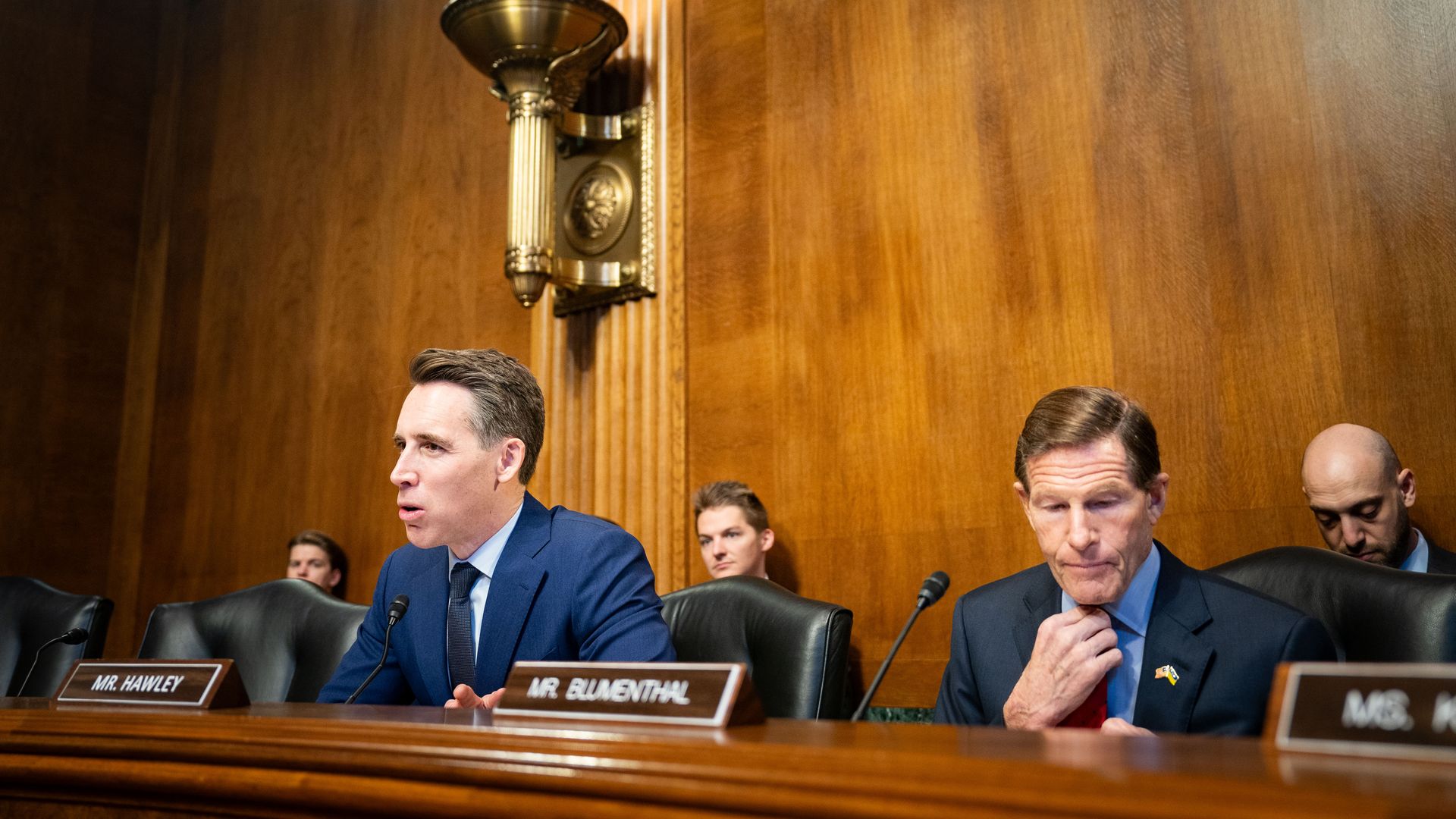
Sens. Josh Hawley (R-Mo.) and Richard Blumenthal (D-Conn.) are introducing an AI risk evaluation bill today, per an announcement shared exclusively with Axios.
Why it matters: There's bipartisan appetite on Capitol Hill to address the biggest risks of AI, even as the White House warns that regulation could hamper U.S. innovation and competition with China.
Driving the news: The Artificial Intelligence Risk Evaluation Act would house an evaluation program at the Energy Department for advanced AI systems to "collect data on the likelihood of adverse AI incidents, such as loss-of-control scenarios and weaponization by adversaries," per a memo shared with Axios.
How it works: Developers of advanced AI would be required to submit information to the program and cannot deploy until complying with its requirements.
- The energy secretary would also be mandated to annually report to Congress with recommendations for federal oversight of AI.
- "While some proposals would take a hands-off approach to AI, this new bipartisan legislation…would guarantee that there is common-sense government oversight of the most advanced AI systems to better inform and protect the public," a description of the bill shared with Axios reads.
Flashback: Blumenthal and Hawley back in July introduced a bill to protect creators' work from bring misappropriated from AI firms. In the last Congress they backed a bipartisan legislative framework to establish guardrails for AI.
What they're saying: "Congress must not allow our national security, civil liberties, and labor protections to take a back seat to AI," Hawley said.
- "This bipartisan legislation would guarantee common-sense testing and oversight of the most advanced AI systems, so Congress and the American people can be better informed about potential risks."
- Blumenthal: "Our legislation would ensure that a federal entity is on the lookout, scrutinizing these AI models for threats to infrastructure, labor markets, and civil liberties."
3. The jobs crisis in plain sight


Starting with our interview in the spring with Anthropic CEO Dario Amodei, where he foresaw a white-collar bloodbath, we've been warning of a jobs crisis unfolding in plain sight across America.
- This month, Mike Allen and I talked privately with 20 different CEOs of a range of companies. Every single one of them said they're reducing their hiring ambitions at the dawn of AI.
Why it matters: Don't trust us. Just listen to Amodei, who is building AI technology, and top CEOs as they freeze or reduce hiring because of AI.
- Amodei, in two interviews with us — one on the phone and the other this month at our AI+ Summit in D.C. — told us that AI could wipe out half of U.S. entry-level white-collar jobs and send unemployment soaring.
- Ford CEO Jim Farley said almost the same thing this summer. "Artificial intelligence is going to replace literally half of all white-collar workers in the U.S.," he told Walter Isaacson during the Aspen Ideas Festival. "AI will leave a lot of white-collar people behind."
Driving the news: More telling, two of the largest private employers in America are sounding similar warnings.
- Amazon CEO Andy Jassy said in June that Amazon will reduce headcount "as we get efficiency gains from using AI": "It's hard to know exactly where this nets out over time, but in the next few years, we expect that this will reduce our total corporate workforce as we get efficiency gains from using AI extensively across the company."
- In the story topping the Wall Street Journal on Saturday morning, Walmart execs said that they, too, expect to freeze hiring and change how every job is done. "It's very clear that AI is going to change literally every job," said CEO Doug McMillon. "Maybe there's a job in the world that AI won't change, but I haven't thought of it."
The big picture: Maybe all these CEOs are wrong. But what if they're right? The White House and Congress aren't treating this like a brewing crisis. They seem more focused on beating China to advanced AI than bracing workers for a short-term jolt.
- Top officials argue that the race with China is existential and that new technologies, over time, create more and better jobs. They dismiss the warnings of massive job loss as misguided doomerism.
The bottom line: Both could be true. Most new technologies cause short-term pain then later create new jobs. What's different with this one is that we had advanced warning to prepare the population for it.
4. Training data
- President Trump on Friday called on Microsoft to fire its head of global affairs, Lisa Monaco, over her work in the Biden administration. (Axios)
- Data center builders are turning to debt to finance the expensive projects, raising new questions about the potential fragility of the AI boom. (Wall Street Journal)
- OpenAI's new parental controls for ChatGPT — launched today — feature a dual opt-in system, meaning a teen could decline to connect to their parents' account. (OpenAI)
5. + This
If you have extra space (and cash) a New Jersey amusement park closing in November is selling giant animatronic dinosaurs on Facebook Marketplace. "Just be sure you've got a big backyard," a park official said.
Thanks to Scott Rosenberg and Megan Morrone for editing and Anjelica Tan for copy editing.
Sign up for Axios AI+
