Axios AI+

June 09, 2026


Mady here after the Knicks lost Game 3. Forgive any New Yorkers you know who are tired during the finals.
Today's AI+ is 1,187 words, a 4.5-minute read.
1 big thing: Apple's Siri AI is cool and late

Apple is finally delivering the conversational and context-aware AI that it promised two years ago. Its rivals have already moved on to agents.
Why it matters: OpenAI, Anthropic, Google and other AI companies are pushing beyond chatbots toward agentic tools that can write code, search through complex file structures, use apps and handle workplace tasks.
Driving the news: At its annual developers conference yesterday, Apple announced that its long-delayed Siri overhaul will arrive this fall, built through Apple's partnership with Google.
- Apple says its new conversational assistant is "profoundly more capable" and includes greater "personal context understanding" that can surface relevant information from texts, emails, photos and more.
- The updated Apple Intelligence also includes integrated tools for writing and image generation, with other AI features in Safari, Messages and Photos.
- Developers have access to the new Siri and other tools now, with a public beta planned next month and final versions due out in the fall, typically just as new iPhones go on sale.
State of play: Meanwhile, OpenAI and Anthropic have been locked in a hype battle promoting their agentic AI tools for both coders and office workers.
- In a follow-up meeting with reporters, senior VP Craig Federighi addressed the issue of autonomous AI agents. "I think it's very early days in getting to those kinds of helpful long-horizon agent tasks, but we're all building on agentic architectures at this point."
- Federighi said Apple's own developers are using agentic coding tools, and that people experimenting with agents are using Apple hardware to run them in more controlled environments.
- For now, though, Apple Intelligence is focused more on information-gathering tasks.
- In one example, Apple showed how Siri can help find and play a podcast someone recommended in a message. Another showed how it could take camping recommendations from an email and add them to a packing list in Notes.
What they're saying: Ray Wang, principal analyst at Constellation Research, said that Apple probably did the right thing for consumers by focusing on privacy, security and trust.
- "If it takes them longer to get there, it doesn't matter," Wang said. Not so, he said, for software developers. "They see all this stuff happening at AI speed and they want to move faster."
Zoom in: Apple is betting consumers will value an AI assistant that can draw on personal data while keeping that information on-device and out of other companies' hands.
What we're watching: Whether Apple's features feel like a helpful hand just where people need it or more like too little, too late.
2. OpenAI files paperwork for an IPO
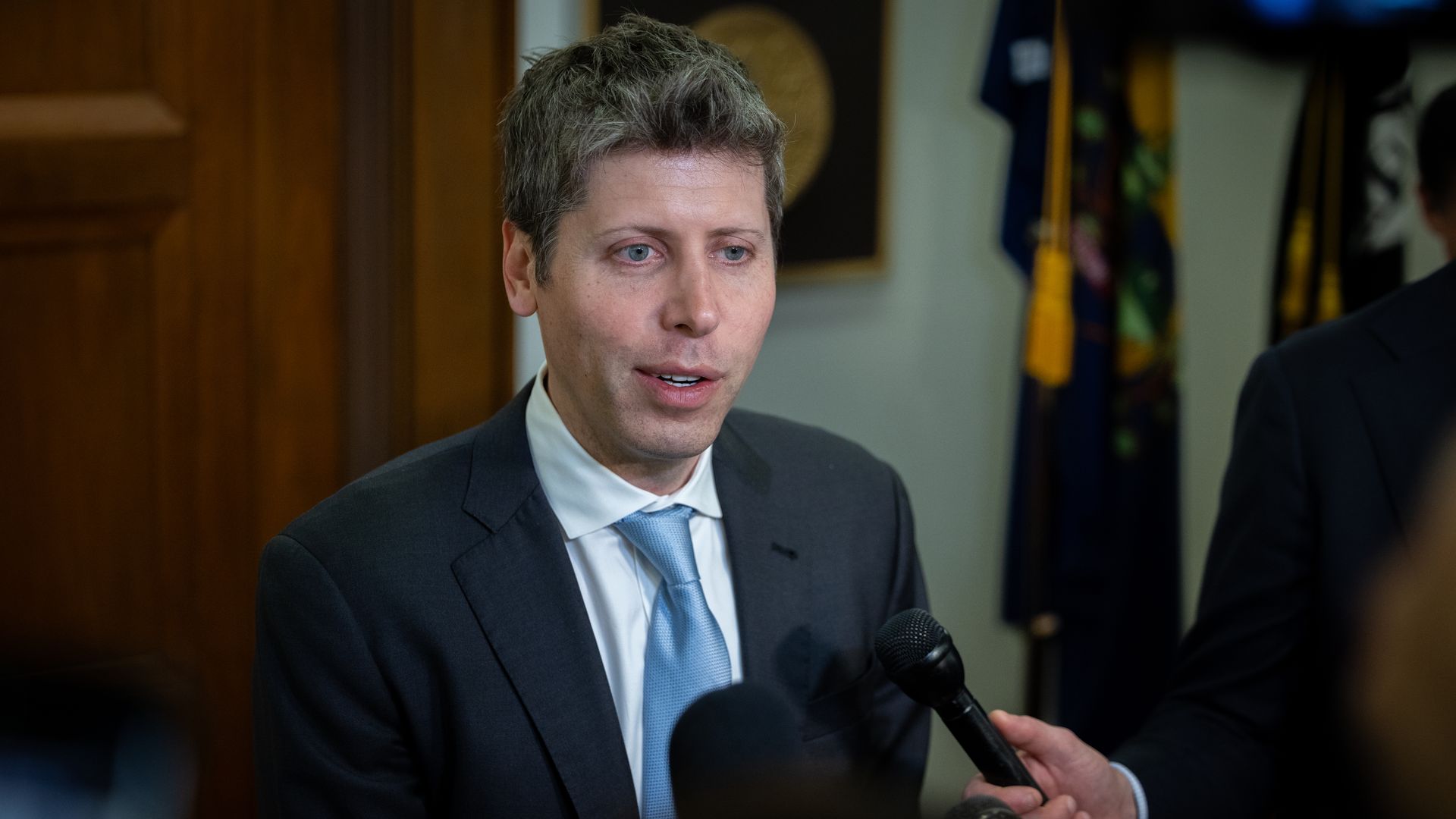
OpenAI says it has confidentially filed draft IPO paperwork, giving itself the option to tap public markets — even as the company says its focus remains on building new AI products rather than preparing for a listing.
Why it matters: The race is on between Anthropic and OpenAI to go public and tap investors for tens of billions of dollars.
What they're saying: OpenAI has not decided on timing, adding that "it may be a while because there are things we want to do that are likely easier as a private company."
- The company said the filing gives it flexibility.
- The AI lab is working toward a tender offer that would give investors some liquidity while it remains private.
- OpenAI is working with Goldman Sachs and Morgan Stanley on a listing that could come as soon as this fall, Bloomberg reported.
Zoom out: This comes exactly one week after OpenAI's biggest competitor, Anthropic, filed IPO paperwork, and just days before SpaceX is expected to go public.
- The three companies have valuations around $1 trillion, giving them all the potential to be among the largest IPOs in history.
Friction point: AI excitement may be soaring, but investor dollars are finite. As more companies head to the public markets, competition for capital is only getting tougher.
- OpenAI could face particular investor scrutiny: The Wall Street Journal reported the AI lab missed internal revenue targets and that CEO Sam Altman and CFO Sarah Friar disagreed over the IPO timeline.
Zoom in: The timing of OpenAI's SEC review could affect what Anthropic ends up disclosing, or vice versa, PitchBook's Harrison Rolfes told Axios.
- If OpenAI is still early in the review process and Anthropic releases extensive information first, public and regulatory attention may shift toward Anthropic.
- That could give OpenAI an advantage by letting it observe Anthropic's disclosures and adjust its own approach accordingly, ultimately working in OpenAI's favor.
What we're watching: Whether Anthropic or OpenAI decides it has more to gain by going first.
3. Scoop: White House and Hill talk state laws


The White House is negotiating a federal preemption of some state AI laws in exchange for its support of key tech policy priorities from the Hill, Axios has learned.
Why it matters: States are increasingly passing stronger AI laws, and the Trump administration is feeling the heat to get something done.
- The talks are aiming to pair one of the tech industry's top priorities — overriding state AI laws — with legislation aimed at protecting kids online and combating deepfakes.
Behind the scenes: Sen. Marsha Blackburn (R-Tenn.) is leading the negotiations, per a spokesperson, which include the Kids Online Safety Act and other tech-related measures.
- A Blackburn spokesperson said that the package is not "blanket preemption of all laws regulating AI or child safety."
- "The White House continues to proactively engage across government and industry," a White House official said.
Catch up quick: The last time the Trump administration tried to preempt the states, Republicans were inundated with pushback from advocacy groups and state lawmakers across the country.
- Blackburn's support, which the White House did not previously have, would be key for passage.
Zoom out: Two sources told Axios the White House is also holding a meeting this week with AI companies to dig into what benchmarking should look like for the recent AI and cyber executive order.
The revival of the preemption fight comes on the heels of Trump signing an AI and cyber executive order last week that includes voluntary pre-deployment testing of frontier models.
4. Meta's new $115 million free job training

Meta is investing $115 million in a no-cost training program for workers in skilled trades, with a big promise for graduates: a guaranteed job.
The big picture: The AI boom is driving a data center buildout that McKinsey estimates could hit $7 trillion globally by 2030. Tech companies need more than chips and power — they need workers to build the physical infrastructure.
Driving the news: Meta's new America's Workforce Academy is free for participants and aims to address the shortage in skilled trade workers, including fiber technicians, welders, plumbers, electricians and more.
5. Training data
- Nvidia and Hyundai's Boston Dynamics will broaden their partnership in the race to deliver humanoid robots. (Axios)
- Riva Sciuto, YouTube's head of global civics partnerships, has joined Kalshi as its first head of external affairs.
6. + This
Frontier AI agents can complete just 2.6% of "economically valuable" real-world workplace tasks, according to new UC Berkeley-led research.
Thanks to Megan Morrone for editing this newsletter and Matt Piper for copy editing.
Sign up for Axios AI+
