Axios AI+

February 13, 2025

BonjβI mean, hi. It's good to be home. Today's AI+ is 960 words, a 3.5-minute read.
ποΈ Save the date: The first of this year's three Axios AI+ Summits β AI+ Summit: NY β will take place in the Big Apple on Wednesday, June 4. We'll have more information on the event (and this year's other AI+ Summits) soon.
1 big thing: Exclusive β China's people trust AI more than Americans do


Trust in artificial intelligence is significantly higher in China than in the United States, according to new data from the Edelman Trust Barometer shared first with Axios.
Why it matters: The pace of AI adoption won't solely be determined by how fast the technology itself advances, but also by the willingness of businesses and individuals to use it.
By the numbers: Edelman's latest research found that 72% of people in China trust AI, compared with just 32% in the United States.
- Not only is trust higher in China, it's higher in much of the developing world than it is in the United States, according to Edelman's research.
- Trust in AI was highest in India, at 77%, followed by Nigeria at 76%, Thailand at 73% and then China.
- Only six of the surveyed countries ranked lower than the U.S. in their trust in the new technology: Canada (30%), Germany (29%), the Netherlands (29%), United Kingdom (28%), Australia (25%) and Ireland (24%).
- Globally, 52% of men said they trusted AI vs. 46% of women, with younger people significantly more trusting of the technology than older folks.
- In the U.S., AI was trusted more by Democrats (38%) than Republicans (34%) or independents (23%).
- Higher-income respondents were also more trusting (51%) than those with middle (45%) or low (36%) incomes.
The big picture: It's not just AI that's facing a lack of trust. The tech sector, once one of the most trusted sets of institutions, has seen significant decline in recent years. While nearly three-quarters of Americans said they trusted tech companies a decade ago, that number is now 63%.
- "This shift reflects a growing perception that technology is no longer just a tool for progress, it is also a source of anxiety," Edelman Global Technology Chair Justin Westcott said in the report.
- Job fears play a part in this, with 58% of people worried about displacement due to automation. But it's not just that: More than 3 in 5 people are worried about AI-driven misinformation, for example.
- Companies need to do a better job of explaining how jobs and society will evolve as AI grows more powerful, Westcott said.
- "AI can be a force for progress, efficiency, and inclusion," Westcott wrote. "But it will take deliberate action to ensure that people trust its potential as much as they believe in its power."

2. Musk's new OpenAI ultimatum
Elon Musk will withdraw his $97.4 billion bid to purchase the assets of OpenAI if OpenAI gives up on its plan to spin out its for-profit subsidiary, Musk's lawyers said in a new court filing Wednesday.
Why it matters: Musk's bid for OpenAI was the latest surprise maneuver in a long-running legal battle that has pitted him against OpenAI CEO Sam Altman.
The big picture: Musk and Altman, who were both among OpenAI's cofounders in 2015, have been fighting for years over the nonprofit's future.
- Altman has guided OpenAI from its roots as a nonprofit research lab to its role today as the AI industry's leader and creator of ChatGPT.
- Altman's approach requires enormous amounts of investment, which the company has funneled from Microsoft and others into a for-profit entity. Altman and OpenAI's original nonprofit board intend to spin out that entity into a fully independent company that the nonprofit would have a stake in.
- The value of that stake is what's at issue in the Musk-Altman fight.
Between the lines: Since Musk announced his bid Monday, many observers have seen it less as a serious effort to take control of OpenAI than as a gambit to put a higher price tag on the assets that underlie the for-profit entity's value.
- The higher the price, the harder it will be for Altman to execute his plan.
- Musk β who founded OpenAI competitor xAI in 2023 β has said he wants OpenAI to refocus on its original nonprofit goals rather than evolve in the for-profit direction. Altman has argued that it can only fulfill its mission of developing advanced AI for all of humanity by raising massive funding from investors who require a return.
The bottom line: The latest filing reinforces the view that Musk is less interested in becoming OpenAI's owner than in foiling Altman's plan.
3. OpenAI's new models are coming soon
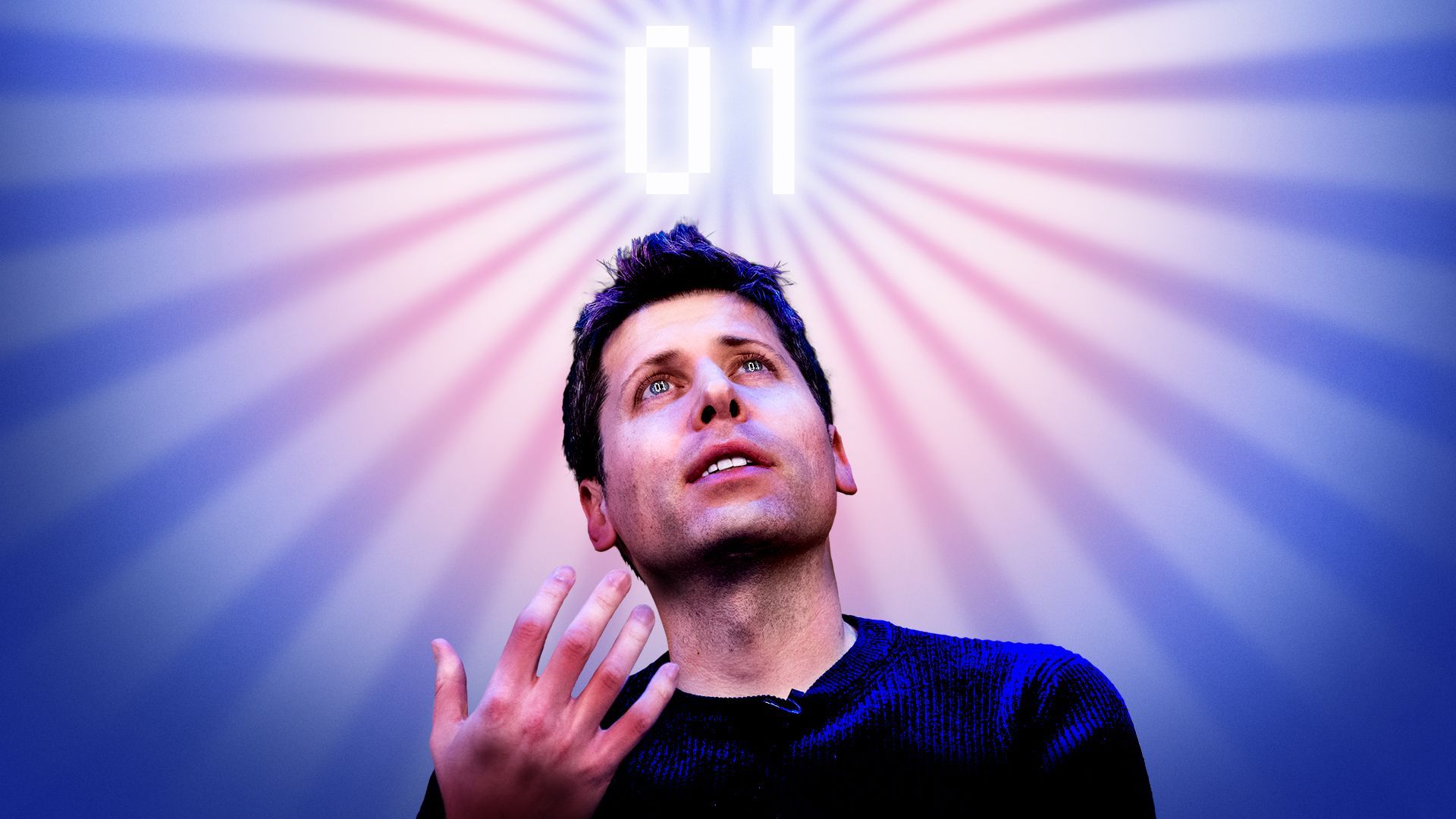
OpenAI will release its GPT-4.5 and GPT-5 models within "weeks" and "months," CEO Sam Altman said in posts on X Wednesday.
Yes, but: Altman's "roadmap update" says that the o3 reasoning model, previewed with fanfare in December, won't get its own independent release, as originally planned, but will instead be integrated into GPT-5.
The big picture: OpenAI's next big model releases will be closely watched by the AI industry to see how the company's continued massive investments in scaling up large language models are paying off.
Between the lines: ChatGPT has become a bit of a maze for users, who have to select which of several confusingly named AI models should answer their questions.
What they're saying: Altman wrote, "We want AI to 'just work' for you; we realize how complicated our model and product offerings have gotten. We hate the model picker as much as you do and want to return to magic unified intelligence."
- Altman said GPT-4.5, "the model we called Orion internally," will be "our last non-chain-of-thought model."
- "In both ChatGPT and our API," he added, "we will release GPT-5 as a system that integrates a lot of our technology, including o3."
4. Training data
- Google will test using an AI algorithm to estimate whether users are under 18 and then serve them age-suitable content. (CNBC)
- Scale AI CEO and founder Alexandr Wang and U.K. Prime Minister Keir Starmer met this week to discuss global cooperation around artificial intelligence, a source told Axios. (Axios Pro)
5. + This
This ASCII art generator is pretty great, turning any image into a version made out of letters, numbers and symbols.
Thanks to Scott Rosenberg and Megan Morrone for editing this newsletter and Matt Piper for copy editing it.
Sign up for Axios AI+