Axios AI+

April 27, 2026


AI spending is eclipsing salaries at some companies, and execs are starting to notice. Today's AI+ is 887 words, a 3.5-minute read.
👀 Situational awareness: Jury selection begins today in Elon Musk's lawsuit against Sam Altman over OpenAI's shift to a for-profit model.
- Why it matters: This case goes to the heart of one of the most consequential questions in AI: whether a company can pivot toward profit without betraying its original mission, and who gets to decide.
1 big thing: AI can cost more than human workers now

IT budgets are getting blown out as some companies increasingly spend more on AI than on employees' salaries.
Why it matters: Maybe human labor will be more cost-efficient after all.
What they're saying: "For my team, the cost of compute is far beyond the costs of the employees," Bryan Catanzaro, vice president of applied deep learning at Nvidia, told Axios.
- Uber's chief technology officer already blew through his full 2026 AI budget due to token costs, according to The Information.
- Amos Bar-Joseph, CEO of Swan AI, bragged about his Anthropic bill in a viral LinkedIn post, saying "We're building the first autonomous business - scaling with intelligence, not headcount."
Zoom out: Worldwide IT spending is expected to reach $6.31 trillion in 2026, up 13.5% from 2025, according to Gartner.
- That increase is being driven by "sustained momentum" across AI infrastructure, software and cloud services, which includes everything from the AI buildout to the cost of AI subscriptions.
Yes, but: Even companies with the biggest IT budgets will need to prove returns on AI spending over time, especially if they're answering to shareholders on quarterly earnings calls.
- That could look like proof of productivity gains or metrics that show a clear return for all this AI investment.
- "The tone is shifting a bit more into what is the true value of a worker ... human or digital?" said Brad Owens, vice president of digital labor strategy at Asymbl, which focuses on workforce orchestration.
What we're watching: How rising costs impact enterprise spending at the major AI labs.
- An OpenAI investor told Axios that the shift could benefit them, since they view Codex as superior to Claude Code at maximizing tokens efficiently, cutting down on usage costs.
- Anthropic has changed its pricing to account for a spike in demand.
The bottom line: When AI labs raise prices, big spending on AI could shift from a flex to a liability.
2. Exclusive: Adobe brings agentic AI to Firefly, with Claude next
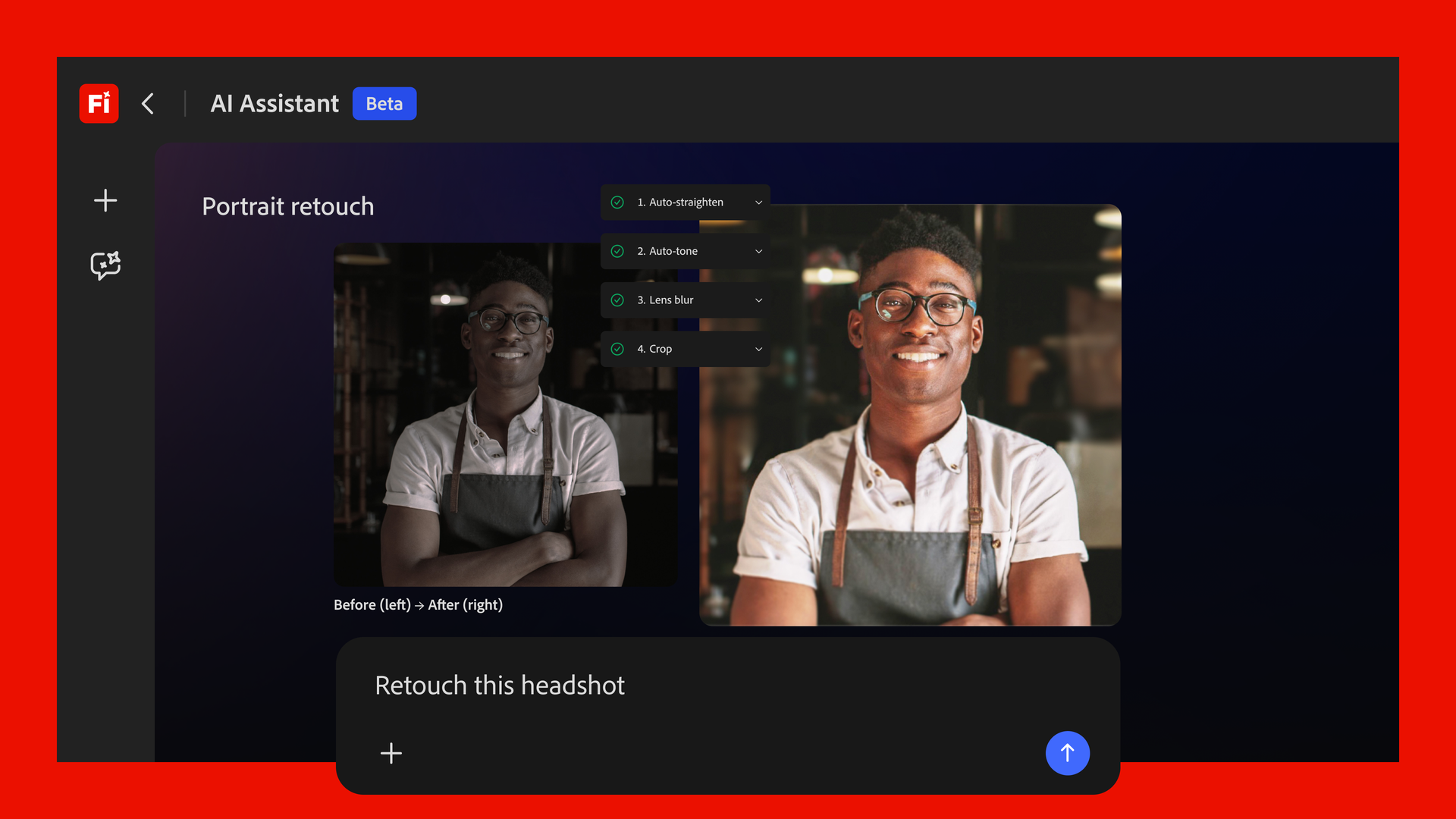
Adobe today began public testing of an agentic AI assistant inside Firefly and is building a lighter-weight version that can work inside chatbots, starting with Anthropic's Claude, company executives told Axios.
Why it matters: The move comes as chatbots are increasingly able to automate tasks that once required dedicated design tools.
Driving the news: Adobe is launching a public beta for the conversational agent in Firefly that it announced last week.
- The tool can handle complex, multistep actions and draw on tools from Adobe apps including Photoshop, Lightroom, Illustrator, Express and Premiere.
- Adobe is also working to bring a lighter-weight version of the assistant into third-party chatbots, starting with Claude. Features will depend on what actions each chatbot supports.
- The company continues to expand the number of third-party AI engines that work inside its apps, adding OpenAI's improved image model last week.
How it works: Adobe's creative agent can pull from across the company's apps and perform actions that would otherwise require opening multiple programs.
Catch up quick: Adobe has been adding AI tools to its own apps while also partnering with outside AI companies.
- Earlier chatbot integrations with ChatGPT and Microsoft Copilot focused on bringing in features from a specific app, such as Acrobat or Photoshop.
What they're saying: David Wadhwani, the president of Adobe's creativity and productivity business, told Axios that allowing people to access Adobe tools within others' chatbots could attract new customers.
- "I think some people are taking a very shallow view of what you should be able to do in these third-party applications," Wadhwani said.
- "Access to creativity is going to explode," he said. "We want to be the company that catalyzes that."
3. The pope moves to police AI


The Vatican is racing to build digital defenses for the AI era and quietly positioning itself as a global referee of what's real.
Why it matters: The Holy See is moving faster than most other legacy institutions to shape rules and guardrails in verifying reality, with urgency that's unfolding amid unusual geopolitical and digital clashes.
- The Vatican has stepped up cybersecurity partnerships and AI oversight efforts, blending defense with diplomacy and ethics.
- It has implemented formal AI guidelines and monitoring structures inside Vatican City.
- Church leaders are increasingly warning about a "crisis of truth" driven by AI-generated content.
4. Training data
- The Justice Department moved last week to join xAI's lawsuit against Colorado over a new AI law to prevent "algorithmic discrimination." (Axios)
- Canadian AI model company Cohere is combining with Germany's Aleph Alpha, in a deal that will value it around $20 billion after a concurrent Series E closes. (Axios)
- Google will invest $10 billion in Anthropic, with the potential for an additional $30 billion — days after Amazon announced its own massive investment. (Axios)
5. + This
Scientists say that a real-life "kraken" may have ruled the seas alongside dinosaurs. The 60-foot octopus is reshaping what we know about ancient oceans, per AP.
Thanks to Mackenzie Weinger for editing this newsletter and Matt Piper for copy editing.
Sign up for Axios AI+
