Axios AI+

February 05, 2026

The opening ceremony isn't until tomorrow, but the Olympic women's ice hockey tournament kicks off today with both Team USA and Canada in action. Today's AI+ is 892 words, a 3.5-minute read.
1 big thing: AI's biggest champions are feeling "useless" and "sad"


Happy but sad is the new mood among tech executives building AI, including OpenAI CEO Sam Altman.
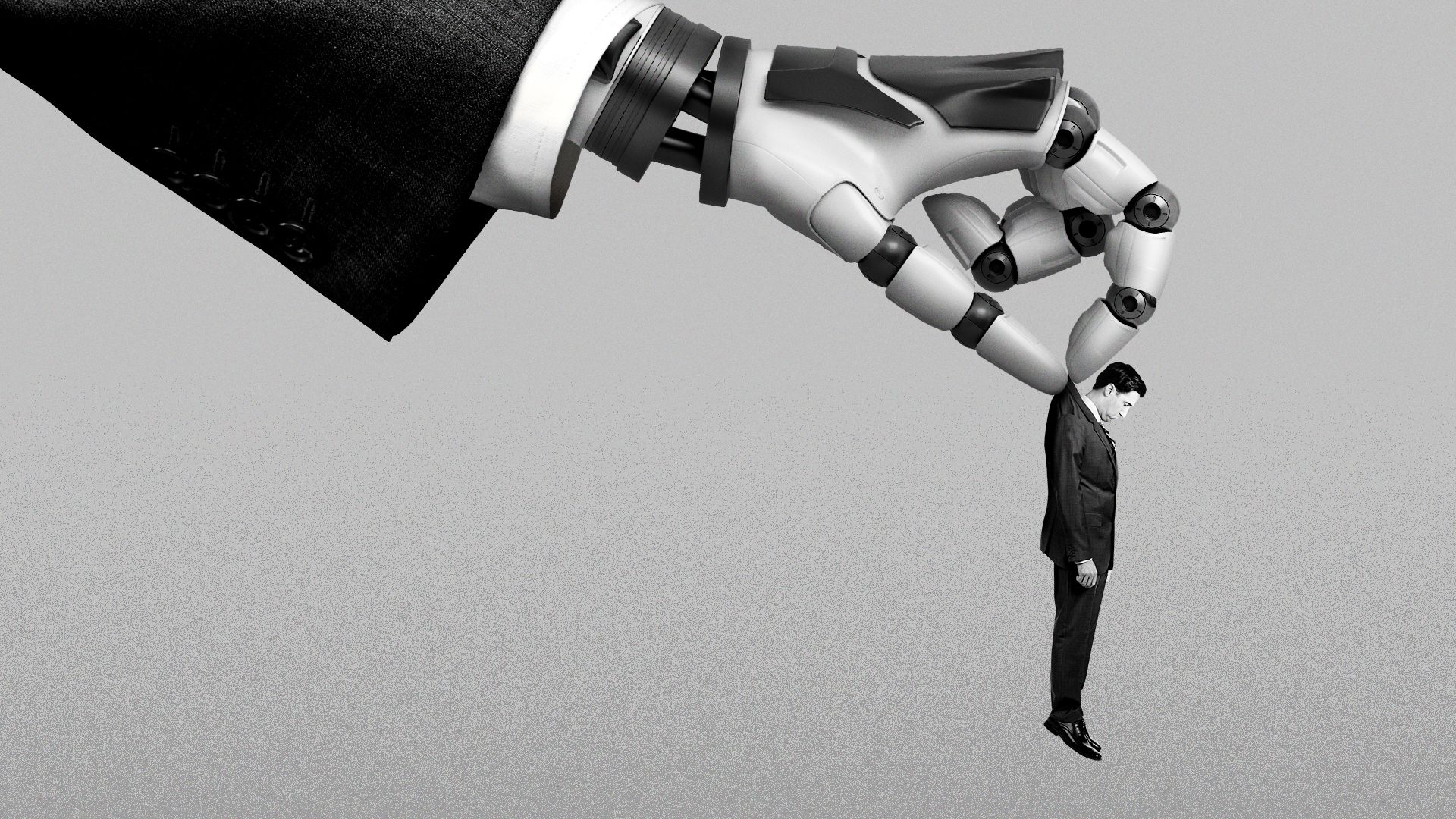
Why it matters: The tech executives building and promoting AI are now confronting its downsides firsthand, including the possibility that the technology could diminish their own roles.
State of play: For years, there have been predictions of a white-collar job bloodbath thanks to AI. More recently, AI startups are raising billions to develop "brains" for robots that could complete blue-collar and industrial jobs, too.
- AI agents are also expected to help shape agendas, coach senior leaders and reshape business calls with new thinking, insiders say.
- But tech leaders may have lost the joy.
What they're saying: On Monday, Altman said on X he was recently hit with sadness while building an app with Codex, a coding agent for ChatGPT.
- Altman said the process "was very fun." But when he asked Codex to share new ideas for the app, "at least a couple of them were better than I was thinking of."
- "I felt a little useless and it was sad," Altman wrote.
- "I am sure we will figure out much better and more interesting ways to spend our time, and amazing new ways to be useful to each other, but I am feeling nostalgic for the present," he wrote.
Zoom in: The same day, Aditya Agarwal, co-founder of the health app Bevel, shared a similar feeling after coding with Claude, saying it was "very clear that we will never ever write code by hand again. It doesn't make any sense to do so."
- "It's a weird time. I am filled with wonder and also a profound sadness," he wrote on X.
- "Something I was very good at is now free and abundant. I am happy ... but disoriented," he added.
The big picture: This isn't just emotion — AI leaders are warning policymakers about the risks they see ahead.
- Anthropic CEO Dario Amodei has called on Congress to act faster as AI capabilities accelerate and "test who we are as a species."
Reality check: CEOs and tech executives likely have gigantic safety nets to fall back on if AI takes their jobs. And it's not like CEOs will be eliminated overnight because a bot can build a spreadsheet.
- But the role of the CEO might change, experts said.
- "More and more people are going to be … chief question officers. Not chief executive officers," said Erik Brynjolfsson, Stanford Digital Economy Lab director, at an Axios Davos event in January.
- "People who define the question for a fleet of agents who then carry them out become the CQO," Brynjolfsson added.
The bottom line: The AI revolution is hitting closer to home than its creators expected.
2. OpenAI launches platform to manage AI agents

OpenAI today released a new enterprise platform, Frontier, designed to let large companies build, deploy and manage fleets of AI agents that plug into their existing systems.
Why it matters: OpenAI is stepping up its push into enterprise services as rivals gain ground with business customers.
Driving the news: OpenAI's Frontier is meant to help companies integrate and manage AI agents inside business applications, said Denise Dresser, chief revenue officer at OpenAI.
- "What's really missing still for most companies is just a simple way to unleash the power of agents as teammates that can operate inside the business without the need to rework everything," Dresser said on a briefing call with reporters.
Between the lines: OpenAI is pitching Frontier as a solution to companies lacking the tools to manage the waterfall of AI capabilities coming their way, including features like:
- Identity and governance: Each agent gets a defined identity, explicit permissions, and guardrails aimed at regulated environments.
- Quality improvement: Built-in evaluation and optimization tools to help agents learn what good work looks like over time through feedback.
- Shared business context: Connects data warehouses, CRMs, ticketing tools, and internal apps so agents can understand enterprise-specific workflows.
- Execution environment: Allows agents to plan and act across files, tools and code in a dependable runtime that can run locally, in an enterprise cloud, or OpenAI-hosted.
Zoom in: Dozens of companies have already adopted Frontier, including Intuit, Uber, State Farm and Thermo Fisher.
- A global financial services firm using the technology got 90% more time back for their client-facing team, according to OpenAI.
- Another customer in tech said it saved 1,500 hours a month in its product development.
3. Training data
- Another Super Bowl means new commercials, but one marketing expert predicts companies will avoid airing ads made with AI. (Axios)
- Anthropic is pledging to keep advertising out of Claude, alongside a Super Bowl spot that takes a direct shot at competitors like OpenAI integrating ads into their chatbots. (Axios)
- Alphabet is going to spend more money on AI this year, and so are all the other hyperscalers that have reported earnings so far. (Axios)
- AI meets bobsled and speedskating. (NBC News)
4. + This

One of the first things Team USA athletes do when they land is get outfitted by Ralph Lauren. Yesterday, I got to chat with the four members of the women's moguls team as they went through the fitting process.
Thanks to Mackenzie Weinger for editing this newsletter and Matt Piper for copy editing.
Sign up for Axios AI+
