Axios AI+

November 16, 2026



Mady here ahead of a big week of NYC events for our BFD conference. If you're coming, please find me and say hello!
Today's AI+ is 1,224 words, a 4.5-minute read.
1 big thing: The AI boom faces a dot-com reckoning

The downfall of Nvidia CEO Jensen Huang adds an explosive new risk to an already-strained AI boom, threatening to burst a financial bubble even if the technology ultimately succeeds.
Why it matters: History shows that world-changing technology and devastating financial bubbles often go hand in hand. A market reckoning won't stop the AI revolution. But as with the dot-com crash, it could vaporize trillions in investor wealth as expectations come crashing back to earth.
The big picture: "No sane person questions whether AI works. And that 'working' status is precisely what makes a bubble possible," veteran technology investor Paul Kedrosky told Axios.
- The risks have grown as technology companies commit trillions to infrastructure, increasingly relying on debt, investments in one another and complicated financing arrangements to keep the expansion going.
What they're saying: RSM chief economist Joe Brusuelas told Axios that Huang's departure could trigger a "wholesale bursting" of the AI bubble.
Zoom out: The financial and political vulnerabilities were piling up well before the Nvidia scandal.
- Spending is outpacing expected returns. AI providers are projected to spend $7 trillion on infrastructure through 2030, while Gartner forecasts no more than $3.6 trillion in related revenue over the same period.
- Valuation expectations are being reset. Anthropic's newly announced IPO terms imply a valuation well below earlier hopes of as much as $2 trillion. OpenAI also reportedly secured less cash and a lower valuation than it had hoped for in a recent funding round.
- Investors are growing more cautious. Retail traders, who have routinely bought previous AI-related market dips, instead became net sellers of U.S. stocks during the sharp Nov. 5 sell-off, according to Vanda Research.
- Financing is getting harder. The debt-fueled expansion was already showing signs of strain before the latest turmoil. Rising borrowing costs and an avalanche of new bond offerings have made lenders wary.
- Political opposition is growing. A wave of election victories for AI-skeptical candidates, along with widespread voter support for data center restrictions, threatens to delay construction, increase costs and undermine the assumptions behind some projects.
- Regulatory risks are mounting. Huang's downfall has intensified bipartisan demands for tighter restrictions on advanced chip exports to China, which increasingly appear likely to pass.
The risk: A retreat in AI investment could become self-reinforcing, turning a market correction into a much broader financial reckoning.
Yes, but: There is considerable evidence that AI itself is a real and potentially transformative technology — and that demand is growing rapidly.
- Anthropic reported an annualized revenue run rate of $81 billion at the end of October, up from $71 billion a month earlier.
- OpenAI grew quarterly revenue roughly 50% to $10 billion in the third quarter, according to the Wall Street Journal, even as its adjusted operating losses reached $10.9 billion.
- Businesses are already using AI to write software, automate tasks and perform work that previously required significant human effort.
- Tighter U.S. export controls could also benefit American AI developers by limiting Chinese rivals' access to advanced computing power, even as they complicate Nvidia's business prospects.
The historical lesson: Some of the greatest technological transformations have been accompanied by speculative investment booms that ended painfully for investors.
- "I have no doubt that AI will be transformative. That does not preclude a financial bubble," MIT economics professor Ricardo Caballero told Axios.
The bottom line: "AI can deliver enormous value to users while the companies building the infrastructure earn far less than their investors expected," Columbia Business School professor Stijn Van Nieuwerburgh told Axios.
2. Right tries to pull Trump away from Big Tech
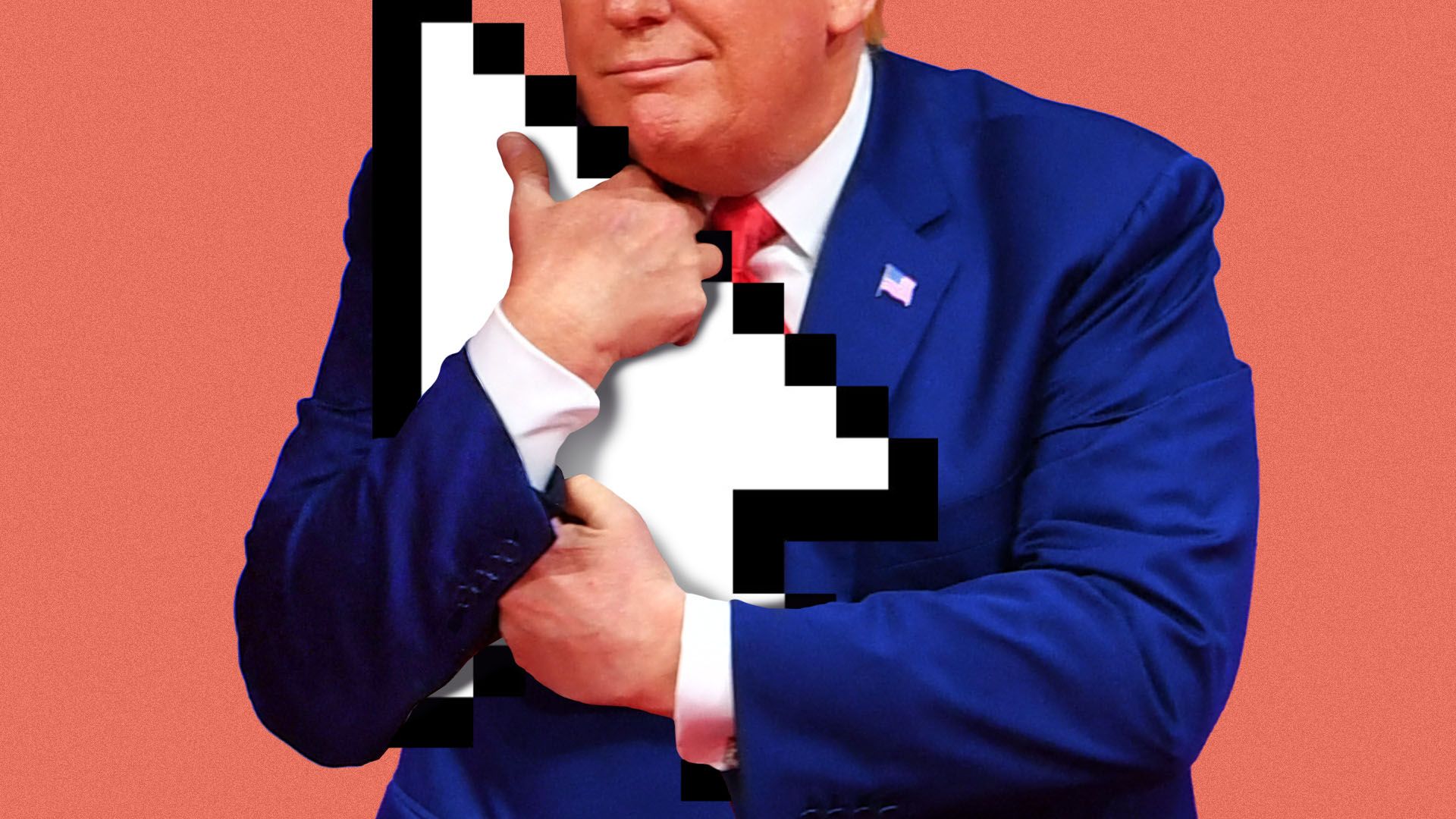
Prominent conservative thinkers and MAGA figures are seizing on former Nvidia CEO Jensen Huang's affair with an alleged Chinese spy to pull President Trump away from his alliance with the tech right.
Why it matters: The Nvidia scandal highlights some of the political weaknesses for Trump in allowing himself to be defined by his connections to an increasingly unpopular group of companies.
- Right-wing players are hoping the bombshell revelations about Huang's affairs will chip away at the president's embrace of the tech industry and offer an opening for anti-tech voices in his administration.
What they're saying: They view the midterm elections as proof that people across the political spectrum hate AI and data centers and view Silicon Valley as too powerful.
- Trump's perception of China "has always been entirely commercial and transactional. His view was, 'We're getting screwed. I'm going to get a better deal,'" said Oren Cass, founder of conservative think tank American Compass.
- Cass, who has warned about Nvidia risks for more than a year, said the allegations of espionage are the strongest evidence yet that China is not a commercial partner but an adversary that is going to "subvert the American political process in ways that end up humiliating the president."
- MAGA figure Steve Bannon, meanwhile, said in a text he has called Huang "a CCP 'Agent of Influence' a thousand times" and that it's an "OPEN SECRET."
- "We need to actually cut OFF ALL THE CHIPS NOW," Bannon added as Congress warms up to legislation aimed at that.
What's next: Conservatives are hoping the scandal changes who gets a seat at the table for the remainder of Trump's presidency as 2028 and mounting AI unpopularity approach.
3. Britain brings its AI pitch to Silicon Valley

Britain wants a bigger piece of the AI boom without becoming wholly dependent on American technology, the country's AI minister told Axios ahead of a visit to Silicon Valley this week.
Why it matters: The U.K. is trying to position itself as both an attractive destination for U.S. AI investment and an independent voice on how the powerful technology should be developed and regulated.
- Its approach offers a contrast to the European Union's sweeping AI legislation and the largely hands-off approach favored by the Trump administration.
Driving the news: U.K. AI minister Kanishka Narayan is visiting the Bay Area this week for meetings with U.S. government counterparts, AI startups and leading AI companies. He is also scheduled to speak tomorrow at Stanford, where he earned his MBA.
- "Britain is back in business when it comes to AI," Narayan told Axios in an interview Friday.
- He said Britain wants a larger share of AI hardware and manufacturing, both to create British jobs and to strengthen the resilience of the U.S. and U.K. technology supply chains.
The big picture: Rather than attempting to recreate the entire AI industry domestically, Britain wants to build strength in areas where it can gain leverage while relying on a diversified group of allies for other technologies.
4. Training data
The Jensen Huang story continues to grow, and even the New York Post joined the party.
Here are a few more from the weekend:
- Allies of Huang are plotting for him to return to the top spot, apparently seeing an opening for a Sam Altman-style comeback. (Financial Times)
- Treasury Secretary Scott Bessent was having none of it yesterday, urging Nvidia to hire an outside CEO. (Axios)
- The New York Times offered a six-byline, comprehensive narrative of the entire saga, going back to last year when the paper asked about Megaspeed.
5. + This
The Nvidia saga even got the "SNL" treatment over the weekend (with Bowen Yang playing Huang).
Thanks to Bradley Olson for editing this newsletter and Matt Piper for copy editing.
Sign up for Axios AI+
