Axios AI+

March 25, 2024

Ryan here. Today's AI+ is 1,187 words, a 4.5-minute read.
Situational awareness: The EU said it is opening major new investigations of Apple, Google and Meta over failures to comply with the DMA, the region's new rules for giant "gatekeeper" companies, the Financial Times reports.
1 big thing: Amazon wants to personalize advanced AI
Illustration: Aïda Amer/Axios
Advanced AI won't arrive as a single, monolithic intelligence, but as a whole swarm of personalized systems tuned to individual needs, a key Amazon AI executive predicts.
What they're saying: Amazon wants to use its Alexa voice bot as one building block toward that goal, says Vishal Sharma, Amazon's VP for artificial general intelligence, or AGI.
- The future is a personal AGI for everyone, Sharma told Axios onstage at SXSW earlier this month.
The big picture: AGI remains the industry's sought-after grail. OpenAI's mission is to deliver it for humanity's benefit, and both Google and Meta are committed to the quest as well.
- But industry players don't agree on how to define AGI. It could be AI that can outperform humans on standardized tests; AI that can hold down a job; or AI that demonstrates consciousness.
- Delivering AGI "is going to be a series of developments" rather than a big bang in which one company or government announces it has arrived, Sharma said.
Between the lines: Both Google and the Microsoft/OpenAI alliance are committed to seeking AGI by making their models bigger and more powerful.
- Amazon's vision suits its role as the leading provider of cloud services. A world where everyone has a personalized AGI is a world that requires a lot of infrastructure support that Amazon is positioning itself to provide.
Yes, but: "Personal" AGI systems provided by big tech companies may be tailored to your individual needs and style, but they'll pose the same privacy and control challenges as social media — unless users own and control all their data.
Amazon has long championed the idea of "ambient intelligence," exemplified by the Alexa assistant. It's AI that presents itself when needed, then fades into the background when it's not.
- Today, "under the covers there's something like 30 models" powering Alexa's more than 130,000 skills, Sharma said.
- 40% of smart home interactions where Alexa is in use are now initiated by Alexa, without a customer saying anything, per Amazon.
What's next: Alexa has been Amazon's starting point toward AGI, but Sharma is striving to "apply AGI to everybody and every situation" — and that increasingly means delivering embodied AI.
- Amazon's forays into embodied AI include a smart glasses range and Astro, an AI-powered household robot.
Proactive AI interactions will be increasingly common, Sharma says.
- Alexa's Hunches feature can lock your door if you accidentally leave it open, but Sharma wants to push much further.
- "Imagine a patient whose physician is automatically consulted by their AGI based on a change in some vital metrics and then care suggestions are brought," Sharma said.
Reality check: We're still a long way from AGI, and today's generation of AI models may hit a ceiling.
- "There's more fundamental work that needs to be done," Sharma said. He worries that language may be too abstract to train AI to the degree of knowledge necessary to attain AGI.
The bottom line: Sharma is an avid reader of dystopian science fiction but remains convinced AGI will be the foundation of an "age of abundance" — a version of venture capitalist Marc Andreessen's manifesto.
- Amazon's workforce has "doubled in size in the last few years," even as the company integrated generative AI into all its workflows and products, Sharma said.
2. Apple's secrets on the line
Illustration: Sarah Grillo/Axios
Win or lose, the Justice Department's antitrust suit against Apple could force the company to do something it hates: It will have to share detailed info about its inner workings, Ina reports.
Why it matters: The famously tight-lipped company likes to carefully craft every narrative, releasing only information that makes its products and business practices look good.
- But business lawsuits involve "discovery," in which the other side gets to look through a company's emails, reports and numbers, and some of that material is made public at trial.
Flashback: Apple has faced this challenge before. After choosing to sue Samsung about a decade ago, it was forced to share details of unlaunched prototypes, market research and its secretive design process.
- That suit even dragged in details that other tech companies wanted to keep secret, with Intel, Qualcomm and others filing motions to keep their business dealings out of the public record.
- In 2005, the company was forced to essentially confirm unannounced products when it went to court to punish people who leaked its product info.
Be smart: The antitrust case is likely to force Apple to reveal even more of its business dealings, though it may be able to keep its most confidential arrangements under seal.
The other side: An Apple official told Axios that new secrets won't necessarily be exposed.
- "We have litigated dozens of high-profile cases over the last 15 years," the official said. "DOJ has already had access to millions of documents during the course of the investigation. Yet they only used the same tired documents that have been part of the public record."
The big picture: Apple is particularly averse to having its business arrangements made public, but many tech companies have faced similar dilemmas when facing antitrust and other legal challenges.
- Such suits inevitably become uncomfortable for all parties, as happened in the recent battle between Apple and Fortnite maker Epic Games.
Between the lines: Lawsuits also create risk through distractions, taking time and energy away from other priorities or reducing risk appetite, challenges Microsoft faced during its long antitrust battles in Washington and Brussels.
3. Stability CEO resigns from generative AI company
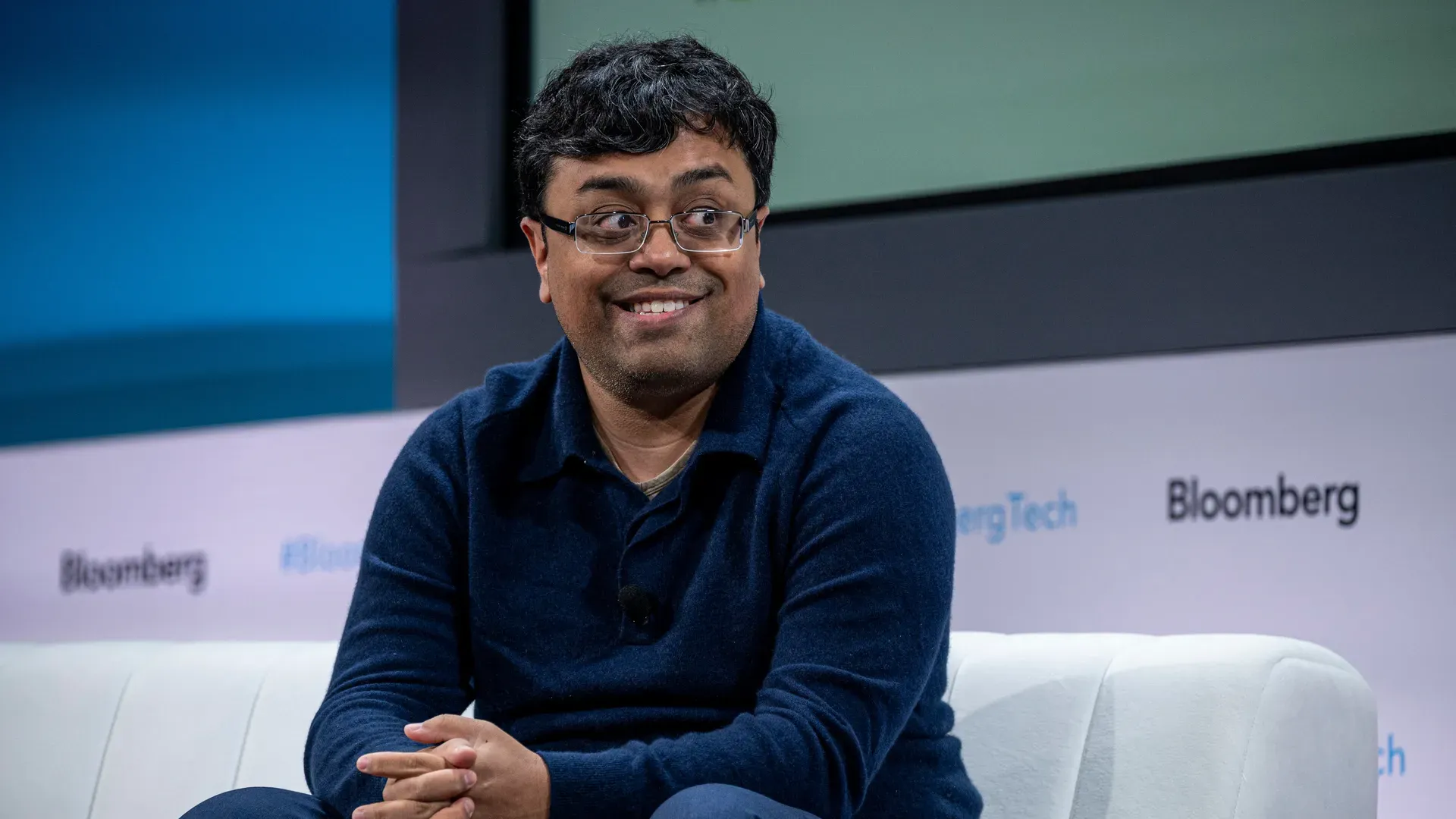
Emad Mostaque, founder of Stability AI Ltd. Photo: David Paul Morris/Bloomberg via Getty Images
Emad Mostaque stepped down as CEO and from the board of Stability AI, the company announced late Friday, Axios' Kia Kokalitcheva reports.
Why it matters: As co-creator of Stable Diffusion, a popular AI-based image generator, Stability helped kick off the current generative AI boom in 2022.
- The company has been buffeted by reports about some of the founder's past claims, corporate dysfunction and high-profile departures, among other issues.
State of play: The company's board has appointed chief operating officer Shan Shan Wong and chief technology officer Christian Laforte as interim co-CEOs.
What they're saying: "I believe strongly in Stability AI's mission and feel the company is in capable hands," Mostaque said in a statement. "It is now time to ensure AI remains open and decentralized."
- In a post on X, Mostaque added that you can't "beat centralized AI with more centralized AI."
Flashback: Late last year, the company was reportedly exploring a possible sale, and at least one investor, Coatue, was calling for Mostaque's resignation.
By the numbers: The company raised $101 million at a reported valuation of more than $1 billion in October 2022, and has reportedly sought more funding at a $4 billion valuation.
4. Training data
- The rapid adoption of generative AI tools is making the GPUs that power them a juicy cybersecurity target. (Axios)
- New Chinese procurement rules will bar Intel and AMD chips, along with Microsoft Windows, from government computers. (Financial Times)
- Tennessee is the first state to offer voice and likeness protections in response to new AI capabilities, with the ELVIS Act now in force. (NPR)
- OpenAI's latest charm offensive targets Hollywood executives as it seeks customers for its unreleased Sora video generation product. (Bloomberg)
5. + This
Lego presented Telefónica, the Spanish telecoms operator, with a 264,820-piece, nearly 1,000-pound replica of its massive Madrid headquarters.
Thanks to Scott Rosenberg and Megan Morrone for editing this newsletter and to Caitlin Wolper for copy editing it.
Sign up for Axios AI+

Scoops on the AI revolution and transformative tech, from Ina Fried, Madison Mills, Ashley Gold and Maria Curi.