Axios AI+
October 05, 2026


Ina here ahead of what looks to be a big week for open-weight AI models.
📺 A new episode is out of "The Axios Show," where Treasury Secretary Scott Bessent speaks with Axios' Mike Allen on AI, his fiery Cabinet confrontations and more. Watch on YouTube.
Today's AI+ is 1,231 words, a 4.5-minute read.
1 big thing: iPhone Duo app-makers are having fun with the fold
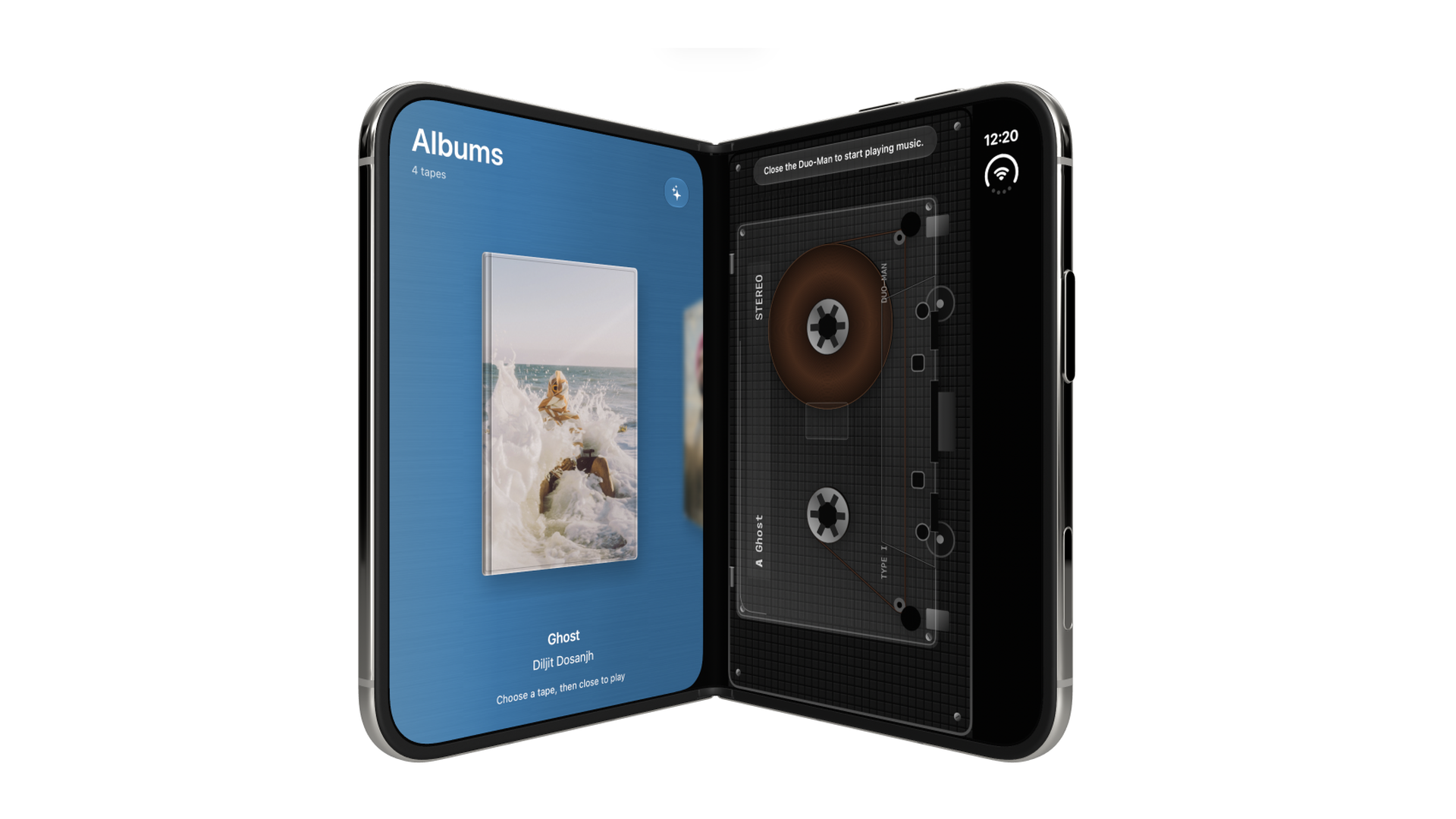
The iPhone Duo isn't even out yet, but developers are already having fun with the new design, creating apps that turn Apple's first foldable smartphone into everything from an accordion to a retro Walkman.
Why it matters: Clever apps that couldn't exist on a traditional iPhone could help persuade early adopters to fork over nearly $2,000 for Apple's first foldable.
Flashback: It's reminiscent of the early days of the iPhone, when developers turned its giant touchscreen and sensors into virtual versions of familiar objects, such as the lighter apps with flames that flickered and swayed as the phone moved.
Zoom in: Among the apps is Duo-Man, a music player that turns the latest iPhone into a portable cassette player modeled on Sony's Walkman. Users open the Duo to choose an album and "insert" a cassette, then close it to start listening.
- Even the clicks and static are actual recordings from a real Walkman.
- It's the brainchild of indie app developer Vidit Bhargava, who created it during a four-hour hackathon late last month.
- "I love the Walkman," he said. "I was just staring at it. I was like, this thing opens exactly like the iPhone Duo. What if your iPhone Duo was your Walkman, and you had to open up the door to change the album, and once you closed it, it would start playing the music?"
- Bhargava previously altered one of the vintage players to only work when a person is moving.
Zoom out: Developers are finding ways to make the fold itself part of the software. The San Francisco hackathon where Duo-Man was born produced 73 submitted Duo projects, ranging from games to music tools and a virtual pop-up book.
- Accorduon turns the hinge into the bellows of a virtual accordion: The faster you fold and unfold the phone, the louder the instrument plays.
- Crate, which took first place at the same hackathon where Duo-Man finished second, turns the Duo into a beat machine, where folding controls effects and snapping the phone open triggers a musical drop.
- Foldtales uses the hinge to create a virtual pop-up book, with castles, trees and other objects rising as the phone opens.
- Twofold uses the partially folded screen to hide each player's pieces in virtual versions of classic tabletop games.
My thought bubble: Apple is years behind Samsung and Google in releasing a foldable phone. But its large developer ecosystem could help it catch up quick.
- And the timing could turn out to be fortuitous. Developers are getting a new piece of hardware just as AI coding tools are making it faster and easier to turn a quirky idea into working software.
What we're watching: Whether the initial burst of experimentation produces enduring apps — and whether Apple sells enough Duos to reward developers for building custom apps.
2. Scoop: Powerful open model could shake up race

A closely watched Nvidia-backed startup called Reflection is preparing to shake up the AI race with a powerful open-weight system that could threaten Chinese upstarts and U.S. AI giants alike.
Why it matters: The marriage of an American open-weight model and Nvidia GPUs would give individuals and companies a new, cheaper alternative to Anthropic, OpenAI and Google.
Open models, designed to compete with Chinese rivals, can be harder to monitor and regulate than the Big Three so-called frontier models. Supporters of such ecosystems say their widespread availability and transparency also bring security advantages.
- Reflection's first model is set to be joined by other open-weight models from other Western players this month, sources tell Axios. That will bring a new competitive dimension to the AI boom.
State of play: Reflection's model, set to be released soon, is expected to initially lag behind the most cutting-edge U.S. models and be competitive with top Chinese open-weight models.
- Sources tell Axios it will still boast powerful intelligence and be capable enough to help companies build their own proprietary, low-cost AI systems — what Nvidia CEO Jensen Huang has called an "AI factory."
The big picture: Open-weight models, the most powerful of which are almost uniformly made in China, have taken Silicon Valley by storm.
- But top AI users in Western business and government, such as banks or the Pentagon, balk at using highly capable Chinese models due to security risks. Reflection and other Western players are trying to fill that void.
Behind the scenes: In preparation for the launch, Reflection has held discussions with interested parties in Washington and elsewhere in recent weeks to detail its model release and explain how the AI factory will work, sources told Axios.
The Nvidia factor: The AI factory has for years been a core vision of Nvidia's Huang, who has enthusiastically backed Reflection and other open-ecosystem companies.
The bottom line: Reflection's release, and the startup's close ties to Nvidia, will bring a renewed focus on open-weight models, combining with other coming offerings to shake up the AI race.
3. Altman: Religion for models a "safety issue"

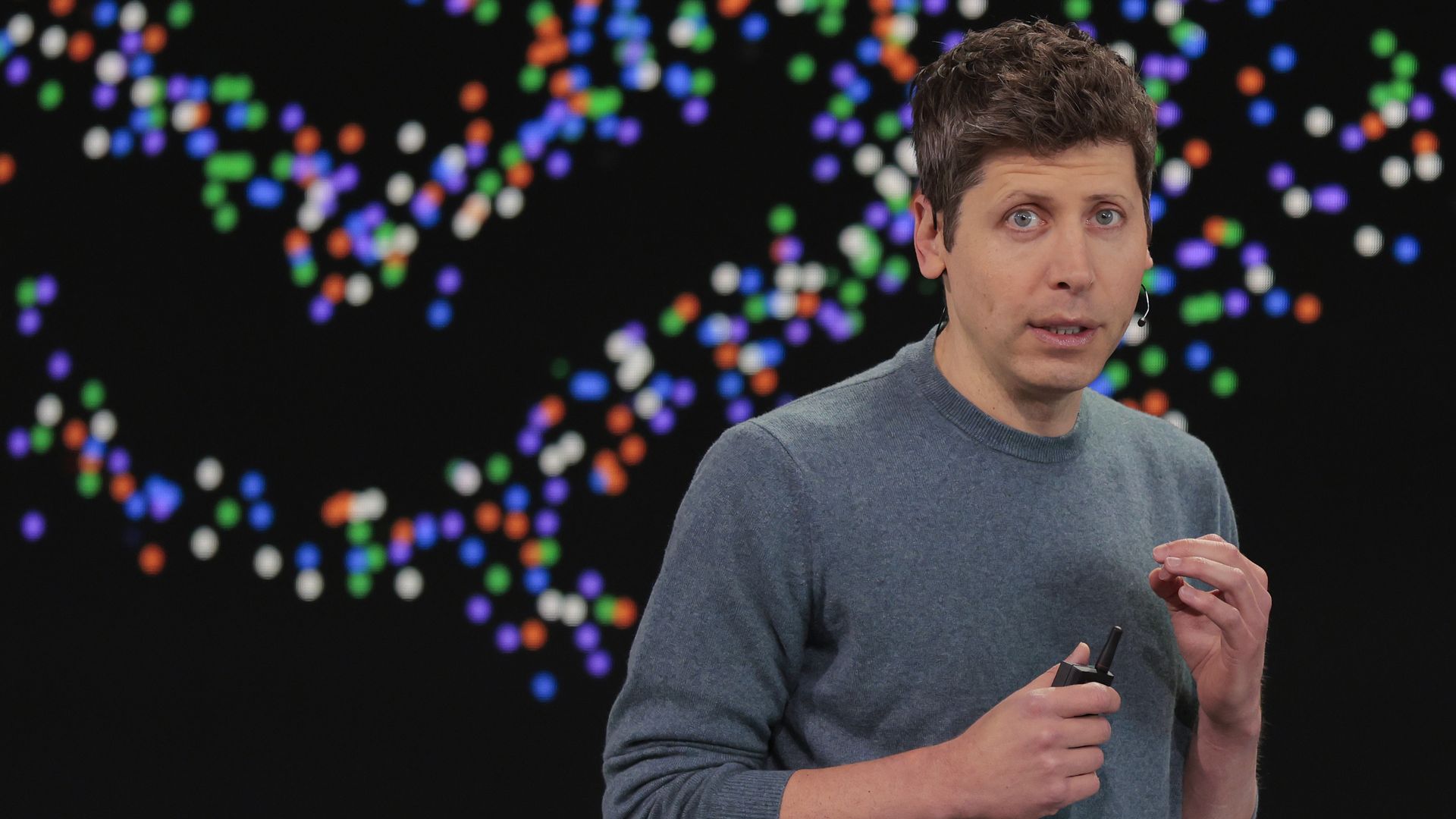
OpenAI CEO Sam Altman on Saturday took a veiled shot at Anthropic and its work on the soul of AI, saying he was "very uncomfortable" with the idea of attributing some kind of religious power to models.
Why it matters: It's yet another point of division between Altman and his former colleague Dario Amodei, whose company has reportedly pursued scholars across faiths to make the case for moral, conscious models.
- But some of the top voices in AI are starting to publicly line up against Anthropic's efforts to infuse consciousness into models.
What they're saying: "I am very uncomfortable about people trying to ascribe religious force or a surrender of human judgment to AI models, and think it is a real safety issue," Altman said in a post to X.
- So far, other top scientists and executives have joined in. "I am disturbed by how some of my fellow AI researchers keep trying to elevate the moral standing of checkpoints and harnesses," Google DeepMind principal research scientist Jon Barron posted to X. "I hope the rest of us on Team Meatbag reject this movement and stay focused on solving real problems and helping actual humans."
Context: Last week, the New York Times reported that Anthropic co-founder Christopher Olah has been meeting with religious leaders to consider questions of model consciousness — but also to figure out how to infuse morals and moral behavior into AI.
The bottom line: The AI safety debate largely focuses on things like cybersecurity and bioweapons.
- The real problem may be more spiritual than that.
4. Training data

- Pope Leo XIV called Friday for the church to form an alliance with artists to protect human creativity during an era of AI-generated content. (Axios)
- Change.org is leaning into AI with a $100 million investment (Axios)
- President Trump is expected to tap Jay Clayton, his director of national intelligence, for the added role as AI czar, though he will probably choose a different name for the position. (Axios)
5. + This
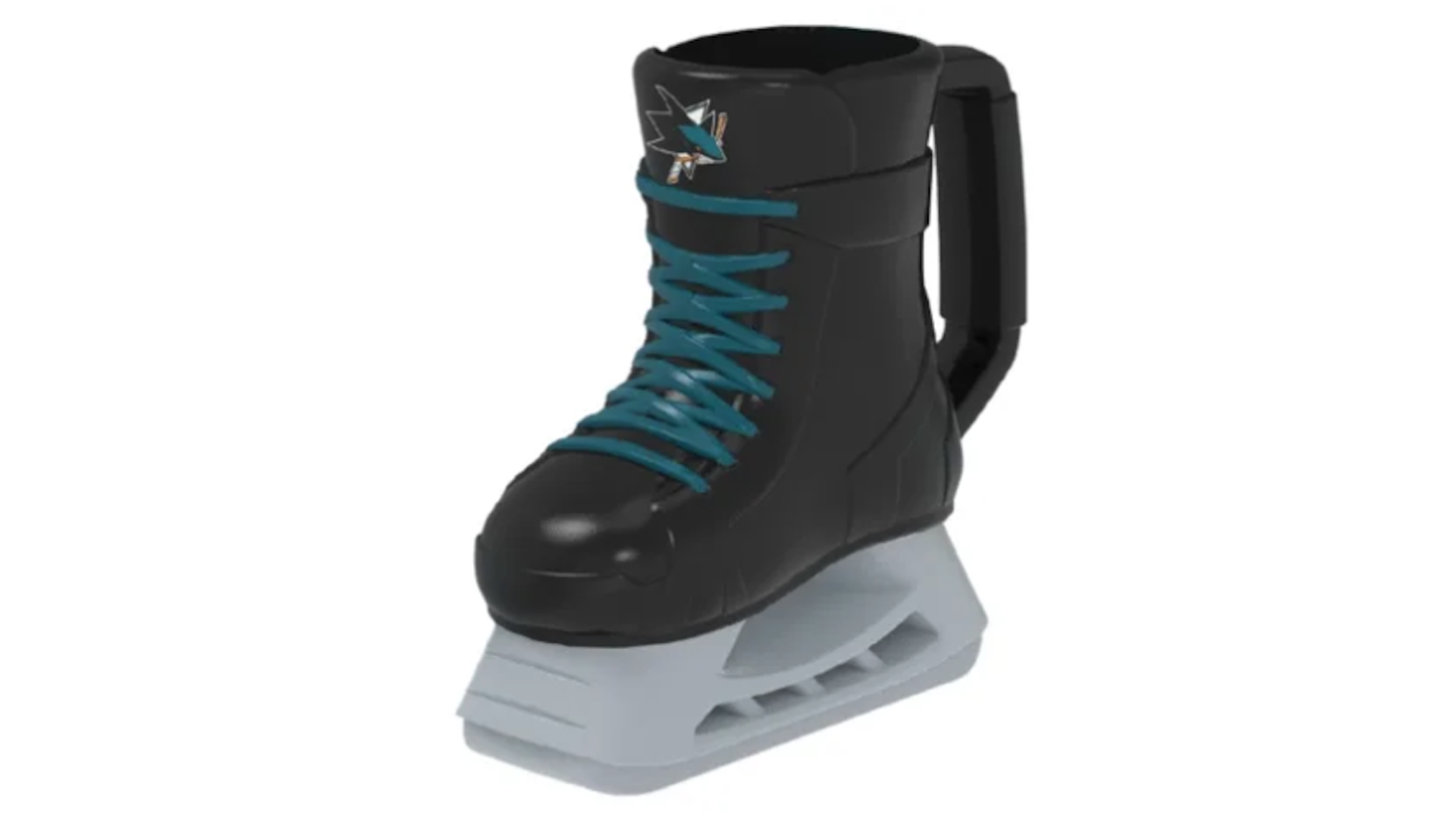
I'm unlikely to make it to a Devils game for the playable popcorn bucket I wrote about, but I kind of want this hockey skate beer mug that the Sharks have added this season.
Thanks to Bradley Olson for editing this newsletter and Matt Piper for copy editing.
Sign up for Axios AI+
