Axios AI+

July 14, 2025

1 big thing: Jensen vs. Dario — "There will be more jobs"


Nvidia CEO Jensen Huang, bristling at Anthropic CEO Dario Amodei's warning of a looming white-collar apocalypse, tells Axios that artificial intelligence will create vastly more and superior jobs.
Why it matters: The Huang vs. Amodei debate, playing out in exclusive interviews with Axios, captures a deep divide among industry leaders over America's job market in a highly automated world.
- Both agree we'll soon have AI that's smarter than humans — and will radically reshape how people work and companies operate.
Amodei told us AI could wipe out half of entry-level white-collar jobs in a few years. His comments sparked weeks of national debate over the dangers of fast and furious technological advancements in AI.
- Huang — whose company last week became the most valuable in history, worth $4 trillion — responded: "I don't know why AI companies are trying to scare us. We should advance the technology safely just as we advance cars safely. ... But scaring people goes too far."
- Noting Amodei and other AI leaders issuing warnings are "really, really consequential and smart people," Huang said he was eager to "offer a counter-view," based on "all the evidence of history."
"If we have no new ideas," Huang began, "and the work that we're doing is precisely all that needs to be done ... and no more than what humanity will ever need, then when we become more productive, [Amodei's warning would be] absolutely correct — we will need fewer people doing that work."
- "However, if you now look at history and you ask yourself: 'Do I have more ideas so that, if I were to be more productive, I could do more?' Then, you would describe a condition that reflects human history — that we have become more productive over time."
"We've become more productive raising crops," Huang continued, noting that it's not like all of a sudden, as a result of mechanization, "everybody ran out of work."
- "Everyone's jobs will change," he said. "Some jobs will be unnecessary. Some people will lose jobs. But many new jobs will be created. ... The world will be more productive. There will be higher GDP [gross domestic product, or total output]. There will be more jobs. But every job will be augmented by AI."
In response to Huang's comments, Jack Clark, co-founder and head of policy at Anthropic, told us: "Starting a conversation about the impact of AI on entry-level jobs is a matter of pragmatism. As producers of this technology, we have an obligation to be transparent and clear-eyed about AI's potential societal and economic impacts."
- "We should be discussing these issues in the open and preparing for them as needed — just like we should be discussing and preparing for its transformative benefits."
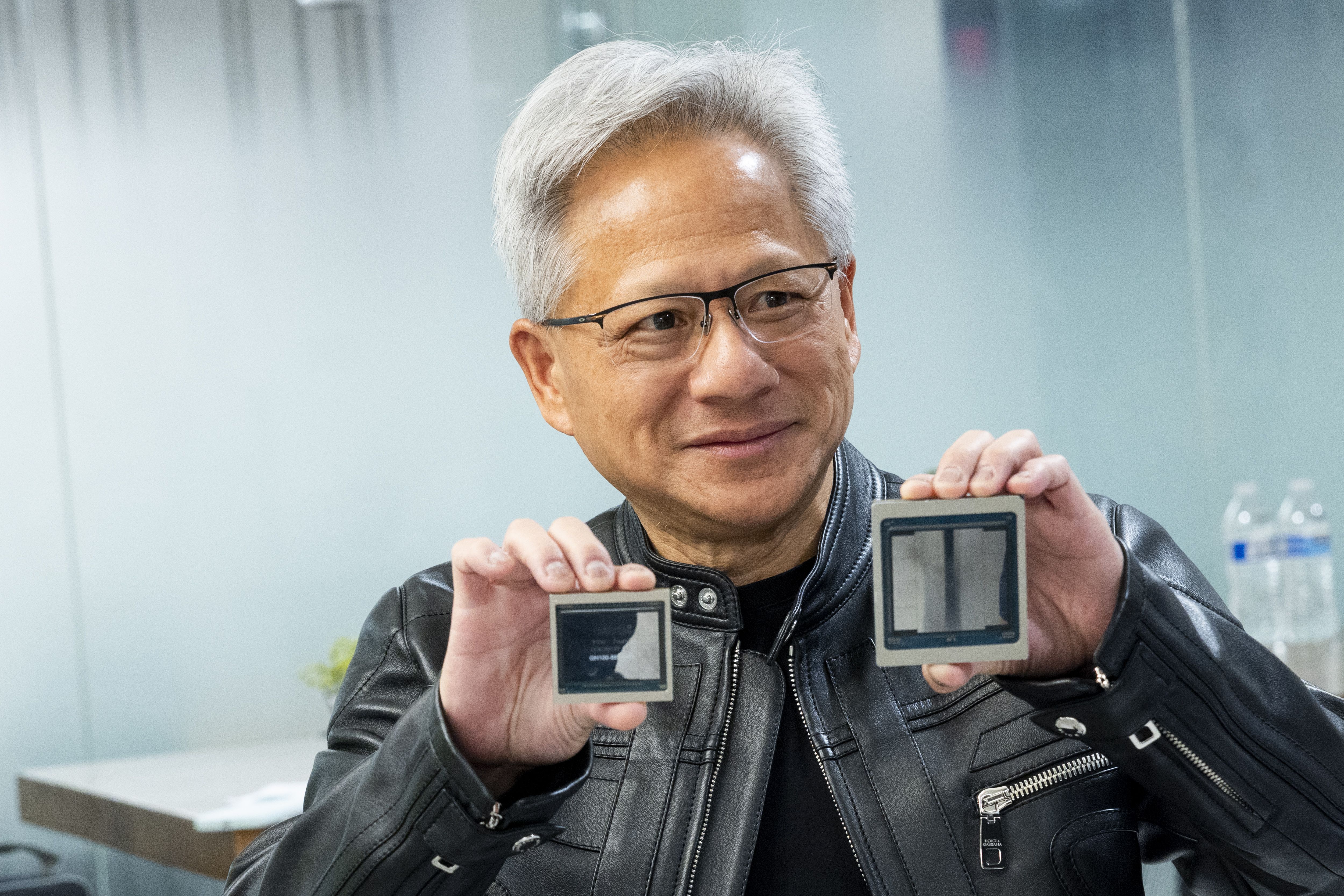
The big picture: Huang, 62, started Nvidia 30+ years ago — back in 1993, before the dotcom bubble. The former engineer was relatively anonymous when Nvidia's chips were used for graphics for computer gaming.
- During last week's visit to D.C. from his home and headquarters in the Bay Area, Huang met with President Trump at the White House and sat down with senators on Capitol Hill. Huang then headed straight for Beijing, where he'll start meeting with Chinese officials today.
Huang's prescription: For knowledge workers who want to prepare and protect themselves, Huang recommends learning to use AI "to transform the way you work."
- "You might go forward 10 years from now," Huang said, "and just realize: The actual thing I was doing before that I considered to be my job, I don't do anymore. But I still have a great job — in fact, even better than before. The things that I'm doing at my job are different, because AI is helping me do a lot of it. But I'm doing a lot more meaningful things."
Zoom out: Huang loves to talk about a "new industrial revolution" where AI benefits people who work with their hands to build data centers and create other AI infrastructure — including the chips that last week gave Nvidia a market capitalization of $4 trillion (and made Huang worth $144 billion, eclipsing Warren Buffett).
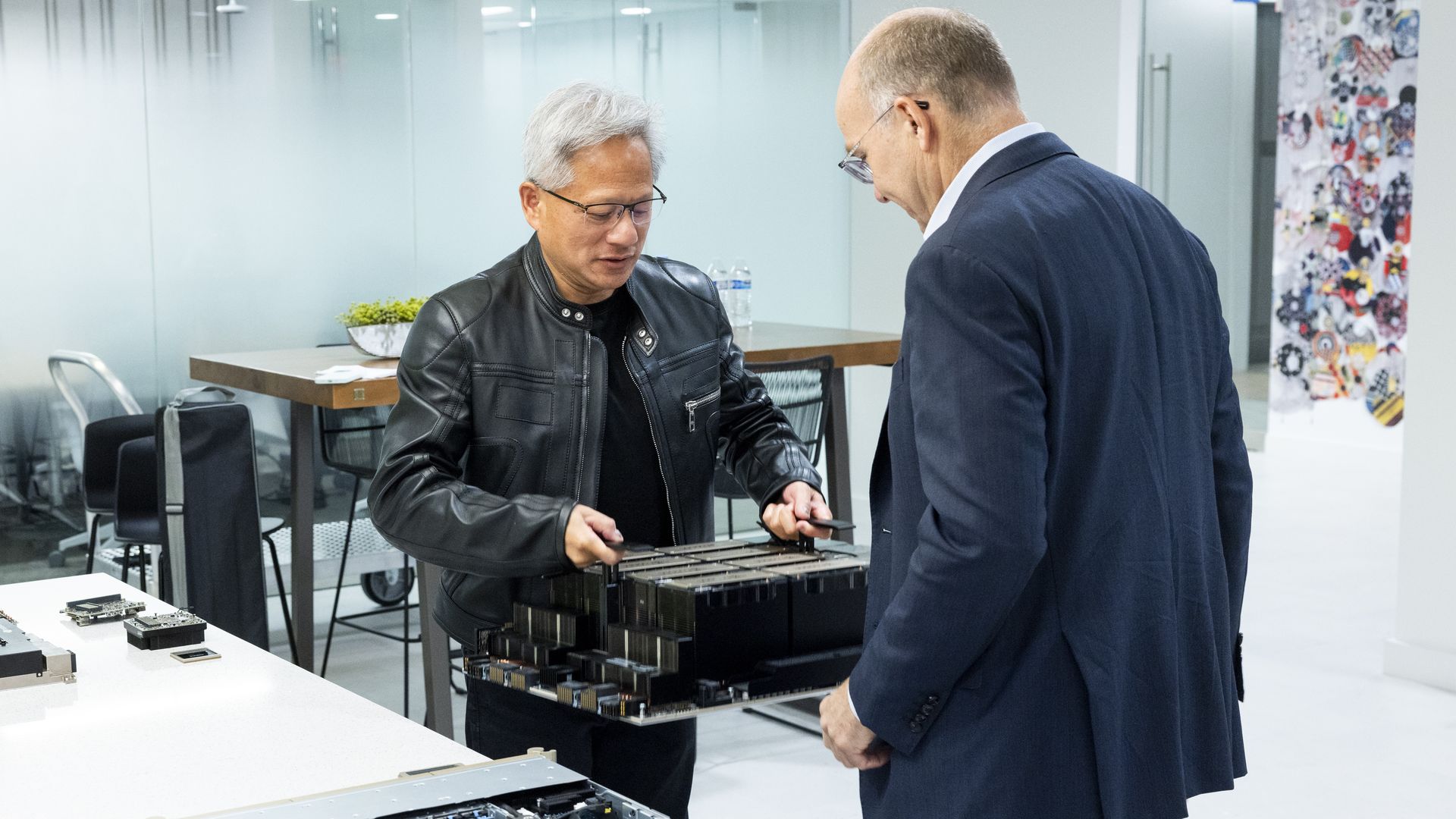
- Leading a show-and-tell in Nvidia's kitchen in downtown Washington, Huang pointed to a 70-pound Nvidia system that, when stacked in racks, helps power AI models. "It takes the love of manufacturing to build these things," he said. "There's just so much admiration for intellectual work in the United States. We need heroes who are making things."
Behind the scenes: Huang, who was born in Taiwan, doesn't wear a watch. When we said we needed to wrap up the interview, he pulled up the sleeve of his trademark leather jacket to show off his bare wrist. He also keeps his phone on silent — the better to focus on the moment.
- IBM pioneer "Thomas Watson didn't care about the time, nor did Einstein care about the time," he explained. "The only time is right now. ... Because I'm here with you."
The bottom line: "The AI revolution," Huang told us, "is both an incredible technology — and the beginning of a whole new industrial reset."
3. Training data
4. + This
Axios AI+
