Axios AI+

April 11, 2025

Hello one last time from Vancouver. TED wraps up today, but not before Sam Altman and Eric Schmidt take the stage. Today's AI+ is 1,041 words, a 4-minute read.
1 big thing: Culture is AI's next conquest
AI is leaping over the borders of tech and business and making waves across culture, from art and poetry to medicine and parenting, as this week's TED conference highlighted.
Why it matters: The technology is already reshaping our lives, even as critics warn that the underlying systems remain dangerously unreliable.
The big picture: Every recent TED has had AI talks. But this year AI kept turning up everywhere, even in seemingly unrelated discussions around nature, family and the arts.
- AI remains a dominant topic at TED, as it has been for the past few years.
- Proponents like Anduril's Palmer Luckey touted its virtues, while critics such as Yoshua Bengio, Carole Cadwalladr and Tristan Harris warned that the technology remains unsafe.
- Now, though, even the poets and anthropologists are getting in on the action.
Case in point: Evolutionary anthropologist Sarah Blaffer Hrdy expanded on her research to imagine how AI could change the future of raising infants.
- "Like it or not, artificial intelligence will change the nature of human work, but will it change human nature?" she asked the audience. "That's going to depend on what we do with it."
- While it is tempting to tap AI to aid sleep-deprived mothers, there are also biological reasons why young children evolve the way they do, in a lengthy process highly dependent on human connection.
Zoom in: In detailing Milo, a text-message-based AI service for busy parents, Avni Patel Thompson said that initially she was seeking to use the technology to automate a larger swath of tasks.
- She then realized that while it's great to have some help keeping track of a family schedule, automating communications would lead to missing out on the chance to really connect with teachers and other parents.
- "Not all friction is bad," Thompson said. "Where people are involved, there's lots of productive friction because there is meaningful interaction."
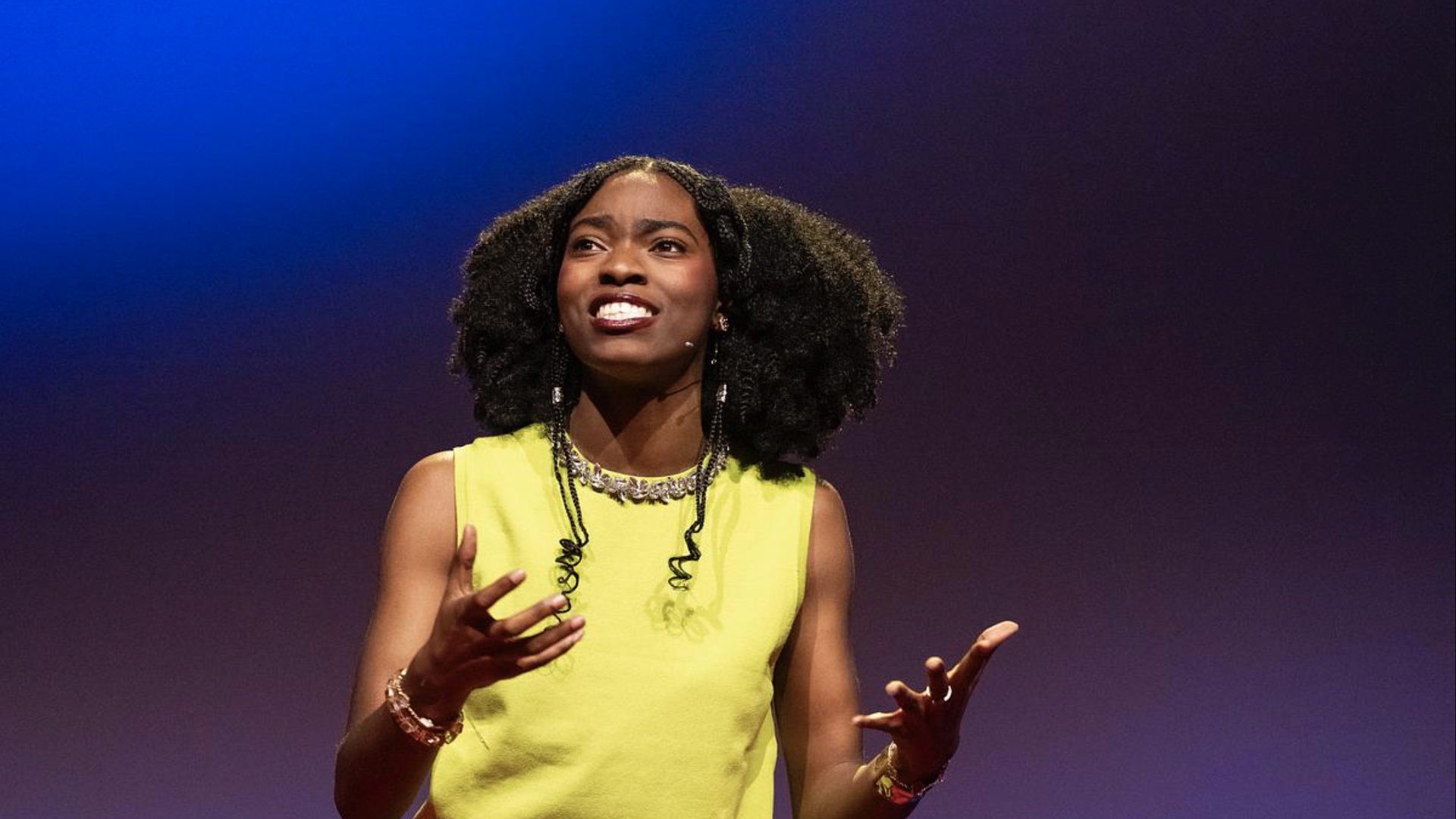
Former U.S. Youth Poet Laureate Salome Agbaroji used her time on stage to explore the blurred lines between intelligence and systems of power.
- "I say to AI 'Don't feel too special,'" she said. "You aren't the first artificial system we humans carelessly labeled intelligent. Global capitalism was genius until it became negligent."
- "The future we fear is not the sci-fi, cyborg AI uprising that sets the world aflame," she said. "No, the true dystopia is the today we make when humans watch the world burn, still with the power to save it, and don't."
The bottom line: The talks at TED predict much broader social changes, so whatever you're interested in, you should expect AI to be part of the conversation, if it isn't already.
2. AI impact on climate change "overstated"


While plenty of fossil fuels will power data centers, a big new report argues that fears about AI speeding up climate change "appear overstated."
Why it matters: Weighing AI's electricity thirst against ways it can help cut emissions is a wild card in the global energy and carbon future.
Driving the news: The International Energy Agency just dropped a detailed analysis of the AI-energy-climate nexus. Some major findings ...
- Data centers accounted for about 1.5% of global electricity use last year. It's projected to more than double by 2030 to surpass Japan's current overall demand.
- In IEA's "base case," which models current regs and industry server projections, renewables make the largest contribution to meeting data center demand growth through 2035, followed by gas.
- On local levels, grids are already strained and unless risks are addressed, about 20% of planned data center development could be delayed.
Stunning stat: "A typical AI-focused data center consumes as much electricity as 100,000 households, but the largest ones under construction today will consume 20 times as much."
The intrigue: IEA doesn't really see AI as a climate devil or savior.
- It cites AI's ability to improve renewables integration, boost efficiency and detect methane leaks, among other benefits.
- "We estimate that emissions reductions from the broad application of existing AI-led solutions to be equivalent to around 5% of energy-related emissions in 2035," the report finds.
Reality check: Nobody really knows the future energy mix, AI's climate benefits, the data center growth path and more. The word "bubble" is surfacing.
- IEA is up front about uncertainty, offering three sensitivity cases beyond its "base case."
The bottom line: "The widespread adoption of existing AI applications could lead to emissions reductions that are far larger than emissions from data centers — but also far smaller than what is needed to address climate change," IEA finds.
Go deeper: This just scratches the surface of the report, so do take it for a spin yourself.

3. Congress tackles AI fakes in campaign ads
Members of Congress are rolling out tech policy legislation focused on AI in elections, as first shared with Axios.
The big picture: The bipartisan Protect Elections from Deceptive AI Act led by Sen. Amy Klobuchar (D-Minn.) and co sponsored by Sens. Josh Hawley (R-Mo.) Chris Coons (D-Del.) and Susan Collins (R-Maine) bans the use of AI to make "materially deceptive content" about federal candidates in political ads.
- "Voters deserve transparency, and it's clear we need rules of the road in place to stop the use of fraudulent AI-generated content in campaign ads," Klobuchar said in a statement.
- "This commonsense, bipartisan legislation would update our laws to prohibit these deceptive ads from being used to mislead voters no matter what party they belong to," she added.
- Last year's version of the bill made it past the Rules Committee.
If you need smart, quick intel on federal tech policy for your job, get Axios Pro Policy.
4. Training data
- Some Meta insiders fret that the company's AI research division is dying a slow death, while leadership insists it's more like a "new beginning." (Fortune)
- OpenAI is expanding ChatGPT's memory feature so a user's past chats can inform the bot's answers to new questions. (TechCrunch)
- Canva unveiled what it calls its biggest update in 13 years, adding both AI and spreadsheet capabilities. (Fast Company)
5. + This
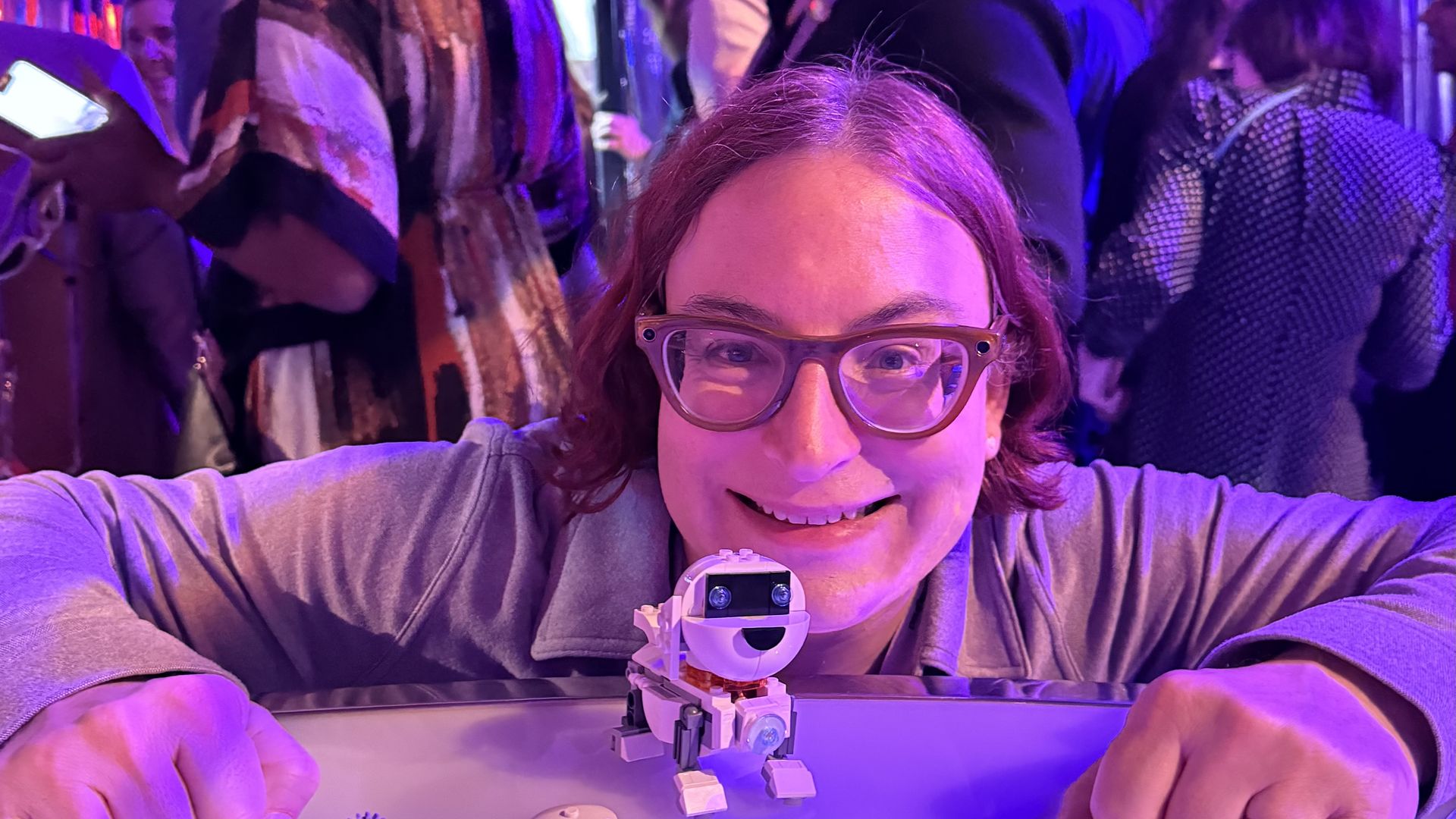
I was wandering through the space-themed closing party at TED on Thursday. I made it as far as the Lego-building station.
- "That's the nerdiest thing ever," said one passerby.
- "Sister, you don't know the half of it," I thought, before proceeding to finish the robot dog I was working on and completing 7 of the 8 bags for the Pharrell Williams set.
Thanks to Scott Rosenberg and Megan Morrone for editing this newsletter and Matt Piper for copy editing.
Sign up for Axios AI+