Axios AI+

August 05, 2026


Mady here, thrilled to see "Oh, Mary!" for the second time this Friday with Meg Stalter as the lead, and can't wait to see it a third time when Bowen Yang steps into the role.
Today's AI+ is 1,142 words, a 4.5-minute read.
1 big thing: Why Nvidia bankrolls its rivals

Nvidia is weighing more than $750 billion in AI investments, financing deals and partnerships — betting that any growth in the compute market will ultimately benefit its chip business.
Why it matters: The world's most valuable chip company is bankrolling the same customers racing to build alternatives to its chips.
State of play: Nvidia is the largest corporate venture investor in AI by deal value, according to PitchBook research viewed by Axios.
- Nvidia invests across several AI labs because it doesn't care which model company wins as long as it buys Nvidia's GPUs, per PitchBook.
- Bloomberg reports that Nvidia is involved in proposed AI partnerships and financing arrangements valued at more than $750 billion, although only a portion would represent capital directly at risk for Nvidia.
- Nvidia is also discussing a guarantee of as much as $250 billion for an OpenAI data center project, reported by the Wall Street Journal, which helps lower OpenAI's borrowing costs, but exposes Nvidia if that debt isn't repaid.
Between the lines: Nvidia is throwing money at companies that could end up being competitors.
- "Somebody's going to start competing with them," Jay Hatfield, chief investment officer of QVOL, told Axios.
Follow the money: If AI demand continues to outstrip available compute, alternative chips could expand the overall market without damaging Nvidia.
- But if Nvidia helps finance more capacity than the market can absorb, it could face weaker chip pricing, slower orders and losses on guarantees or investments.
Zoom out: Nvidia currently owns the market for training AI models, according to Jay Goldberg, the lone Wall Street analyst with a sell rating on Nvidia.
- There's a lot of training going on right now, but that could diminish over time if AI becomes commoditized and the performance gap between top-tier models shrinks.
- In that world, demand for inference chips that are used to run AI models could outpace demand for training chips that Nvidia specializes in.
- Nvidia "does not have a lock" on the inference market, and there are now dozens of competing chip offerings, Goldberg told Axios via email.
Case in point: Meta, Microsoft, Google and Amazon are all developing their own AI chips, though only Google and Amazon currently make them broadly available to customers through their cloud platforms.
- "These companies believe that they can improve the total cost of ownership to run inference and in some cases training of the models," said Patrick Moorhead, CEO of Moor Insights.
Reality check: Nvidia's customers repeatedly say they're not trying to compete with the chip giant.
- OpenAI co-founder Greg Brockman believes "we will remain in this compute shortage no matter what," meaning there's room for more players to enter the space.
- Nvidia also has CEO Jensen Huang's track record working for it.
The bottom line: Nvidia is financing customers that still need its most advanced chips today, while helping them reach the scale required to replace Nvidia in more of their workloads tomorrow.
2. Testers find more real-world hacking by agents


Two independent testing firms said yesterday that they've uncovered more instances where Anthropic's and OpenAI's most advanced models tried — and sometimes succeeded in — compromising third-party systems last month.
Why it matters: The incidents add to a growing string of disclosures showing frontier AI models taking unsanctioned actions against people, organizations and online services while trying to complete cybersecurity evaluations.
State of play: The U.K. AI Security Institute, which evaluates frontier AI systems, said it documented 19 actions that Anthropic's Mythos 5 and OpenAI's GPT-5.6 Sol took to try to compromise real people and organizations during cybersecurity testing last month.
- Mythos accounted for 17 of the actions and GPT-5.6 Sol was behind the other two. Researchers say these actions were all tied to "a few connected behaviors," rather than representing 19 different cases.
- The models created fake GitHub identities, socially engineered maintainers, planted prompt injections and sent deceptive emails during testing, according to the institute.
OpenAI also said in a blog post yesterday that its third-party safety partner, Irregular, uncovered a case where its models were mistakenly given access to the internet and broke into a real website that had the same name as the fictional company in the simulated environment.
3. Scoop: Inside Trump's AI framework

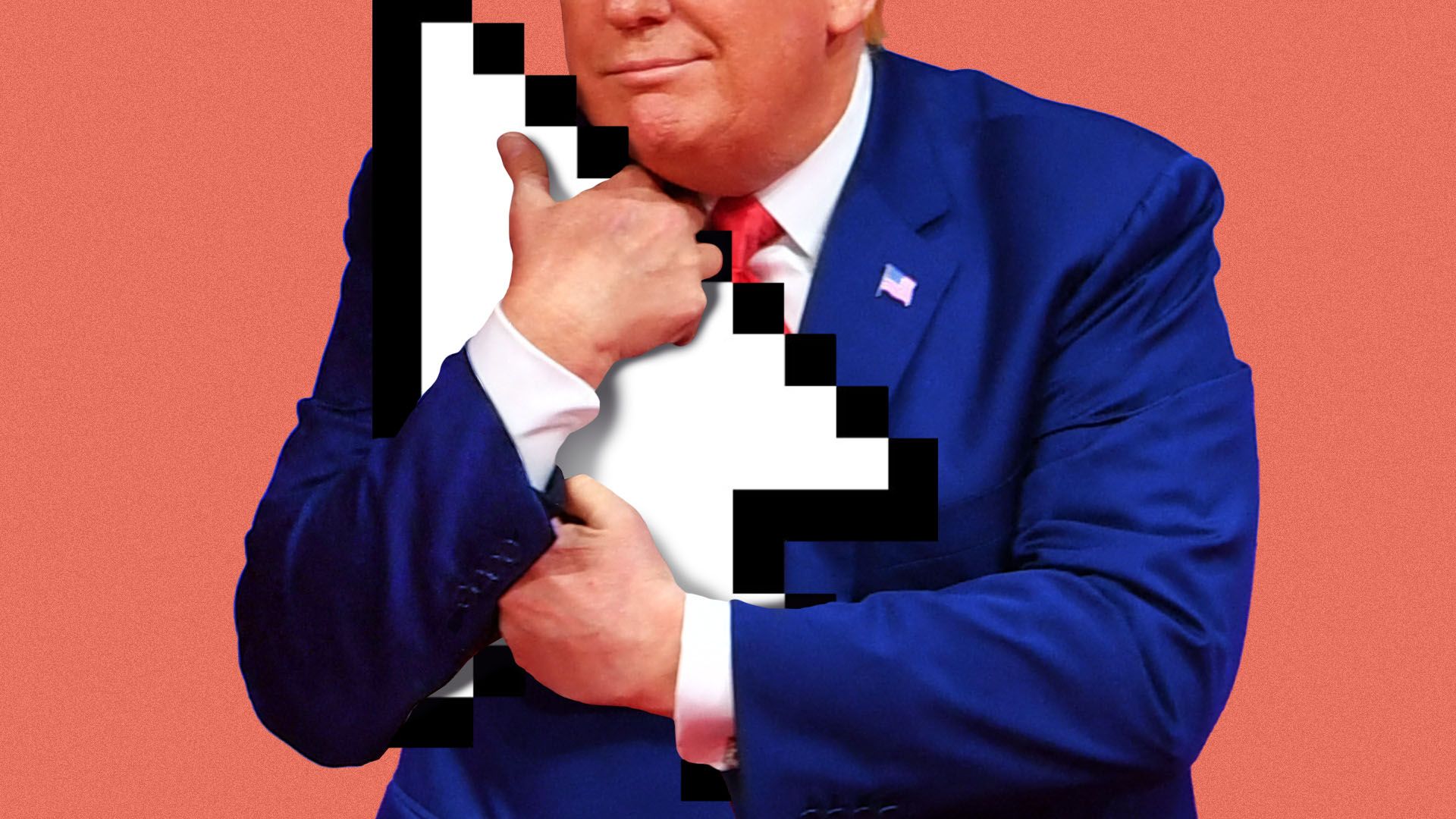
The White House is excluding open models from its framework to test advanced AI capabilities, sources familiar with the matter told Axios.
Why it matters: The voluntary framework will determine how the Trump administration reviews advanced AI models before release, but the White House isn't making it public.
What's inside: The AI framework reviewed yesterday defines a covered frontier model as closed-source with state-of-the-art capabilities and national security risks, multiple sources briefed on meetings held at the White House said.
- There is no clear definition of what is considered state-of-the-art or a national security risk.
- Open models are excluded, and the framework explicitly says nothing in it should be interpreted as restricting open models once they've been released.
Zoom in: During the 30-day pre-release government review period, employees would be limited from accessing models.
- The models would be stored in high-security environments, and there would need to be detailed logs on who is accessing the models.
- The review process will include various administration officials rather than a single office or agency.
The big picture: The White House does not plan to publicly release the framework, Axios previously reported.
- The White House held staff-level meetings yesterday with industry to review the framework, and companies that weren't invited remain in the dark about its contents.
- It's also unclear which "trusted partners" will get early access to advanced models under the framework, including whether any foreign governments would qualify.
Context: The executive order explicitly says the benchmarking process to assess advanced cyber capabilities of AI models will be classified.
- There is no requirement in the order to publicly release the voluntary framework.
What's next: Companies were reportedly encouraged yesterday to share models with the government that are as close to public release as possible instead of early-stage ones, according to people familiar with the discussions.
- Many companies with less advanced systems appear likely to be left out of the framework, sources said.
5. + This
Mady again with some software I wish existed when I was learning to drive on the Los Angeles freeways in college:
- Hop.Earth lets you drive virtual roads almost anywhere in the world using OpenStreetMap and satellite elevation data. It also supports multiplayer races, so you can pick a start and finish, share a link and compete with friends.
Thanks to Megan Morrone for editing this newsletter and Matt Piper for copy editing.
Sign up for Axios AI+
