Axios AI+

November 05, 2026



Ina here, rewatching today's Valkyries' championship parade because I don't want the magical season to be over.
Today's AI+ is 1,246 words, a 4.5-minute read.
1 big thing: The big questions for Musk's wireless dreams
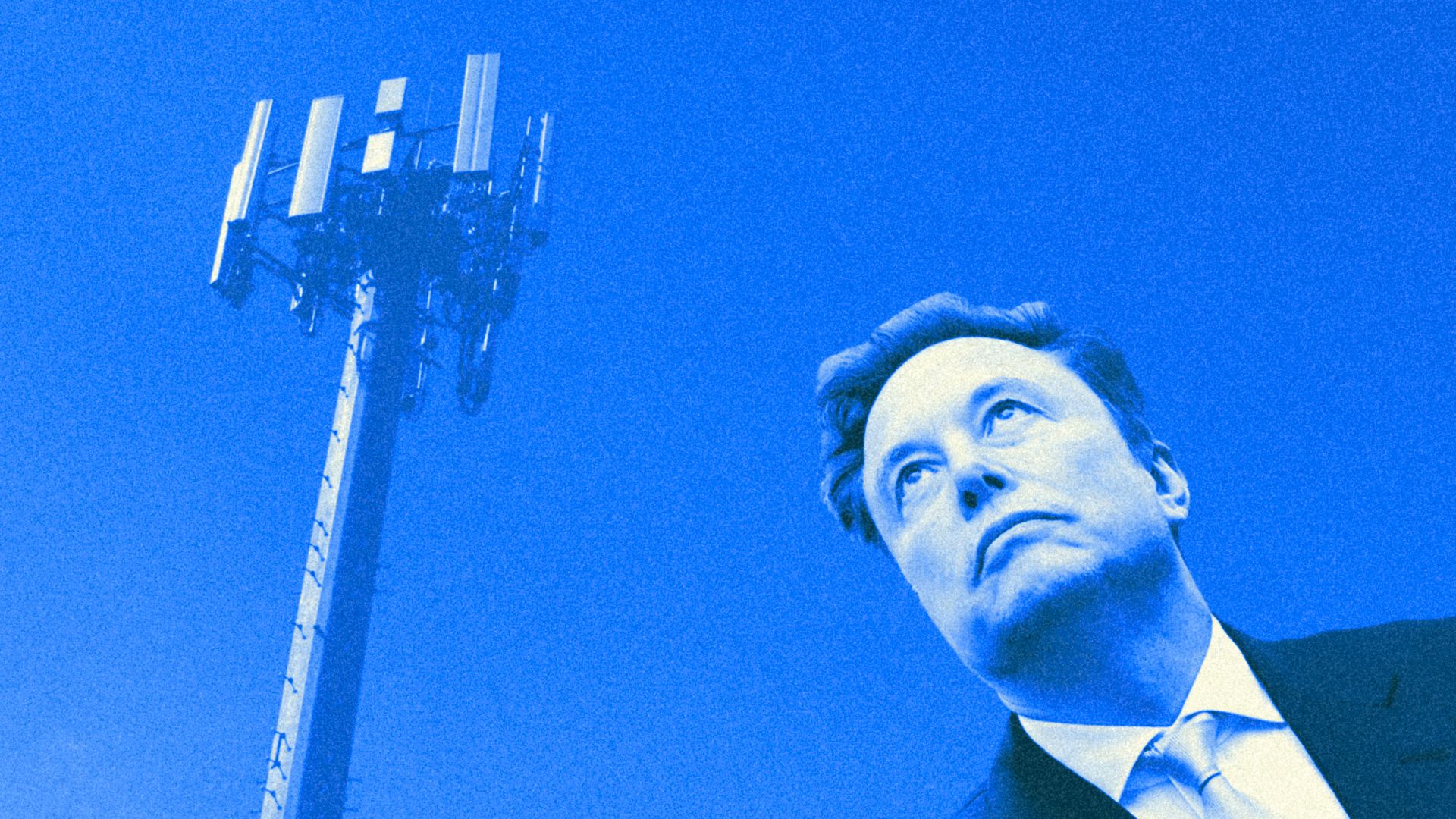
Elon Musk is moving ahead with plans to build a nationwide cellular network. Can he really do it, or is it just a ruse to bring the big telecom companies to the negotiating table?
Why it matters: SpaceX has spent billions on spectrum and struck a multiyear agreement with Qualcomm to build a 5G network. But a deal with an existing carrier could make more economic sense, raising questions about how much of the network Musk actually intends to build.
Catch up quick: There's evidence that SpaceX is serious about building a terrestrial network — even if its ultimate strategy remains unclear.
- SpaceX has acquired spectrum from EchoStar and announced a second, $8 billion spectrum deal.
- Qualcomm says its multiyear agreement with SpaceX calls for deploying equipment at tens of thousands of cell sites, beginning in 2027.
- SpaceX has also reportedly discussed buying Boost Mobile or gaining access to its existing network arrangements, potentially offering a shortcut to serving customers nationwide.
- A wholesale agreement with an existing carrier would be a faster, cheaper and more profitable approach than building an independent network, according to New Street Research analyst David Barden.
The intrigue: Musk has proven naysayers wrong many times before on the way to disrupting established industries. But the nation's wireless giants have spent decades and hundreds of billions of dollars building networks and attracting customers. SpaceX would have to catch up on both fronts.
Here are five big questions that remain unanswered:
1. How much will it cost? SpaceX will need to invest heavily in towers, radios, backhaul and other equipment to compete with AT&T, Verizon and T-Mobile.
- Can it build a competitive nationwide network for less than the established carriers have spent?
- And how will it finance that investment while pursuing its other capital-intensive ambitions?
2. How long will it take? SpaceX says deployment will begin in 2027, but that's a long way from providing reliable nationwide cellular coverage.
- The company would need access to tens of thousands of cell sites to provide competitive coverage, particularly indoors and in dense urban areas.
- Satellites could help fill gaps, especially in rural areas, but they aren't a substitute for terrestrial capacity where large numbers of customers are using their phones.
3. Does SpaceX have enough spectrum? The spectrum acquired from EchoStar (and in a second deal) gives Musk a significant starting point, but it's unclear whether those frequencies alone are sufficient to support a major nationwide smartphone business.
- Additional spectrum could be costly and difficult to obtain.
4. Is this really just about smartphones? Musk's ambitions extend well beyond connecting people.
- A combined satellite and terrestrial network could eventually serve autonomous vehicles, delivery drones, robots and other connected devices.
- That could give SpaceX opportunities beyond the already competitive consumer wireless market.
- It could be that "the point is not to destroy what exists but rather to create a new business," New Street's Barden told Axios. "A new vision of connected intelligence."
5. Has the political calculus changed?
- With Democrats set to take control of the House and Senate, SpaceX could face more scrutiny over its spectrum holdings, acquisitions and dealings with federal regulators.
- A Democratic Congress wouldn't directly control decisions by the Federal Communications Commission or Justice Department, but it could hold hearings, demand documents and put political pressure on regulators.
- That could complicate Musk's path, particularly if SpaceX seeks approval for additional spectrum transactions or a major acquisition.
The bottom line: Musk has made clear he wants to become a major force in wireless communications. What's far less clear is whether he intends to build a new cellular giant from scratch — or use the prospect of doing so to strike a deal with the companies already dominating the market.
2. Big Tech races to offer voters a new AI deal
The AI industry is scrambling to repackage a $10 trillion infrastructure buildout to appease a hostile electorate that overwhelmingly voted to restrict data center construction in ballot measures across the country.
- It's not just changing the name of data centers to "compute campuses," but offering communities real money, including dividends and benefits for schools or cities, plus environmental concessions and labor protections.
Why it matters: Tuesday's election proved voters won't tolerate unchecked growth, although the market and many analysts see the blue wave slowing — but not stopping — data center construction around the U.S. To prevent an existential threat, the world's biggest companies are working on a rebrand.
- How well they execute on their promises will determine the pace of the global AI race.
What they're saying: Chris Lehane, OpenAI's chief global affairs officer, compared the turnaround AI must make to the 1996 election, which came shortly after Republicans routed Democrats in a historic midterm election.
- "A lot happens in two years," he told Axios in an interview. "Smart, talented folks take messages from voters and react and respond to them."
- Getting community buy-in for data centers will require "really making clear that these can be long-term, durable, economically transformative projects for communities," he said.
Between the lines: Incoming Democrats aren't going to kill data centers. Virginia, run entirely by Democrats, is the biggest data center hub in the U.S. Unions are also among the buildout's biggest supporters. But many of the new crop of winning candidates have demands.
- Tech companies must pay for infrastructure and bring their own power, ensuring that new strains on the grid from the boom won't hit ratepayers.
- Tax breaks are dead and face repeal, and the companies will have to show that they will ensure environmental and labor protections. Voters also won't tolerate any more nondisclosure agreements or what look like secret deals.
3. Exclusive: Meta acquires AI coding startup

Meta has acquired Conductor, an AI coding startup that lets software engineers manage multiple coding agents simultaneously, sources familiar with the deal tell Axios exclusively.
Why it matters: Meta is joining OpenAI and other AI giants in a race to own the tools developers use, as coding has become a crucial pathway to AI adoption and capturing enterprise spending.
State of play: The acquisition speaks to Meta's continued AI ambitions and will lay the groundwork for the company's models and ecosystem to compete for coders, the most important power users of AI.
- Conductor, founded in 2024, has developed an AI coding orchestration platform that allows developers to run multiple AI coding agents in parallel.
- Financial terms of the acquisition were not disclosed.
Zoom out: Meta's deal comes the same day OpenAI told Axios it plans to acquire Pierre Computer, another developer tools startup, as AI giants race to own the future of software development.
4. Training data
- Anthropic product executive Cat Wu is moving to rival OpenAI, where she will lead product management for its core services.
- Apple is said to be cracking down on how much employees spend on AI, even as it pushes workers to adopt the technology. (Bloomberg)
- A reporter's therapist thinks she should chuck the Amazon Bee Frontier out a window. (The Verge)
- Hugging Face CEO Clément Delangue's p(doom) is "close to zero." (Wired)
- OpenAI released an updated version of its image generation model that it says is both faster and capable of generating short animations. (The Verge)
5. + This

I had to watch the parade on TV (you know, that whole work thing), but to me this photo captured the sheer joy of the Valkyries players and fans.
Thanks to Bradley Olson for editing this newsletter and Matt Piper for copy editing.
Sign up for Axios AI+
