Axios AI+
June 18, 2025

We'll be off tomorrow for Juneteenth, but back in your inbox on Friday. Today's AI+ is 989 words, a 3.5-minute read.
1 big thing: ChatGPT's creativity gap

AI can generate a larger volume of creative ideas than any human, but those ideas are too much alike, according to research newly published in Nature Human Behavior.
Why it matters: AI makers say their tools are "great for brainstorming," but experts find that chatbots produce a more limited range of ideas than a group of humans.
How it works: Study participants were asked to brainstorm product ideas for a toy involving a brick and a fan, using either ChatGPT, their own ideas, or their ideas combined with web searches.
- 94% of ideas from those who used ChatGPT "shared overlapping concepts."
- Participants who used their own ideas with the help of web searches produced the most "unique concepts," meaning a group of one or more ideas that did not overlap with any other ideas in the set.
- Researchers used GPT-3.5 and GPT-4 and reported that while GPT-4 is creating more diverse ideas than 3.5, it still falls short ("by a lot") relative to humans.
Case in point: Nine participants using ChatGPT independently named their toy "Build-a-Breeze Castle."
The big picture: Wharton professors Gideon Nave and Christian Terwiesch and Wharton researcher Lennart Meincke found that subjects came up with a broader range of creative ideas when they used their own thoughts and web searches, compared with when they used ChatGPT.
- Groups that used ChatGPT tended to converge on similar concepts, reducing overall idea diversity.
- "We're not talking about diversity as a DEI type of diversity," Terwiesch told Axios. "We're talking about diversity in terms of the ideas being different from each other ... like in biology, we need a diverse ecosystem."
Zoom in: A 2024 study found similar results.
- Participants were asked to write short fiction with and without ChatGPT.
- Generative AI–enabled stories were found to be more similar to each other than stories by humans.
Yes, but: ChatGPT can be used as part of the brainstorming process. Terwiesch says idea variance comes from using ChatGPT to generate ideas, while also coming up with your own ideas and collecting original ideas from others.
- Terwiesch also recommends "chain of thought prompting," which means asking your chatbot to generate several ideas, but also specifically asking the bot to make those ideas different from each other.
- "If I just sit back and let ChatGPT do the work, I'm not taking the full advantage of what this tool has to offer. I can do better than that," Terwiesch told Axios.
- A spokesperson from OpenAI shared best practices for prompting ChatGPT, advice from writers on how to use the tool and a student's guide to writing with ChatGPT.
Our thought bubble: Teaching the next generation to use genAI to boost their creativity could help schools balance AI literacy with concerns about using ChatGPT to "cheat."
The bottom line: AI makers say their tools will eventually become as intelligent and creative as humans, but genAI outputs will always be more narrow than humans brainstorming together.
Go deeper: AI's creative block
2. Trump official: Workers don't trust AI

Employee mistrust is holding back AI implementation across U.S. workforces, the Labor Department's second-in-command said on Tuesday.
Why it matters: Many see AI as the next big economic promise that will turbo-charge productivity in the years ahead.
- But that requires mass implementation, already underway, that might devastate white-collar employment.
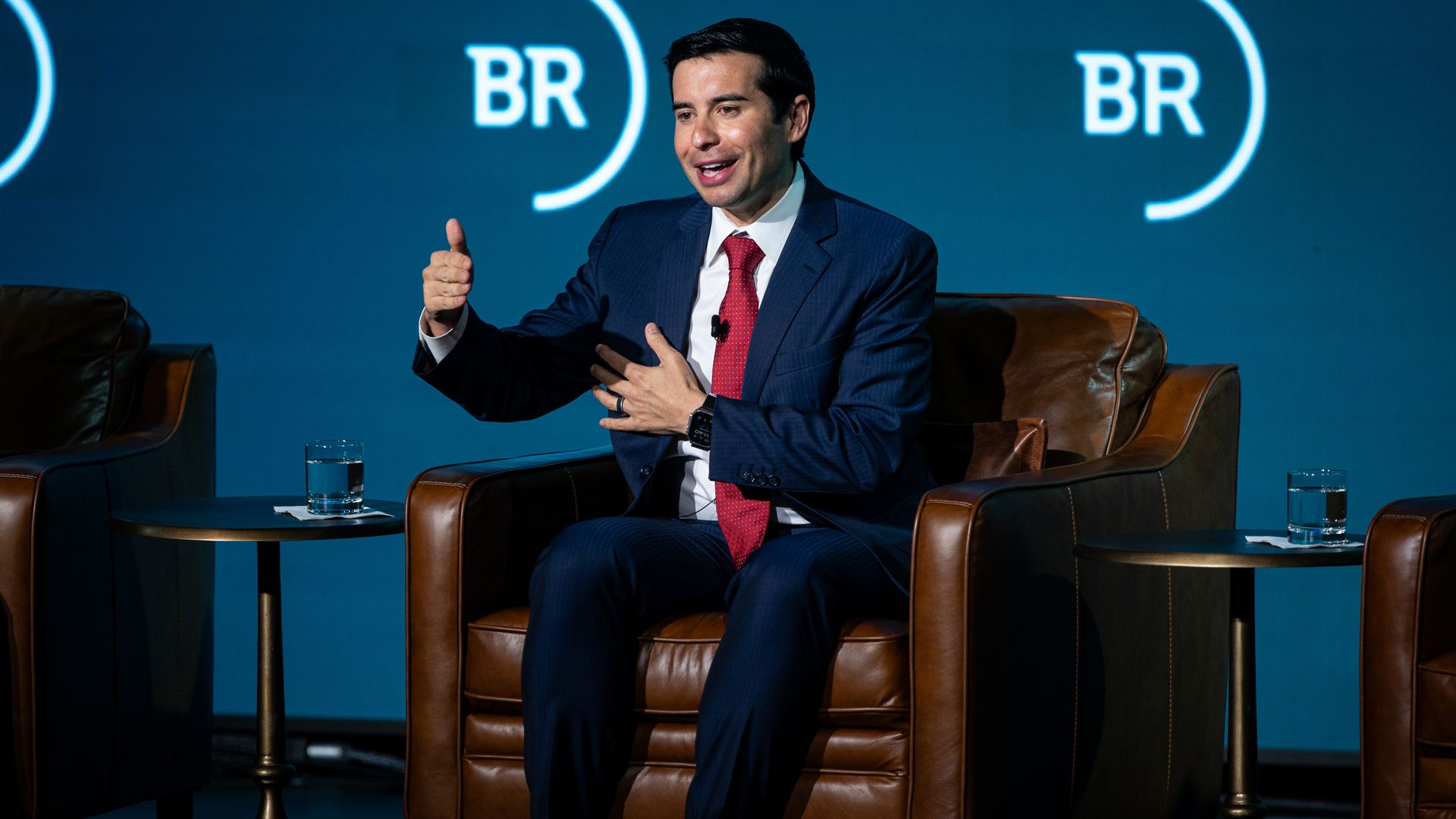
What they're saying: "What we're seeing is it's really coming down to employee trust," Keith Sonderling, deputy labor secretary, said at a Business Roundtable workforce event.
- "Why companies are having issues with the adoption of AI in the workplace is that they don't believe their employers are using this for the right reason," Sonderling added.
- "A lot of employees look at this and say, 'This is going to be my robot replacement. Why would I use this? Why would I help train this if this is going to eventually replace me in my job?'"
The big picture: Sonderling said the Trump administration sees "starting early" on AI education as the key way to dispel that fear, pointing to an executive order that requires government agencies to develop an AI curriculum for schools across the country.
- "We have to train our current workers and the next generation of workers on how to use AI, how to develop them themselves — so they're no longer afraid about AI displacement and they're going to know exactly what AI is doing," Sonderling said.
Yes, but: Sonderling acknowledged the job loss anxiety among some workers might be warranted.
- There are huge questions about what role the federal government will play — if any — in easing the pain in a world where millions of workers could lose their job.
What to watch: "There are all these statistics coming about, that [big companies are] going to replace hundreds of millions of jobs and industries are going to be completely wiped out," Sonderling said.
- "It's not 'How do we prevent that?', it's 'What are we going to do with those workers and what are those jobs you are going to need now?,'" Sonderling said.
- Speaking to an audience of mostly private sector executives, Sonderling said: "You need to tell us where those jobs are going."
- He said the government could use that information to "fund the education institutions on those skills, so you have those skills you need and the workers are ready to go."
3. Training data
- Amazon CEO Andy Jassy warned employees that AI is likely to lead to fewer corporate jobs over time. (NBC News)
- Elon Musk's xAI is said to be burning through $1 billion per month as it expands its workforce and data center use. (Bloomberg)
- Meta tried and failed to poach top OpenAI researchers with "$100 million signing bonuses," Sam Altman said on a podcast. (TechCrunch)
- Meta is set to expand its smart glasses partnership with Luxottica by introducing Oakley-branded smart glasses. (CNBC)
- Applied Intuition, a Silicon Valley-based firm specializing in AI for self-driving cars, raised $600 million in funding at a $15 billion valuation. (Axios)
4. + This
Perhaps the best tweet ever.
Thanks to Scott Rosenberg and Megan Morrone for editing this newsletter and Matt Piper for copy editing.
Sign up for Axios AI+
