Axios AI+

November 20, 2025

This just in: California State Sen. Scott Wiener and Palo Alto Networks CEO and chairman Nikesh Arora have joined a great lineup of speakers for our Axios AI+ Summit in San Francisco on Dec. 4. See more of our lineup and secure your spot here.
Today's AI+ is 1,002 words, a 4-minute read.
1 big thing: AI's first geopolitical test
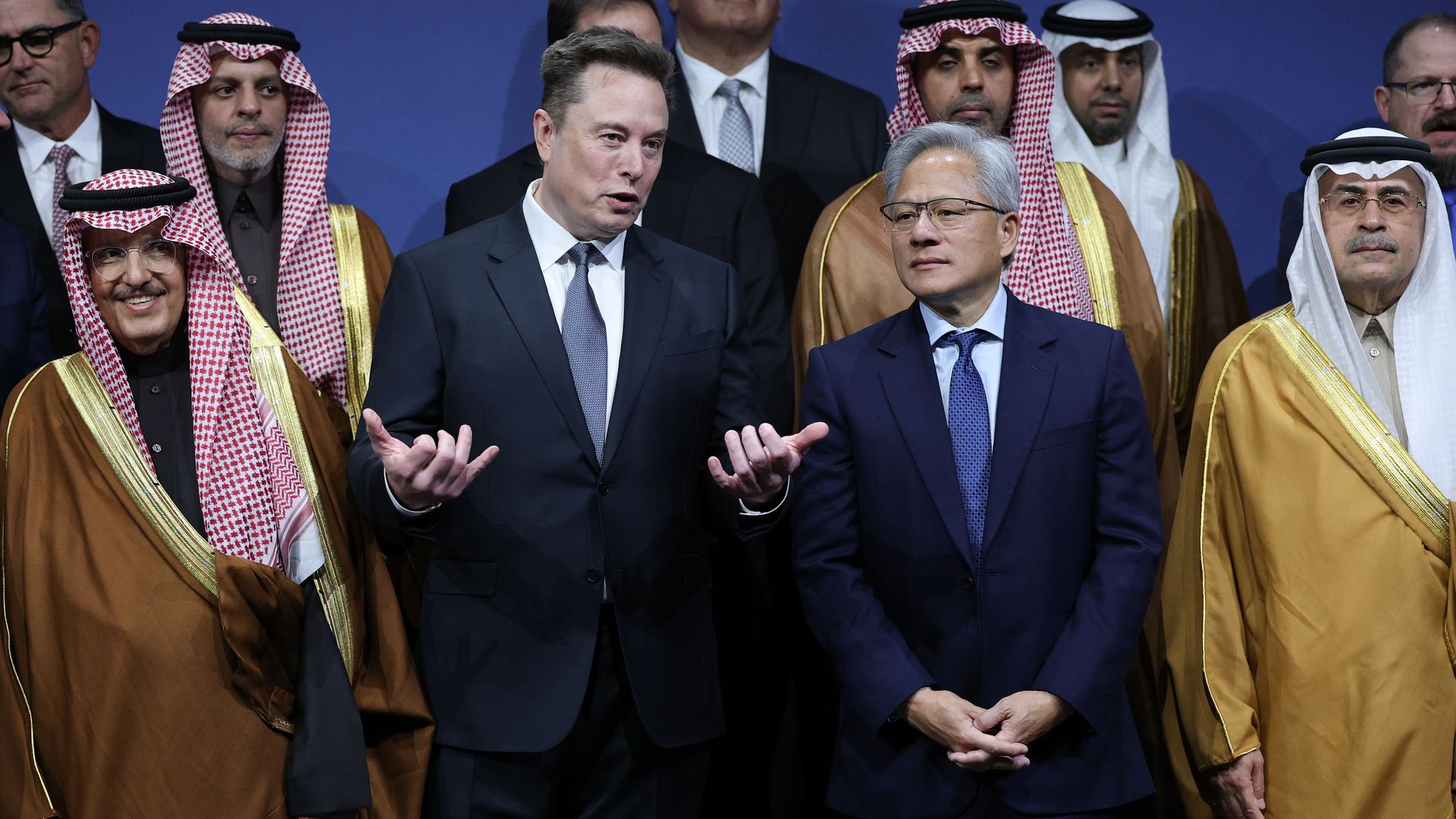
The Middle East is fast becoming not just a deep-pocketed investor in AI but a hot spot for data centers, highlighted by a new wave of Saudi deals announced yesterday.
Why it matters: Allowing these deals is part of a strategic effort to ensure Saudi Arabia and other countries in the Middle East adopt U.S. technology rather than AI systems from China.
Driving the news: Tech companies used yesterday's U.S.-Saudi Investment Forum and this week's D.C. visit of Crown Prince Mohammed bin Salman to announce a host of new projects with Humain — a Saudi AI and infrastructure developer backed by the country's Public Investment Fund.
- xAI: Elon Musk's company has signed a "framework agreement" to build low-cost GPU data centers with Humain in Saudi Arabia and deploy Grok models throughout the country.
- AMD and Cisco: Humain is working jointly with AMD and Cisco to deliver up to 1 gigawatt of AI infrastructure by 2030.
- Nvidia: Humain will deploy up to 600,000 Nvidia GPUs across Saudi Arabia and the U.S. over three years, including work focused on physical AI as well as Arabic language AI.
- Qualcomm: The chip maker is making a renewed push for a role in data centers, and its work with Humain is a key piece. Yesterday Qualcomm said it will create an AI engineering center with Humain in Riyadh as part of a broader partnership to deploy 200 megawatts of data center capacity.
- Amazon Web Services: Humain and AWS will deploy up to 150,000 AI accelerators for an "AI Zone" in Riyadh.
- Adobe: Humain is working with Adobe to create culturally aware AI models, particularly for Arabic speakers, making use of Qualcomm's data center products.
Between the lines: The region's significant energy capacity is a huge draw for U.S. companies looking to rapidly build out AI infrastructure.
- "Given constraints on U.S. energy supplies that are likely to create serious bottlenecks in domestic AI data center buildouts, the Middle East has emerged as a key technology hub that will help bridge a 3-5 year period when U.S. energy supplies are likely to be significantly constrained," Paul Triolo, partner and global AI policy lead at business diplomacy consultancy Albright Stonebridge Group, told Axios.
The other side: Saudi Arabia, like the United Arab Emirates, is trying to diversify its economy beyond fossil fuels.
- The Saudi government last year targeted $40 billion in AI investments as part of its Vision 2030 plan, while the UAE has been backing its homegrown G42 effort. The G42 project initially had ties to China, but more recently has shifted to partnerships with U.S. companies, including Microsoft and OpenAI.
- "Both countries are investing massively in AI and looking to use their deep pockets and ability to rapidly build new electrical infrastructure to attract a major share of the booming market in AI data center construction," Greg Allen, senior adviser at the Center for Strategic and International Studies' Wadhwani AI Center policy think tank, told Axios.
Yes, but: The U.S. is expected to impose strict controls to ensure AI hardware sold in the region doesn't reach China or Russia, Triolo said.
- Some China hawks still worry that these massive Middle East deals could pose a risk.
- Meanwhile, Triolo said the issue is also sensitive for both the UAE and Saudi Arabia, which both maintain close ties to Beijing and rely on telecommunications infrastructure built by Huawei and other Chinese firms.
The bottom line: With tens of billions flowing into AI infrastructure, the Middle East is emerging as a critical bridge and a geopolitical test for U.S. tech companies.
2. What bubble?


Nvidia delivered record revenue and profit in the third quarter, exceeding expectations as CEO Jensen Huang reported "off the charts" demand for its advanced Blackwell chips.
Why it matters: Nvidia is positioned in the center of the tech universe — and its earnings are closely watched as an indicator of health of the booming AI economy.
Driving the news: The company posted third-quarter revenue of $57 billion, up 62% compared with a year earlier, while net income soared 65% to $31.9 billion.
Zoom in: Huang outlined a bullish case for AI and Nvidia's role in its acceleration, rejecting critics who have said it's too much too soon.
- "There's been a lot of talk about an AI bubble," he said on the company's earnings call. "From our vantage point, we see something very different."
3. White House pushes to block state AI laws


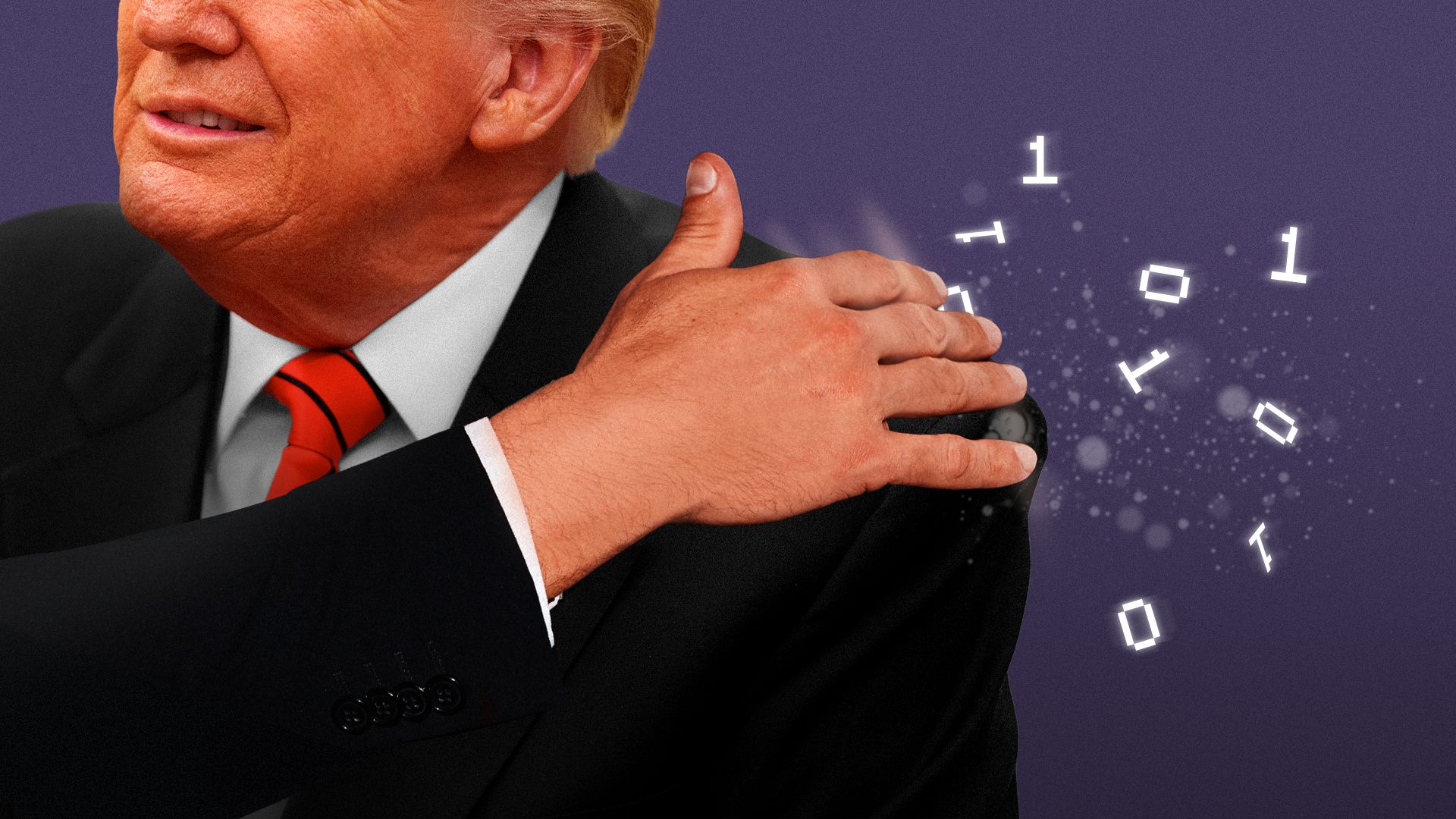
The White House is floating an executive order to override state AI laws by launching legal challenges tying compliance to federal grants, after President Trump publicly backed a national AI standard, per a copy of the draft seen by Axios.
Why it matters: It would escalate the administration's push to centralize U.S. AI policy.
- AI and crypto czar David Sacks is involved in the majority of the agency-level work the executive order calls for, according to a summary of the draft executive order also seen by Axios.
- The order is in flux, and a final version could look different.
- This approach would have far less teeth than legislation, and could face legal scrutiny.
4. Training data
- OpenAI is pushing further into schools with a new ChatGPT designed specifically for K-12 teachers. (Axios)
- Common Sense Media and Stanford's Brainstorm Lab warn AI chatbots aren't safe for teen mental-health support. (Axios)
- Yann LeCun confirmed that he plans to leave Meta for his own startup, which will partner with Meta.
- The Allen Institute for AI (Ai2) announced Olmo 3, the latest in its family of fully open language models, with one flavor able to reason and show its chain of thought.
5. + This
I'm for any event that brings together a large number of Homer Simpsons.
Thanks to Megan Morrone for editing this newsletter and Matt Piper for copy editing.
Sign up for Axios AI+
