Axios AI+

June 25, 2025

Well, I didn't make it to my friend's comedy set last night, but only because I was having such a good time at the Hard Fork Live event. Congrats to Casey and Kevin. Today's AI+ is 1,240 words, a 5-minute read.
1 big thing: Tech's dance with Pentagon speeds up

/2025/06/24/1750800809295.gif?w=3840)
Silicon Valley's long cycle of engagement with the U.S. military is swinging hard toward defense work.
The big picture: The Trump administration has opened the door to spending, the Pentagon is pushing modernization, and a new era of instability and flash wars has engulfed the world just as AI is remaking the entire tech industry.
Driving the news: The Army announced this month that four tech executives would become lieutenant colonels in the new Reserve Detachment 201: Meta CTO Adam Bosworth, OpenAI product head Kevin Weil, Palantir CTO Shyam Sankar, and Bob McGrew, a Palantir and OpenAI veteran.
- The Reserve Detachment 201 project, whose genesis predates the second Trump administration, aims to fast track the introduction of Silicon Valley expertise into the vast defense bureaucracy.
These commissions put a human face on an epochal shift of tech industry energy into defense work.
- Hardware firms are pushing aerospace projects, satellites and drones, autonomous vehicles and VR and AR headsets.
- Software providers bring data collection, management and analysis tools for everything from Defense Department supply-chain management to cybersecurity to real-time battlefield decision making.
At the same time, everyone is promoting AI as the all-purpose answer to taming the Pentagon's vast unwieldy systems and unlocking a competitive edge for the U.S. in its global conflicts and rivalries, most urgently with China.
- Last week the Defense Department awarded a $200 million contract to OpenAI to "develop prototype frontier AI capabilities to address critical national security challenges in both warfighting and enterprise domains."
- Google and Anthropic are also working with the Pentagon.
Industry critics have painted this shift as a MAGA-fueled power grab by a new generation of contractors — like Palantir, Anduril and Elon Musk's companies — and investors like Andreessen Horowitz and Peter Thiel.
Yes, but: While those players are making hay as their allies (former venture capitalist Vice President Vance, White House tech adviser David Sacks) have assumed power, tech's new defense mania is part of a decades-long oscillation by the industry.
- The Silicon Valley of today got its start 75 years ago thanks to a flood of postwar defense contracting work that flowed toward Stanford and the nascent Santa Clara Valley electronics industry.
- That engagement ebbed in the 1970s with stagflation and post-Vietnam cuts, surged again in the 1980s under President Reagan's Cold War defense ramp up, then fell once more in the 1990s as the Soviet empire collapsed and the internet blossomed.
- After 9/11, many tech firms rushed to join the "global war on terror" only to disengage once more as the U.S. wars in Afghanistan and Iraq faltered.
Our thought bubble: Tech's reputation as a left-leaning industry, inspired by its San Francisco Bay Area roots and the counterculture heritage of both the personal computing and internet revolutions, is largely a myth.
- Any time the federal government has been willing to throw dollars at defense technology, the industry has been eager to sell.
Between the lines: Defense Secretary Pete Hegseth's emphasis on a "culture of lethality" might once have raised hackles in tech boardrooms and among staff.
- But AI companies, even those that put "safety" at the heart of their missions, are now rushing to compete for deals, as a call to patriotism has replaced an insistence on caution along the road to "superintelligence."
- OpenAI, Google and other AI leaders who once had policies barring certain kinds of military and weapons work have removed or loosened those rules over the past two years.
What to watch: Support for the alliance between tech and the Pentagon — both inside companies and across the broader public — could splinter if AI, autonomous vehicles and other advanced tech play a high-profile role in immigration enforcement efforts or military deployments in U.S. cities.
2. Exclusive: OpenAI on China's global ambitions
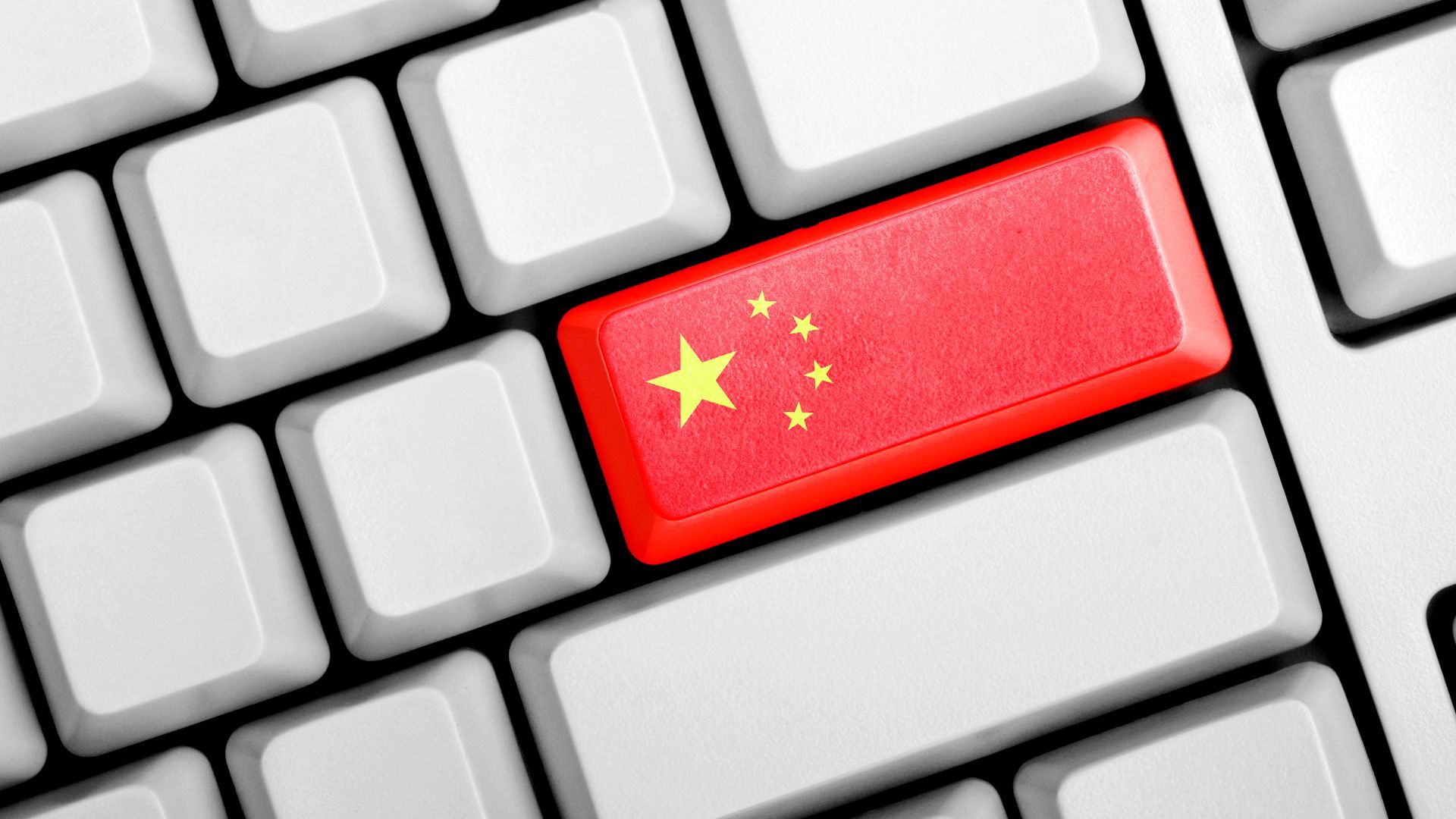
OpenAI says that Chinese competitor Zhipu AI is aggressively courting the governments of developing countries, aiming to entrench Chinese AI systems ahead of Western rivals.
Why it matters: OpenAI and others argue this is a must-win race between U.S. and China over whose technology will control a bot-filled world.
Driving the news: OpenAI says a company called Zhipu AI is trying to pitch governments looking to invest in AI on their services as an alternative to the OpenAI for Countries initiative that launched last month.
- Zhipu AI is a foundation model developer that rivals DeepSeek with global ambitions, according to OpenAI.
- "While promoting the development of domestic large-scale model technology, we also hope to contribute China's AI power to the world," Zhipu AI chairman Liu Debing said last week.
- The company has backing from the Chinese government and from a unit of Saudi oil giant Aramco, which participated in the firm's recent $400 million funding round.
Zoom in: OpenAI says its analysts have found that Zhipu AI is trying to make inroads in various countries in Asia and Africa.
- In a blog post, OpenAI writes, "The goal is to lock Chinese systems and standards into emerging markets before US or European rivals can, while showcasing a 'responsible, transparent and audit-ready' Chinese AI alternative."
- OpenAI, meanwhile, has been pitching companies in the Middle East, Asia and other regions to partner on AI infrastructure. The company announced its first deal last month: a partnership with the United Arab Emirates to build a massive Stargate data center in Abu Dhabi.
The big picture: The Trump administration, tech leaders and others have positioned the battle over AI as the biggest of several must-win technology races, along with battles to lead in semiconductors, quantum computing and alternative energy.
- Through a series of executive orders, President Trump has rolled back policies and regulations from the prior administration in favor of an approach focused on fostering U.S. supremacy.
Yes, but: Critics warn the race to deploy AI first raises the risk of unleashing unsafe or flawed systems.
3. Supersonic AI model progress in 120 slides

Generative AI has entered the mainstream faster than any previous new technology. But the tech industry hasn't yet figured out the best ways to build AI products, and fierce competition, along with rapid advances, means nobody stays at the top of the heap for long.
Those are some of the findings of a new report on the state of AI foundation models from Innovation Endeavors, the venture capital firm cofounded back in 2010 by former Google CEO and chairman Eric Schmidt.
By the numbers: The report (see video), by Innovation Endeavors partner Davis Treybig, said that 1 in 8 workers globally now uses AI on a monthly basis. 90% of that growth took place in the last six months.
- New models regularly topple technical benchmarks, but the cost of training them is also ballooning. "The average duration of human task a model can reliably do is doubling every seven months," per the report.
Stunning stat: New models typically spend three weeks at the top of the usage charts, then drop off as newcomers emerge and open-source rivals absorb and commoditize their advances.
- Frontier models "depreciate on a 6–12 month timescale," the report says.
4. Training data
- A federal judge delivered a mixed ruling in a key copyright case, saying that some of Anthropic's use of books to develop its AI models constituted "fair use" under copyright law. (Reuters)
- New research from Accenture shows carbon emissions linked to AI data centers has grown 11-fold this decade. (Axios)
5. + This

In case you missed it last weekend, check out John Oliver's take on AI slop and the harm it's doing to Pinterest, news literacy and the internet as a whole.
Thanks to Scott Rosenberg and Megan Morrone for editing this newsletter and to Anjelica Tan for copy editing.
Sign up for Axios AI+
