Axios AI+

June 30, 2026


Mady here after using AI to help plan my belated honeymoon, though I'll happily go the analog route and take any of your Paris recommendations in my inbox!
Today's AI+ is 1,155 words, a 4.5-minute read.
1 big thing: AI's jobs panic gets a rewrite

The AI executives who loudly warned about mass job loss may have been wrong, Zynga founder Mark Pincus told Axios in a conversation about his new book, "Life at the Speed of Play."
Why it matters: Several leading voices in Silicon Valley, including AI CEOs themselves, have softened their stance on AI-driven job loss.
The big picture: The softening rhetoric comes just before OpenAI and Anthropic are rumored to go public and also amid a surge in AI hate from consumers.
State of play: Pincus told Axios he doesn't buy "the doom and gloom that all the jobs are going to go away," mirroring the tone shift from AI's loudest evangelists.
- Anthropic CEO Dario Amodei, who has warned of a white-collar bloodbath, recently said that falling AI costs could create new demand for workers amid an AI-driven productivity boom.
- OpenAI CEO Sam Altman said he and his executive team were right on their technological predictions but "pretty wrong" about the impact on white-collar work.
- Investors like Marc Andreessen, Chamath Palihapitiya and now Pincus have also argued AI will ultimately create more opportunity than it destroys.
Public sentiment around AI has worsened, and the industry's largest private companies are beginning to think about their relationship with public-market investors.
- AI executives are increasingly speaking to multiple audiences: "It's part fundraising," Steve Dowling, co-host of the "Communication Breakdown" podcast, told Axios. "It's probably a little part ego, too."
- It's also a self-fulfilling prophecy: "When a tech executive says that in the future we will use AI for everything and everywhere, he's trying to get you to act in a way that will fulfill his vision of the future," philosopher Carissa Véliz said on "TED Radio Hour."
What they're saying: Pincus says part of the problem is the source: The people building AI are "so close to it ... they lose perspective."
- The same perspective problem Pincus points to for AI CEOs could apply to investors like himself: Pincus is an investor in SpaceX, OpenAI and Anthropic.
- His book includes a blurb from Altman, a foreword from LinkedIn co-founder Reid Hoffman, and several other stories from AI insiders and CEOs.
Between the lines: Everyone from the executives at AI labs to entrepreneurs should treat AI less like a replacement and more like a sandbox, Pincus argues in his new book.
Zoom in: AI is "so alluring" that it can "also be a bit of a trap," he said.
- Rather than using AI to build their first idea faster, he argues, founders should use it to test far more ideas before committing to one.
- AI should be used as a tool to challenge ideas, not something founders can turn to for validation of their initial instincts, he said.
2. AI company pays big for Warriors jersey spot
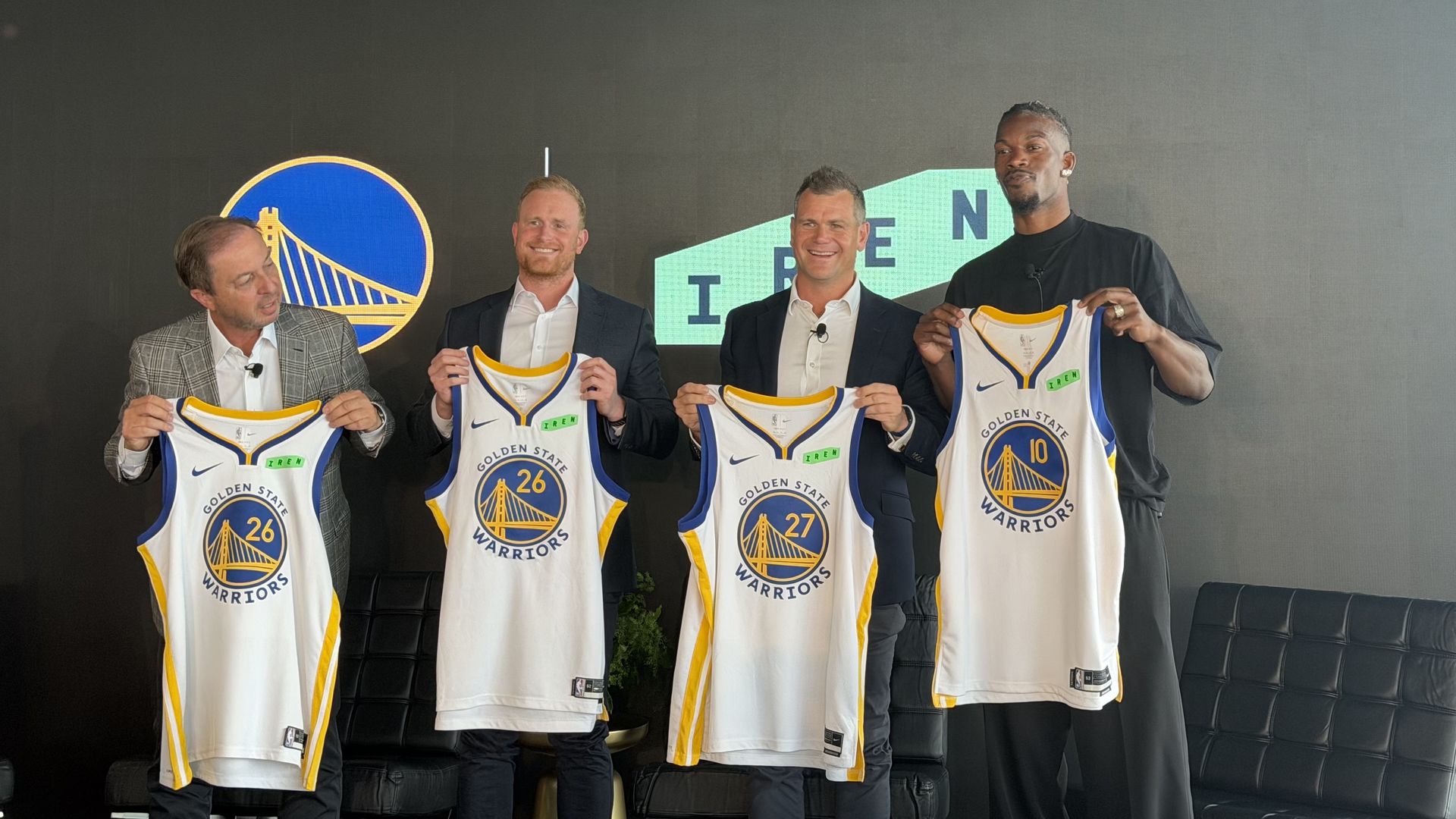
A pricey new deal to sponsor the Golden State Warriors' jersey patch could help IREN — a little-known Australia-based cloud provider — increase its reach.
Why it matters: The deal reflects a mutual courtship between an AI infrastructure provider and a sports franchise eager to tie itself to the Bay Area's booming AI economy.
Driving the news: IREN, which got its start as a bitcoin mining company, is reportedly paying more than $50 million per year for the Warriors jersey patch sponsorship.
- The deal also includes a spot on the warm-up jersey for the WNBA's Valkyries as well as on the uniforms of the Santa Cruz Warriors, the franchise for new and developing Warriors players.
What they're saying: Co-CEO Daniel Roberts told Axios that IREN's goal is to get on the radar of the Bay Area's many AI startups rather than become a household name.
- "Our compute is global, but a lot of the customer base is here," Roberts said.
- IREN sells GPU cloud capacity for AI training and inference.
The other side: The Warriors have also been leaning into the AI boom, recently adding legal AI startup Harvey to a roster of tech-related sponsors that includes Google Cloud and Hewlett Packard Enterprise.
- "We're trying to be part of an ecosystem that is inclusive of every AI company in this marketplace," Warriors chief commercial officer Mike Kitts told Axios.
My thought bubble: IREN has some catching up to do on name recognition.
- I noticed its logo on the Valkyries' warm-ups earlier this year, before the sponsorship was announced. I had to Google the name and was surprised to learn it was an AI infrastructure company.
The intrigue: The jersey patch sponsorship had been held by Japanese retailer Rakuten, which recently extended its Warriors partnership without the prime uniform spot.
Between the lines: IREN is trying to buy more than visibility. The company is also trying to cast itself as a responsible local partner at a time when data centers face growing scrutiny over their use of land, electricity and other resources.
3. KIDS Act passes House


The House yesterday passed the Kids Internet and Digital Safety Act (KIDS Act), but key senators say the legislation has little chance of advancing in its current form.
Why it matters: The vote sets up a showdown over kids' online safety as the White House works to align Congress behind legislation that would preempt some state AI laws.
Driving the news: After garnering broad bipartisan support, House lawmakers fast-tracked a package of kids' online safety measures, including a version of the Kids Online Safety Act, and sent it to the Senate.
- The bill passed in a 267-117 vote.
- The House version of KOSA does not include "duty of care" language — which would require platforms to take reasonable steps to mitigate harms stemming from design features like endless scroll or algorithmic recommendations.
Zoom in: The House package includes preemption language that critics say would make it more difficult to sue social media companies for design features.
- If that language were law, it would have prevented landmark social media cases in California, Sen. Maria Cantwell (D-Wash.) said during a call with reporters last week.
- "Let me be clear. The Senate is not interested in having these cases preempted," she said.
- "Preemption should not be a part of it, period," said KOSA co-sponsor Sen. Richard Blumenthal (D-Conn.).
4. Training data
- Anthropic cut a deal with California Gov. Gavin Newsom's administration to make Claude available at a discount to state agencies and local governments. (Politico)
- Anthropic also reportedly renegotiated with Amazon to charge by tokens instead of hourly usage, which could cost more for Amazon. (The Information)
5. + This
Mady again. Some people have their AI aha moments when they use it to fundamentally alter their productivity or solve a big problem.
- Mine was connecting Resy to Claude so it could find me a happy hour reservation in the crowded West Village on a Friday night.
- To each their own!
Thanks to Megan Morrone for editing this newsletter and Matt Piper for copy editing.
Sign up for Axios AI+
