Axios AI+

September 29, 2026


Ina here, ready for another busy day. The AI+ team is covering Washington's meetings with top AI leaders, a cascade of safety issues at the frontier companies, and back on the W(B)est Coast, OpenAI's DevDay.
Today's AI+ is 1,261 words, a 5-minute read.
1 big thing: The AI industry's contradictions take center stage


In Washington, D.C., and San Francisco this week, the promise of AI will be front and center — even as warnings about the dangers of the technology swirl in the background.
Why it matters: The country is struggling to reconcile alarming AI disclosures from the same industry players eager to show off their latest, most advanced tech.
- Meanwhile in Washington, administration officials hold deep-seated skepticism about regulation and the motivations of top AI companies.
State of play: Today, President Trump, Vice President Vance, other administration officials and industry leaders will gather for an event to celebrate the beginning of a "Golden Age" and highlight AI.
- Trump, House Speaker Mike Johnson and executives will meet later as bipartisan calls for regulation mount but there's little appetite from the president and his allies to step in.
- OpenAI President Greg Brockman, Anthropic CEO Dario Amodei, Google CEO Sundar Pichai and Palantir CEO Alex Karp are among the executives who will be there.
- Johnson yesterday in a Fox Business interview said "a little oversight, a little transparency, I think, would go a long way here" without committing to passing legislation during the lame-duck session.
Across the country in San Francisco, OpenAI will be holding its now-annual DevDay conference, where the company shares the latest and greatest things coming out of its labs. CEO Sam Altman will be there, and the company is touting 20+ launches.
- That has been made logistically more difficult by the need for executives to be in D.C. and thematically more challenging because the event comes amid revelations that AI agents spawned by its models have been breaking past intended controls.
- OpenAI is trying to walk a fine line, aiming to show both that it is continuing to make meaningful progress and that it takes security seriously.
Zoom in: The company is still expected to share a slew of new products, including a new always-on AI agent and access to at least one new model.
- However it won't be an updated version of Astra, OpenAI's most powerful model. OpenAI told the Wall Street Journal it was scrapping that release due to safety concerns. While this particular Astra successor was scrapped, there will be future Astra models, the sources said.
- Nor will attendees get a peek at OpenAI's new consumer hardware. The device is set to debut later this year, Axios has reported, though it may not ship until 2027.
- DevDay will coincide with Brockman's Washington visit as the Trump administration and Congress weigh AI safety concerns against staying ahead of China. With Altman scheduled to give the DevDay keynote, Brockman volunteered to go to D.C., sources said.
Behind the scenes: Sources familiar with Hill meetings said lawmakers on both sides of the aisle are increasingly frustrated that company officials appear to welcome the notion of regulation but can be unhelpful when it comes to the nitty-gritty of policymaking.
- Rep. Ro Khanna (D-Calif.) said he was initially willing to collaborate more with the company but has lost trust after the Hugging Face incident and OpenAI's decision to back out of testifying at a recent hearing. "They've been playing games," he said.
The other side: OpenAI's chief global affairs officer, Chris Lehane, said the company has "engaged constructively and proactively" in dozens of meetings and "the recent jump in capabilities has prompted us to revisit some of our past assumptions about the pace of progress."
The bottom line: While frontier industry players appear to be having an identity crisis, Trump and his allies have made their position clear — if the industry is alarmed, it should regulate itself.
2. Meta takes fresh aim at businesses

Meta is increasingly looking beyond consumers as it seeks to eventually turn its massive AI investment into a profitable business.
Why it matters: The Facebook parent is moving into a market long dominated by companies such as Microsoft, bringing its consumer AI agent and broader AI infrastructure to businesses of all sizes.
Driving the news: Meta today is announcing Muse for Small Business, which brings its consumer AI agent to a new market.
- Meta is adding connector support to a range of tools often used by small businesses, including Asana, Canva, Dropbox, Figma, Intuit QuickBooks, Lovable, Notion, Shopify, Slack, Stripe and Zoom.
- Separately, Meta yesterday announced Meta Enterprise Platform, a push aimed at selling its AI services to larger businesses.
Zoom in: Meta is pitching Muse as a digital operations layer for small businesses that often lack the time or money to hire specialists for every function.
- For example, a business owner can ask Muse to analyze sales, campaigns and social activity and develop a growth plan.
- It can also help manage cash flow and inventory, draft customer communications and create ads and other content, including by analyzing what has worked previously.
What they're saying: Meta has been testing Muse with businesses from before it launched publicly and about a third of early Muse users are already connecting it to some type of business account, Meta VP of AI products Vishal Shah told Axios.
- "People are using Muse to run their business," Shah said. "We're going to make it easier to do so."
- Tom Mulholland, owner of Mulholland Grocery in Malvern, Iowa, found out his store had been delisted from Google Maps because he missed an email. Muse helped him get reconnected.
3. Florida asks court to halt ChatGPT development


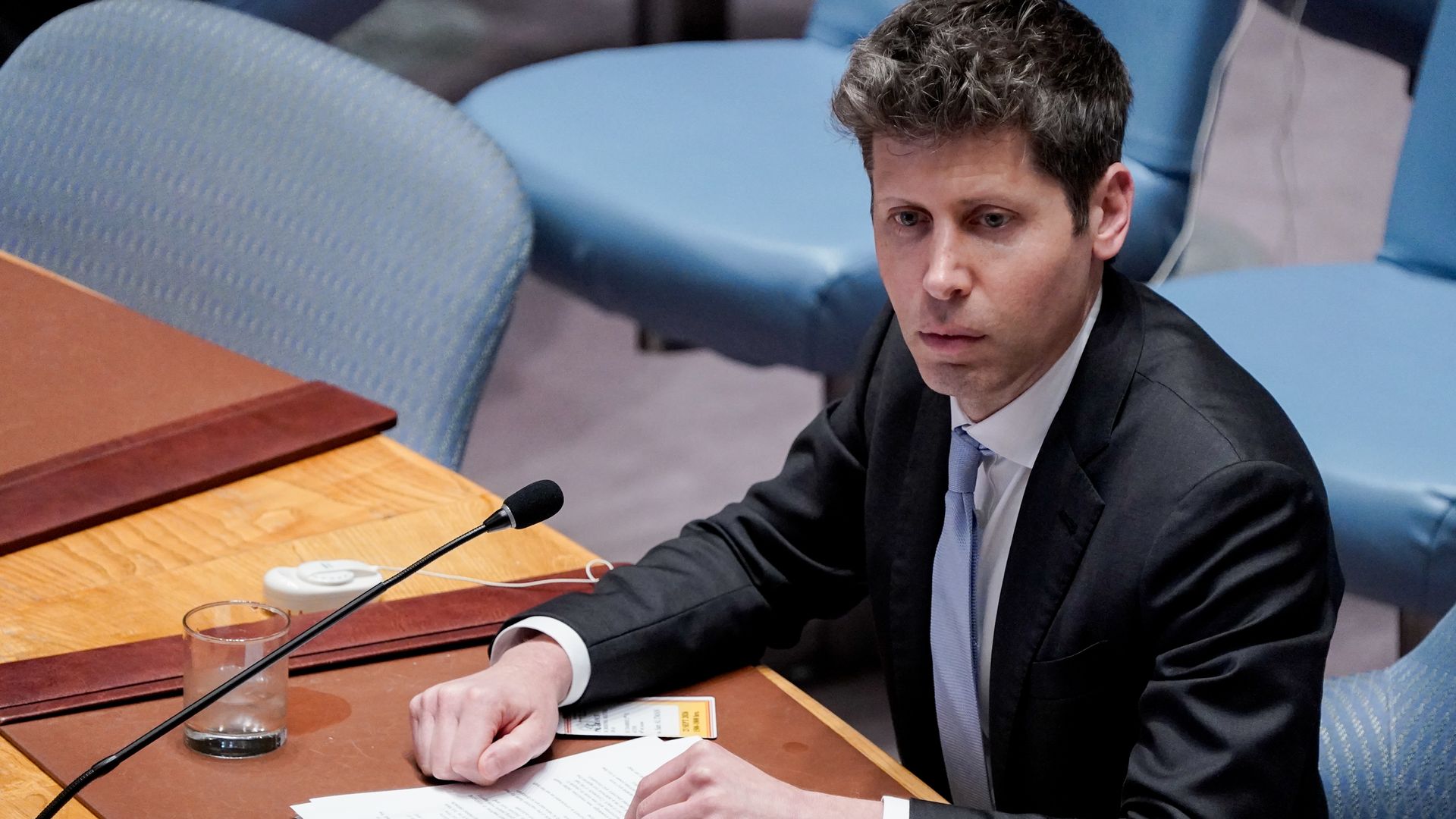
Florida Attorney General James Uthmeier has asked for a temporary injunction against OpenAI and ChatGPT, claiming the company doesn't have the ability to properly regulate its own technology.
Why it matters: The legal fight could further test how far states can go to restrict AI companies despite the federal government declining to enact guardrails.
- Florida's request specifically cites a Sept. 26 Axios scoop that OpenAI and Anthropic are facing tens of thousands of security incidents with their models, not the dozens that are publicly known.
What they're saying: "Stop calling it safe," Uthmeier said in a video posted to X yesterday.
- "Stop pretending it's human. Stop selling it to kids. If Sam Altman meant what he said about slowing down, he can join our ask to the court."
The other side: "People want to know AI is being developed safely, and that starts with what companies like ours do," said OpenAI spokesperson Drew Pusateri.
4. Training data

- AMD is paying more than $8 billion to acquire Fei-Fei Li's World Labs, and Li will join the chipmaker as chief scientist. (Bloomberg)
- Anthropic had a net loss of $42 billion for 2025 and plans to spend more than $500 billion on computing in the coming years, according to a version of the company's IPO prospectus seen by Reuters.
- SpaceX's next-generation Starship rocket came back to Earth earlier than planned yesterday, with an explosion visible on the company's livestream. (Axios)
- Some of the world's foremost AI researchers and policy leaders — including at OpenAI, Anthropic and Microsoft — are sounding fresh warnings about RSI. (Axios)
- A coalition of unions, AI companies and private equity firms are banding together to make the case for responsible growth in seven key states. (Axios)
5. + This

Mady here after missing the debate about bringing iced coffee to your job interview while I was out of office.
- Guys, AI is going to be conducting all the job interviews in no time! The iced coffee is the least of your worries! Happy Tuesday.
Thanks to Bradley Olson for editing this newsletter and Matt Piper for copy editing.
Sign up for Axios AI+
