Axios AI+

June 11, 2026


Mady here, over the moon after celebrating that last-minute Knicks win, but let's get to the onslaught of AI news:
Situational awareness: OpenAI is considering cutting prices significantly to gain market share from rival Anthropic, according to the Wall Street Journal.
- OpenAI's token cost cuts are expected to come ahead of similar cuts at Anthropic, per the report.
Today's AI+ is 1,228 words, a 4.5-minute read.
1 big thing: Prometheus, Jeff Bezos' AI startup, is now worth $41 billion

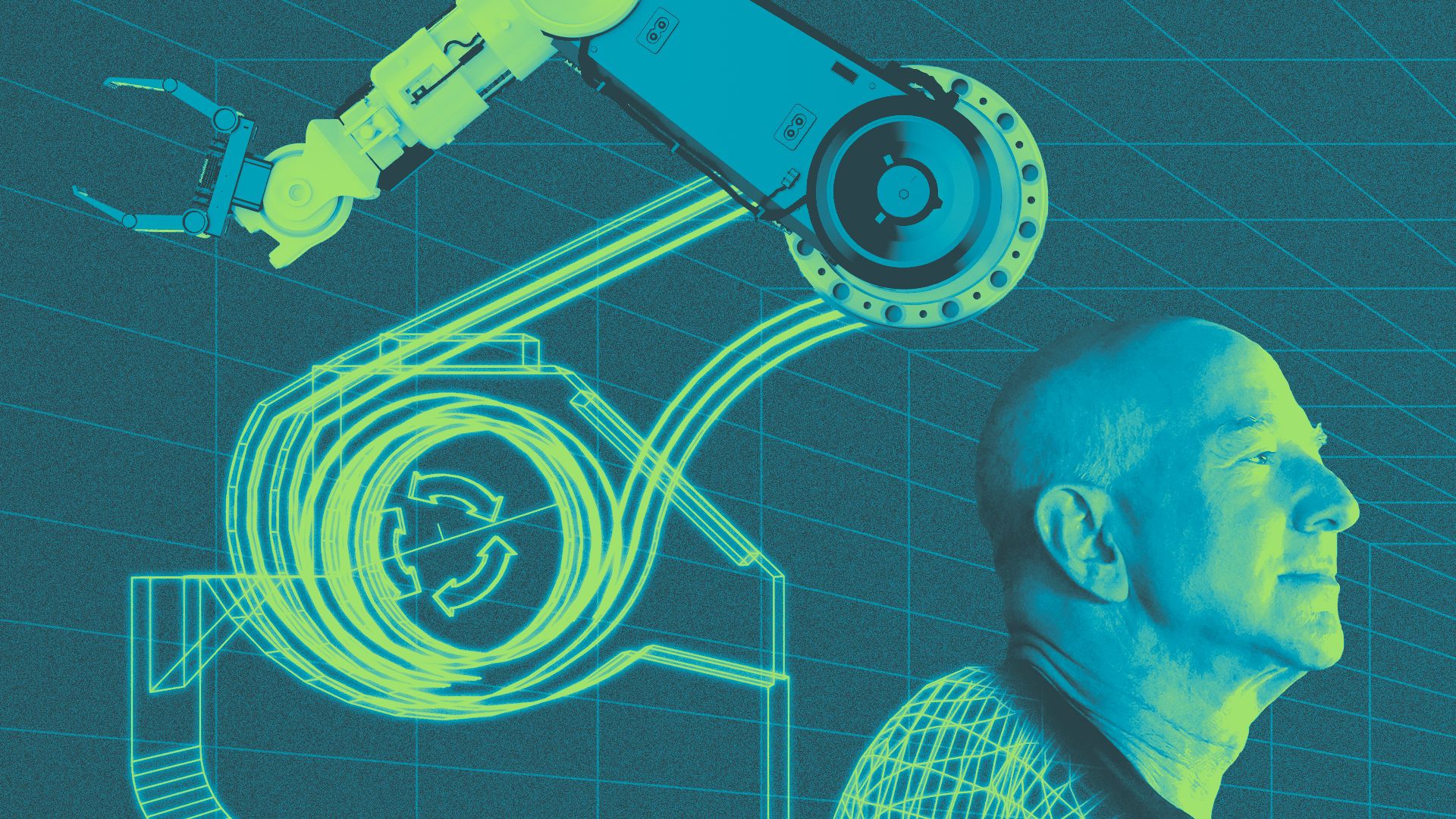
Prometheus, the industrial AI startup led by Jeff Bezos and former Google exec Vik Bajaj, today will announce that it's raised $12 billion in Series B funding at a $41 billion valuation.
Why it matters: It's a massive bet to rearchitect how physical things are made, from jet engines to medical devices to consumer electronics.
What they're saying: "The cycle from dream, to manufacturing at rate, to having it out in the world can be very long," Bezos tells Axios.
- "For example, if you go to a current jet engine manufacturer and say you want the exact same engine but with 10% more thrust, it could be a 10-year program. Not because they're lazy or bad at their jobs, but because it's so complex. So what we're doing is building a set of tools that will empower engineers to compress that cycle time and make that dream-build loop be 10 times faster or even more."
Catch up quick: We previously reported that Prometheus (which has dropped the "Project" qualifier) isn't about robotics or automating factories — although Bezos acknowledges that it could be used to design and manufacture both robots and factories.
- Instead, it's using AI to optimize pre-production machinery and processes, such as prototyping.
The big picture: Bezos and Bajaj had been publicly mum on the effort until now.
- They say that Prometheus currently has around 150 employees and seeks to build what they call an "artificial general engineer."
- It doesn't have corporate ties to either Amazon or Blue Origin, with Bezos saying "it deserves a dedicated team that is obsessed with this one thing." However, he also called Blue Origin a "case study for a customer of Prometheus."
Investors include JPMorgan, BlackRock, Goldman Sachs, DST Global, and Arch Venture Partners. Plus Bezos himself, who was the largest backer in a $6.2 billion Series A round.
The intrigue: Prometheus seems like both a replacement for human engineers and a copilot for them.
- Both Bezos and Bajaj insist that the effort, if it works, will result in more human engineers.
- "The pace of our physical creation right now is nowhere near the pace of human imagination, Bajaj argues. "If we can make it just a little bit easier, or hopefully a lot easier, to bring to life what people dream of there's going to be a lot more invention and a lot more people involved in it."
Zoom in: There's still a lot we don't know.
- For example, they declined to discuss a reported effort to raise $100 billion for an affiliated holding company that would buy legacy industrial companies that would then feed data into Prometheus (and, presumably, provide those companies with AI solutions in a virtuous cycle).
- In a similar vein, they aren't sharing how Prometheus is being trained, except to acknowledge that there isn't an "Internet of manufacturing data" they can ingest. Same goes for timing or details of its initial product rollout.
The bottom line: Bezos has his billions. Now it's time to build.
2. Anthropic CEO says AI policy must change

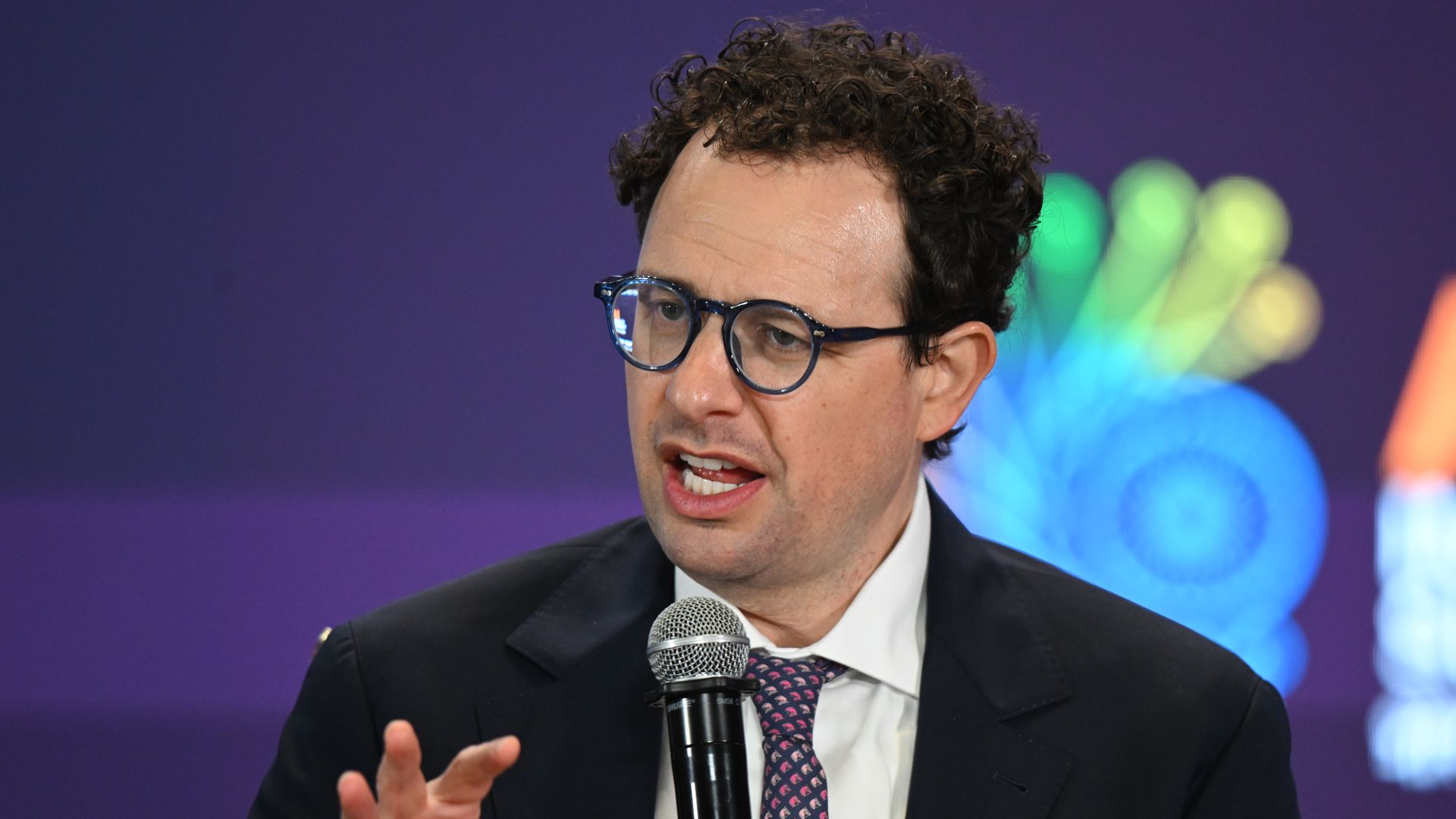
The government should legally be able to block or deter dangerous AI deployments, Anthropic CEO Dario Amodei wrote in an essay yesterday.
Why it matters: Anthropic's ideas for tech regulation and economic disruption from AI go far beyond anything currently under serious consideration in Washington.
- They're also sure to stir up a new set of accusations that Anthropic is proposing strict rules to lock in its own dominance or using frightening future scenarios as a marketing ploy.
Driving the news: Amodei's new essay and proposed advanced AI framework argues that policy has to change in response to the rapid development of AI.
- Trump's AI executive order should go further, he writes, and require mandatory testing for risks related to cybersecurity, biological weapons, loss of control or automated R&D.
- Even more aggressive regulation might be needed in the future if AI systems become more of a threat, he writes.
- Anthropic is also proposing an economic policy framework to address AI disruption including capital accounts, wage insurance, tax incentives and an expanded social safety net.
What they're saying: "AI is advancing at a lightning pace," Amodei writes. "... By contrast, policy — and especially legislation — moves very slowly."
- Following the release of Anthropic's power model Mythos, Amodei writes that biological risks and "serious AI autonomy risks" may soon follow.
- "We now, globally and collectively, need to activate a slow and rickety policy apparatus to deal with risks and opportunities that are going to compound surprisingly quickly from here."
Amodei writes that existing transparency legislation is not enough and calls for "more serious and binding regulation of AI."
- Like cars, airplanes or drugs, he writes, AI regulation should require frontier models to go through rigorous testing and auditing.
- "Their release should be blocked or reversed as a threat to public safety if they do not meet high standards of safety."
On the economy, Amodei writes that "it's reasonable to think that AI could
produce much larger disruptions to the labor market than previous technologies, and, potentially, more enduring disruptions."
- He calls for better data on AI-related job loss, wage insurance, retention tax incentives and possibly universal basic income or universal capital accounts.
- Public opposition to data center buildouts is "largely a symbol or outlet for broader economic anxieties about AI," Amodei writes.
Between the lines: Amodei also writes that regulatory systems are not prepared for how quickly AI will bring new advancements.
- He suggests reform at agencies like the FDA to approve new drugs discovered by AI faster.
- He also suggests banning domestic use of fully autonomous weapons and advocates for continued leadership and coordination from democratic countries on AI.
The bottom line: Amodei still wants the public to be aware of AI's benefits.
- "I am optimistic about finding solutions because many of these issues — from addressing job displacement, to pre-release testing of models, to export controls on chips, to other AI related policy issues such as energy use — have a common-sense appeal across the political spectrum," he writes.
3. Training data
- Visa partnered with OpenAI to give AI agents a way to spend a user's money, with a few limits. (Axios)
- Tech stocks hit a five-week low as oil prices continued to spike. (Bloomberg)
- Half the economists surveyed by the Wall Street Journal see AI leading to no change in the labor market.
- China's successful open source AI companies could be a drag on U.S. IPOs. (Axios Pro)
- Exclusive: Utility software company Kraken Technologies says it will use AI startup Sierra's customer service tech to serve millions of customers. (Axios)
4. + This
SpaceX will trade publicly for the first time tomorrow, and I talked about the upcoming season of AI IPOs and whether we're in an AI bubble on CNN.
- And for those lovely readers who have messaged me asking if they should buy into the SpaceX IPO, I cannot offer financial advice, but I can redirect you to what the experts told me in response to that question.
Thanks to Megan Morrone for editing this newsletter and Matt Piper for copy editing.
Sign up for Axios AI+
