Axios AI+
May 08, 2025

FYI, today is national "Have a Coke Day," commemorating the debut of the carbonated beverage on this day in 1886. Today's AI+ is 1,176 words, a 4.5-minute read.
Situational awareness: Instacart CEO Fidji Simo will join OpenAI in the new role of CEO of applications, reporting to CEO Sam Altman, the company announced late Thursday. Simo, who spent a decade in key roles at Facebook, took Instacart public in 2023 and has served on OpenAI's board since last year.
1 big thing: Apple's AI search gambit

Reports that Apple could add AI search options to its Safari browser — the iPhone default — sent Google shares plunging Wednesday and set off a wave of speculation about the future of AI-driven search.
The big picture: Apple's comment during hearings in Google's antitrust trial Wednesday was more likely a legal maneuver than an indication of a deep shift in the economics of search. But the prospect that AI could disrupt the business that drives Google's massive profits is real.
Driving the news: At the Google trial hearings, Apple executive Eddy Cue disclosed that the company is considering replacing Google with AI-powered search engines, per Bloomberg.
- Cue also testified that last month — for the first time ever — Apple saw a decline in the number of searches performed through Safari, a move he says is likely driven by the adoption of AI. Google disputes this.
How it works: Under a long-standing deal, Google pays Apple a fortune — upward of $20 billion a year — to be the default search option in Safari, the dominant browser for iPhones.
- Combined with Google's control over Chrome and the Android ecosystem, the deal essentially guarantees Google will get a large share of search queries — and be able to sell ads to those users.
Yes, but: No AI alternative is likely to bring in the kind of revenue Apple gets from Google, since most AI search tools today aren't bringing in much revenue at all. OpenAI's search engine doesn't even have ads, yet.
- In traditional search the only realistic possibility is Microsoft, which has previously explored paying to be Apple's default option.
- But due to its smaller share of a scale-driven business, Microsoft makes less revenue and profit per query, meaning it probably wouldn't match what Google currently pays.
State of play: The court is currently weighing what restrictions to put on Google's business after finding the company violated antitrust law.
- Remedies on the table include restrictions on Google's ability to make deals like the one with Apple, as well as stronger measures like forcing Google to sell its browser or open its search engine index up to rivals.
Our thought bubble: Cue was likely trying to thread a needle in describing the competitive dynamics of the search business.
- Apple could benefit from a world that sees Google forced to open its search index to upstarts, including AI companies such as OpenAI and Perplexity.
- But Apple also has a strong interest in stopping the court from barring its deal with Google, and the billions that come with it.
What they're saying: In a research note, analysts at Capstone said they believe the market overreacted and misinterpreted Cue's comment to suggest that Apple was looking to replace Google as the search default even if the court didn't mandate that.
- Instead, the researchers said, Cue was aiming to draw attention to new AI players in the search market. That would show the market is healthy and open to new entrants — and also undercut the government's case to scuttle the lucrative Apple/Google arrangement.
What we're watching: Right now Google search is much more economically feasible than AI search at scale because it was built so efficiently. But the costs of generative AI search can and probably will go down.
Ben Berkowitz contributed to this story.
2. OpenAI's governance headache

/2025/05/07/1746650478671.gif?w=3840)
Control of OpenAI, the company announced this week, will continue to be held by a board devoted to humanity's benefit rather than financial gain — but exactly how humanity gets a say in the organization's decisions remains unclear.
Where it stands: The OpenAI nonprofit will appoint the board of the for-profit, and will also own a significant chunk of its shares. Per a company spokesperson, the nonprofit will also have control of a majority of the votes at the for-profit, regardless of how many shares it owns.
The big picture: The open question is exactly how the nonprofit will exercise its obligation to humanity, beyond simply appointing individuals to the for-profit board.
- After all, once they're on the for-profit board, and regardless of who nominates them, those individuals will be paid, and will have a financial incentive to maximize profits.
- "The whole point of this is that the nonprofit controls the for-profit," says Jill Horwitz, a professor at UCLA Law. "If all they're doing is appointing people and deciding whether to go public, then how is the nonprofit purpose going to continue to control the subsidiary? Because that's what matters."
Where it stands: In the U.S., the primary regulators of nonprofits are state attorneys general — and indeed OpenAI said this week that it continues to engage in "constructive dialogue" with the AGs of California, where it's based, and of Delaware, where it's incorporated.
- The OpenAI board has a clear responsibility — and the California AG, in particular, also has a responsibility to ensure that board does what it has said it is going to do.
- "When you get nonprofits and for-profits acting together, you need oversight," says Horwitz — a lesson learned from studying nonprofit hospitals that merged with for-profit hospitals.
- "That oversight should be funded by the entity, because the entity has all the money."
Zoom in: The state of California has an active charities bureau where most of the pressure on OpenAI will likely come from.
- The California AG also may have more standing than Delaware to take oversight of OpenAI's day-to-day operations, rather than just its incorporation paperwork.
- So far, the California AG has not formally signed off on any plan — it has just given feedback to OpenAI, which has incorporated that feedback into its strategy.
- That kind of semiformal oversight is likely to remain a permanent part of OpenAI's governance mechanism, given that it now says it's going to remain controlled by the nonprofit in perpetuity.
The bottom line: As Horwitz tells Axios, "I don't think we're done seeing attorney general involvement in the unfolding of the OpenAI story."
3. Trump to scrap Biden's "AI diffusion rule"


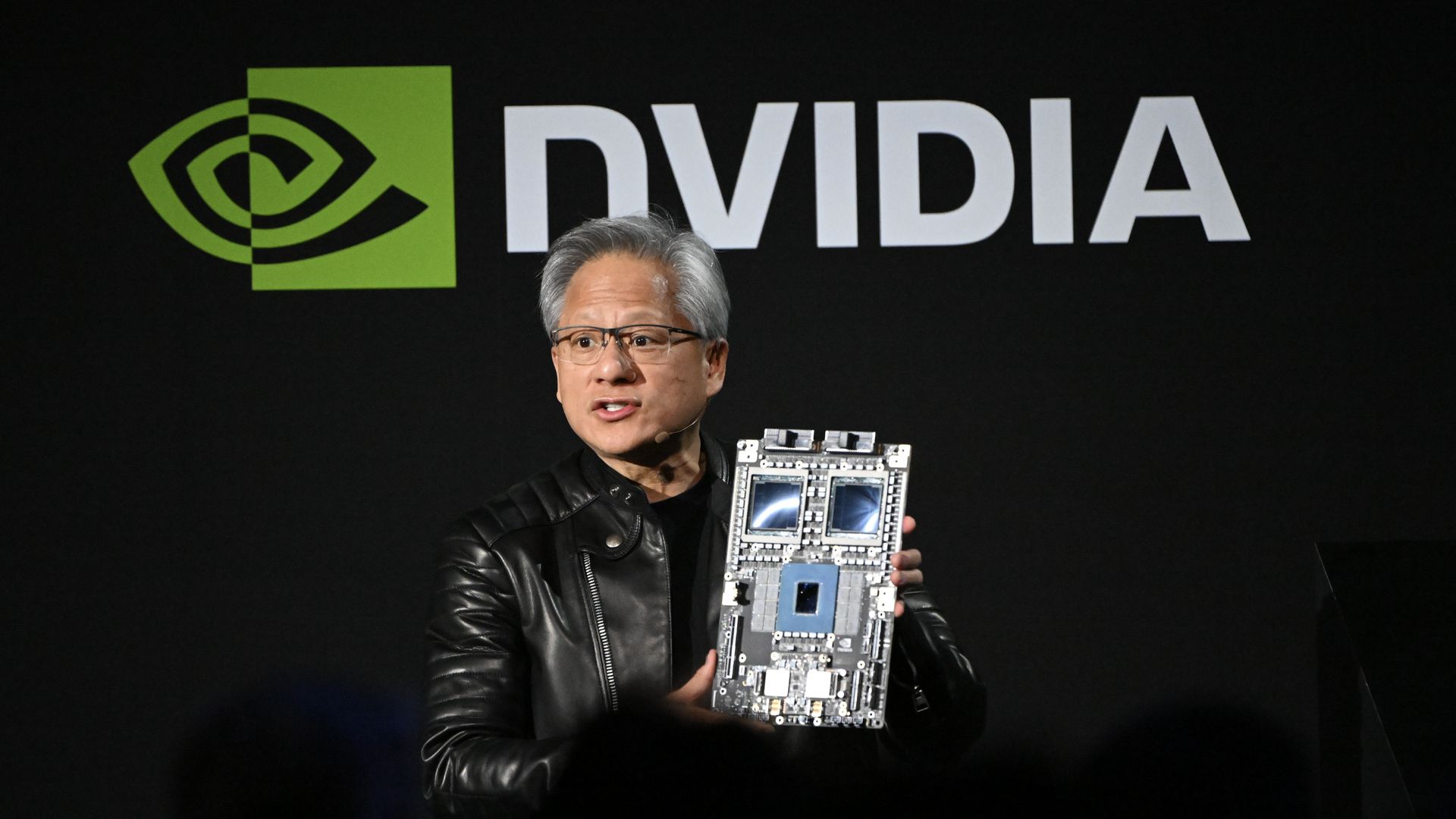
The Trump administration will kill a looming Biden-era rule today that would have restricted how American technology is exported overseas, and is planning to issue new guidance within a few months, a source familiar with the matter told Axios.
Why it matters: The so-called AI diffusion rule was a top target for the Trump administration and a number of AI and chip companies, who said it imposed overly complex rules that would make it difficult for American companies to sell abroad.
4. Training data
- New York Magazine took a look at the massive impact AI tools like ChatGPT are having in higher education.
- An Arizona judge let the AI-created avatar of a homicide victim give an impact statement at his killer's sentencing hearing. (404 Media)
- Meta is said to be reviving its work on facial recognition after abandoning efforts several years ago because of privacy concerns. (The Information)
- Tech titans backed Trump with seven-figure checks, but have seen limited return on that investment. (Axios)
5. + This
A rare two-headed kingsnake was recently born at a reptile store in Berkeley, California. Angel and Zeke are the names. I know you wanted to know.
Thanks to Scott Rosenberg and Megan Morrone for editing this newsletter and Matt Piper for copy editing.
Sign up for Axios AI+
