Axios AI+

January 06, 2026

Shoutout to everyone still recovering from the first day back at school and work. I know our house is. Today's AI+ is 1,195 words, a 4.5-minute read.
1 big thing: Grok's images raise regulator ire

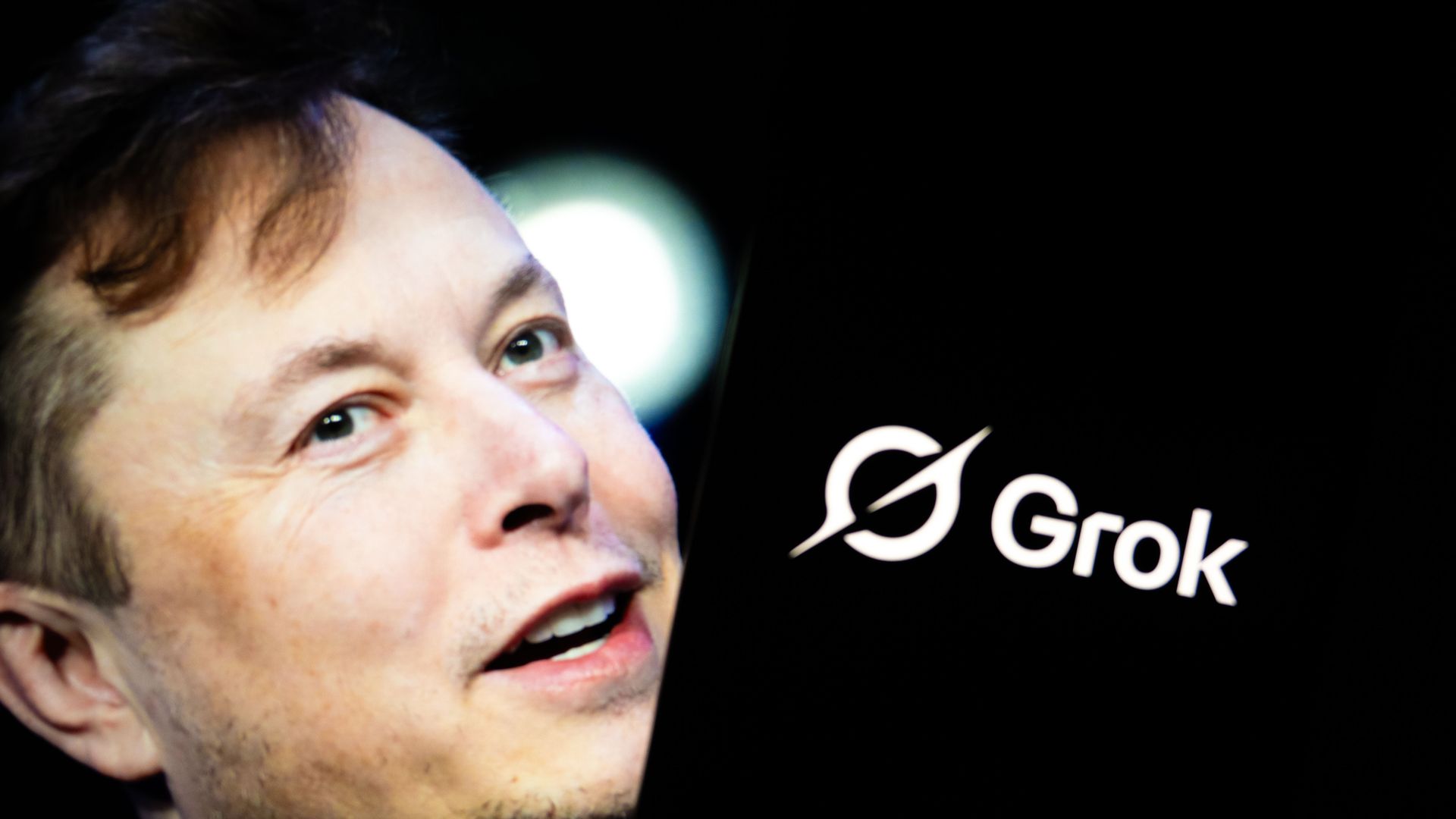
Elon Musk's Grok chatbot continues to generate image edits that put people in bikinis even as regulators and lawmakers in the U.S. and abroad warn of legal risk.
Why it matters: Public X feeds feature Grok's AI creations, autonomously posting images to the world that many other users may be creating and sharing in private.
Driving the news: In recent days, Grok's feed on X has filled with responses to requests to edit photos by replacing the clothing of women — and in some cases girls — with bikinis.
- Regulators in the U.K., France, India and elsewhere have warned of potential investigations and other action in response.
- In the U.S., legislators in both houses of Congress are also expressing concern.
- Meanwhile, a look at Grok's public "replies" feed today showed the chatbot continuing to put women, men and even objects into bikinis.
What they're saying: U.S. lawmakers are criticizing X and other tech companies for failing to curb harmful and illegal AI-generated content.
- "AI chatbots are not protected by Section 230 for content they generate, and companies should be held fully responsible for the criminal and harmful results of that content," Sen. Ron Wyden (D-Ore.) said in a statement to Axios. "States must step in to hold X and Musk accountable if Trump's DOJ won't."
- "The Department of Justice takes AI-generated child sex abuse material extremely seriously and will aggressively prosecute any producer or possessor of CSAM," a DOJ spokesperson tells Axios. "We continue to explore ways to optimize enforcement in this space to protect children and hold accountable individuals who exploit technology to harm our most vulnerable."
- "This grotesque behavior will only get worse," Rep. Jake Auchincloss (D-Mass.) tells Axios. "My bipartisan legislation — the Deepfake Liability Act — will make hosting sexualized deepfakes of women and kids a board-level problem for Musk and [Meta CEO Mark] Zuckerberg."
Zoom in: In the U.K., regulators say they've contacted X about the child sex abuse material and the images of undressed adults
- "We have made urgent contact with X and xAI to understand what steps they have taken to comply with their legal duties to protect users in the U.K.," British telecom regulator Ofcom said in a statement posted to X.
- "Based on their response we will undertake a swift assessment to determine whether there are potential compliance issues that warrant investigation," the statement said.
The big picture: Musk and the X Safety team have warned users that they will be held accountable if they ask Grok to create illegal images, while also touting Grok's abilities and reportedly record traffic on X.
- Lawyers tell Axios that Grok also bears liability because it generates the images itself with its AI.
- "The company is creating this new material, so it's not mere instruction by the user," Ari Waldman, a law professor at the University of California at Irvine, tells Axios.
- "It doesn't mean that it's user-generated material; it is generated by the platform. So you can have criminal and civil liability for all of the parties involved, one does not preclude the other," Waldman says.
- "So Elon Musk saying that he's going to hold someone responsible is fine, but as with many things that he does, he's not telling the whole story. He can also be liable."
Between the lines: Grok is also unique among chatbots in that it is not only generating images but also, in many cases, sharing the generations to the Grok X feed.
What to watch: In the U.S., the TAKE IT DOWN Act was signed into law last year, prohibiting the nonconsensual online publication of intimate visual depictions of individuals of all ages, to be enforced by the FTC.
- The law does not fully go into effect until May 2026. The FTC did not respond to a request for comment.
2. Nvidia CEO pushes autonomous cars at CES

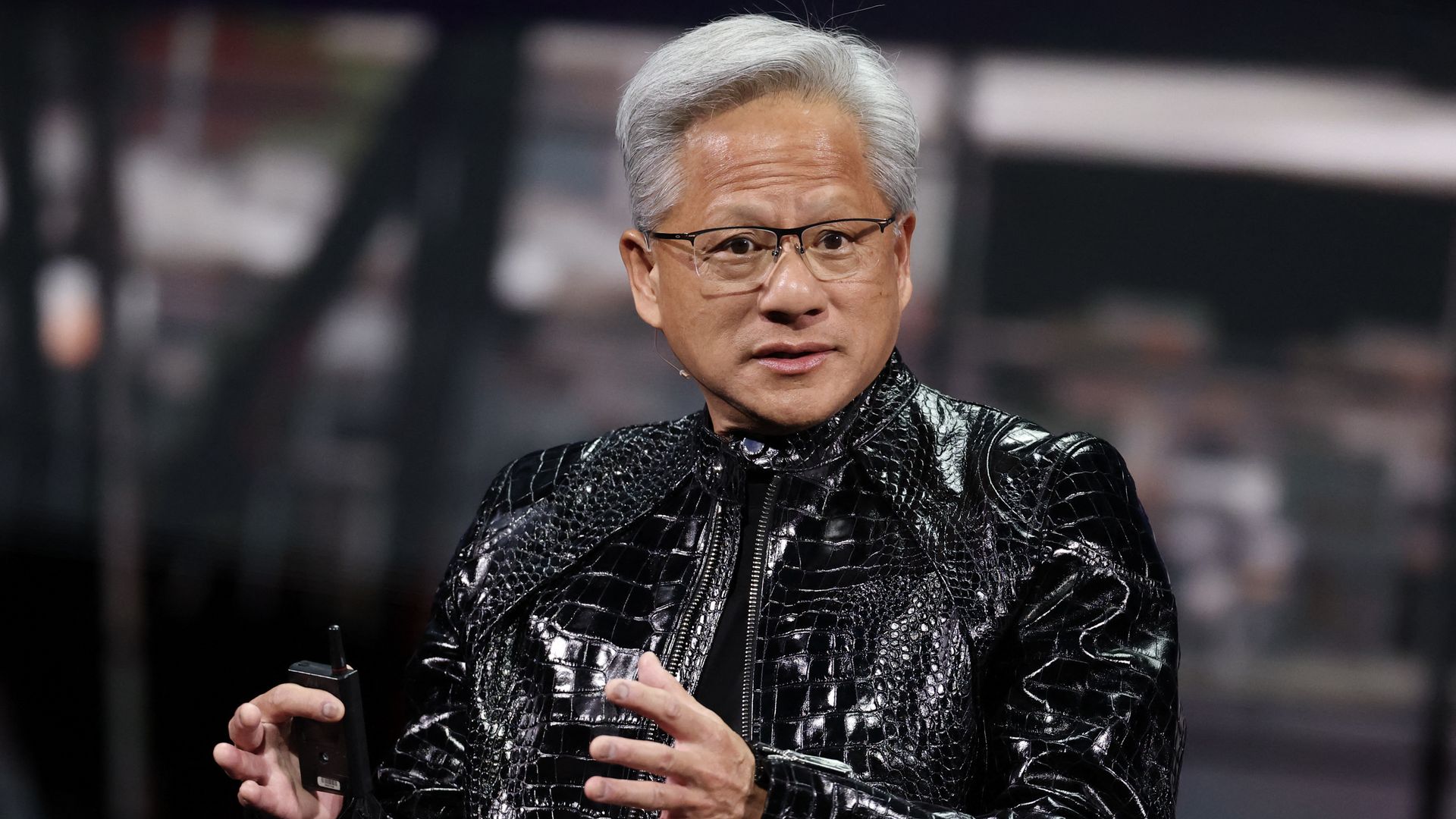
Nvidia CEO Jensen Huang announced the launch of AI models for autonomous vehicles and new chips during a presentation at the Consumer Electronics Show yesterday.
Why it matters: The strategy underscores where the next wave of AI and computing is headed, given Nvidia's dominance in the chip market.
Driving the news: "The ChatGPT moment for physical AI is here — when machines begin to understand, reason and act in the real world," Huang said in a statement. "Robotaxis are among the first to benefit."
- Speaking onstage in Las Vegas, Huang said Alpamayo is "the world's first thinking, reasoning autonomous vehicle AI. Alpamayo is trained end-to-end, literally from camera-in to actuation-out."
- Huang also said the new Mercedes-Benz CLA will feature Nvidia's driver assistance software in what he said is the company's "first entire stack endeavor." He then showed a demo of the car driving in San Francisco, avoiding pedestrians and taking turns.
- Huang also announced the launch of the Rubin platform, composed of six chips. The products will be available for Nvidia partners in the second half of 2026, the company said.
- "There's no question in my mind now that this is going to be one of the largest robotics industries, and I'm so happy that we worked on it," Huang said. "Our vision is that someday every single car, every single truck will be autonomous."
Reality check: Self-driving cars could threaten millions of jobs and already face pushback from unions.
Catch up quick: The presentation follows Nvidia entering into a nonexclusive tech licensing agreement with Groq, a startup producing chips to support real-time chatbot queries.
- That deal helps strengthen Nvidia in inference, the stage at which AI models use what they've learned in the training process to produce real-world results, Axios' Megan Morrone writes.
- This phase is essential for AI to scale.
The big picture: Nvidia has long been investing in physical AI, meaning AI interfacing with the world and not just software.
- Last year, Nvidia stole the show at CES with a series of announcements, including its work in robotics and autonomous vehicles alongside new gaming chips and a smaller AI processing unit called DIGITS.
- Of course, robotics extends beyond cars. Huang was joined onstage by two BD-1 units, droids from the Star Wars universe, as he displayed and discussed an image of other robots that rely on Nvidia's tech such as Caterpillar's construction equipment and Agibot's humanoid robots.
Zoom out: Nvidia's competitors are also attending CES to stake their claims in the AI market, including AMD CEO Lisa Su, Qualcomm CEO Cristiano Amon and representatives from Intel.
3. Training data
- A viral Reddit post supposedly revealing inside chicanery at an online delivery platform may well have been AI-generated rage bait. (Platformer)
- AI-generated footage purporting to be from military operations in Venezuela is spreading through social media, especially X. (NewsGuard)
- Amazon said all users can now chat with its improved Alexa+ chatbot on the Web, while also using CES to debut a Fire TV redesign and a TV. (The Verge/TechCrunch)
4. + This
Lego used an appearance at CES to announce the "Smart Brick," an element the size of a standard 2-by-4 brick that packs a host of sensors including an accelerometer.
Thanks to Megan Morrone for editing this newsletter and Matt Piper for copy editing.
Sign up for Axios AI+
