Axios AI+
January 23, 2025

It's been another busy morning here in Davos, including this town hall session I moderated featuring Meta's Yann LeCun and MIT Media Lab head Dava Newman. Today's AI+ is 1,085 words, a 4-minute read.
1 big thing: The "AI worker" trap

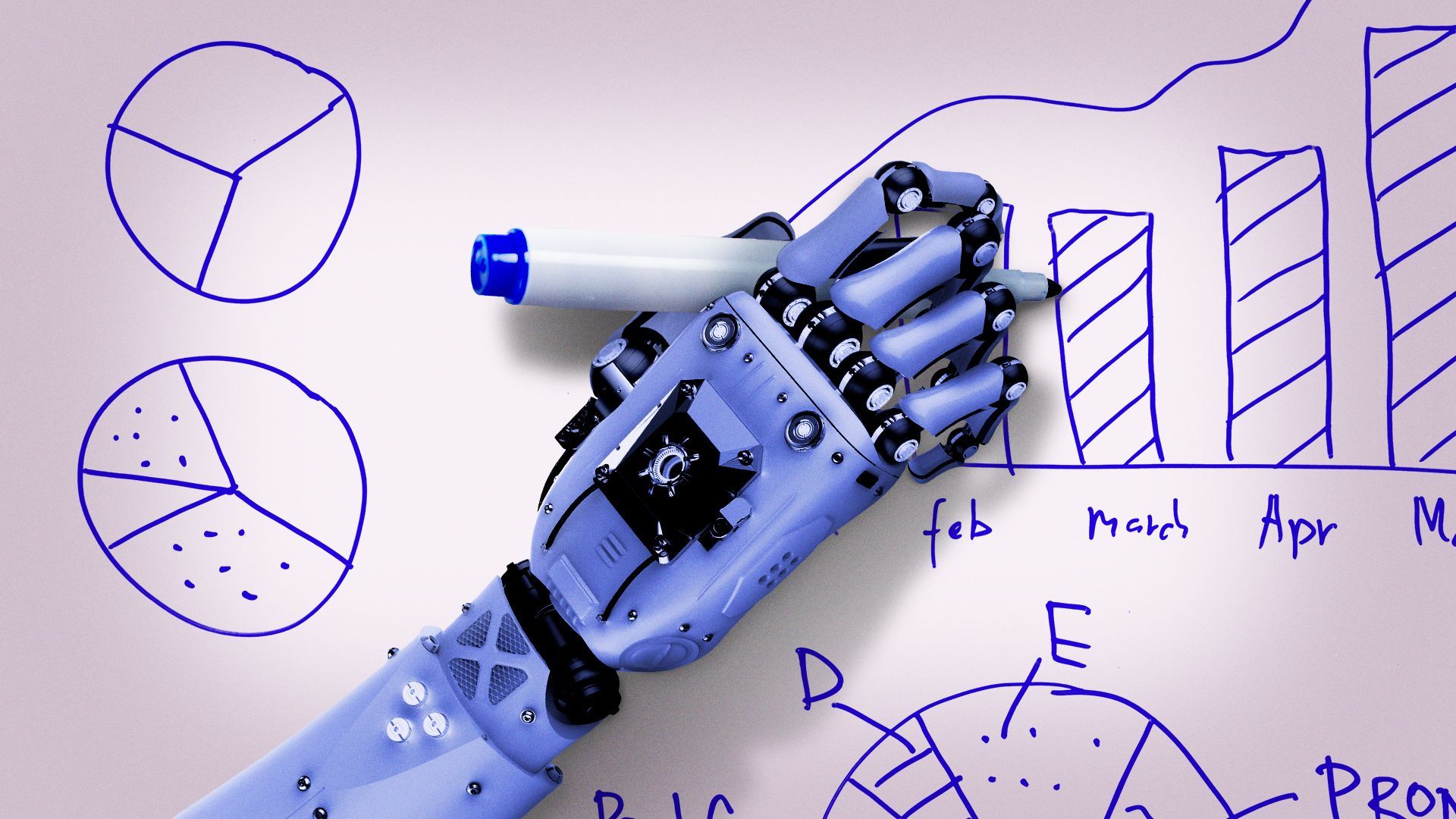
The chatbot that's giving you information and ideas today is not your friend or neighbor — and the AI agent that might perform tasks for you tomorrow is not your coworker.
Why it matters: As the prospect of AI agents comes into clearer view, AI creators and business leaders keep describing them as "AI workers" or "AI employees."
- That's only going to make everyone who's already on edge about AI more uneasy — and muddle the important debates we need to have about the future of labor in an AI-driven world.
What they're saying: In a conversation with Axios' Ina Fried at Davos yesterday, Salesforce CEO Marc Benioff said, "The CEOs who are here today, these are the last CEOs who will manage a workforce of only human beings. We are really moving into a world now of managing humans and agents together."
- Benioff's comment echoed OpenAI CEO Sam Altman's prediction in his "The Intelligence Age": "Eventually we can each have a personal AI team, full of virtual experts in different areas, working together to create almost anything we can imagine."
- In a blog post to greet the new year, Altman wrote, "We believe that, in 2025, we may see the first AI agents 'join the workforce' and materially change the output of companies."
- Already, research labs are talking about "hiring" "AI scientists" and corporations are announcing that they have "AI board members."
The big picture: Right now, it feels natural to cast AI programs as new entrants in the workforce to be managed, or new expert members of your personal team.
- That's because today's generative AI has entered our lives in the form of ChatGPT and other chatbots — helpful digital interlocutors that are built to please with a stream of words.
Yes, but: An AI agent is a way to automate white-collar work using digital technology. That doesn't make one any more of a "worker" than a typewriter or a copy machine.
- When the steam engine, the mainframe computer and the assembly line robot all took on tasks that had previously been manually performed by human beings, no one suggested that these machines were "entering the workforce."
Between the lines: AI makers are rushing to refer to their mathematical models as "workers" because it's convenient right now.
- It helps the makers of this fabulously expensive, energy-hungry technology explain its value to a world of business decision-makers who still aren't quite sure what it's good for.
Workers are the single biggest expense in many industries.
- An AI "worker" won't ask for raises. It won't need vacations, sick time, and retirement benefits. It won't raise ethical concerns or question management decisions. And it won't agitate for a union or go on strike.
- That looks very appealing from the corporate boardroom.
The personification of AI also helps AI makers build the case for charging more for their product.
- The business software packages that underlie the revenue streams for companies like Microsoft, Google and Salesforce are typically based on "per seat" pricing pegged to the number of employees using the tools.
- If AI enables customers to do more work with fewer employees, it will just cut the software companies' per-seat revenue.
- But if the AI maker is selling customers new "AI workers" that cost less than real people, it could charge more for its products while still saving businesses money.
State of play: The tech industry is trying to prove AI's value to executives while also persuading human workers that AI is not the enemy.
- The "AI worker" talk charms the titans at Davos but alienates employees in the trenches.
- Across America, CEOs are ordering their workers to experiment with AI, while workers are googling "how do I turn Copilot off?"
Zoom out: From the personal computer to the internet to the smartphone, we've welcomed each new wave of digital technology with high hopes that it will empower individual workers. Then we've watched with sinking hearts as dehumanizing realities kicked in and work got more frenetic, distracting and disconnected.
- Telling people that AI is "your new coworker" is a convenient marketing tactic — but it's setting us up for another round of disappointment.
2. Musk bashes OpenAI's Stargate deal

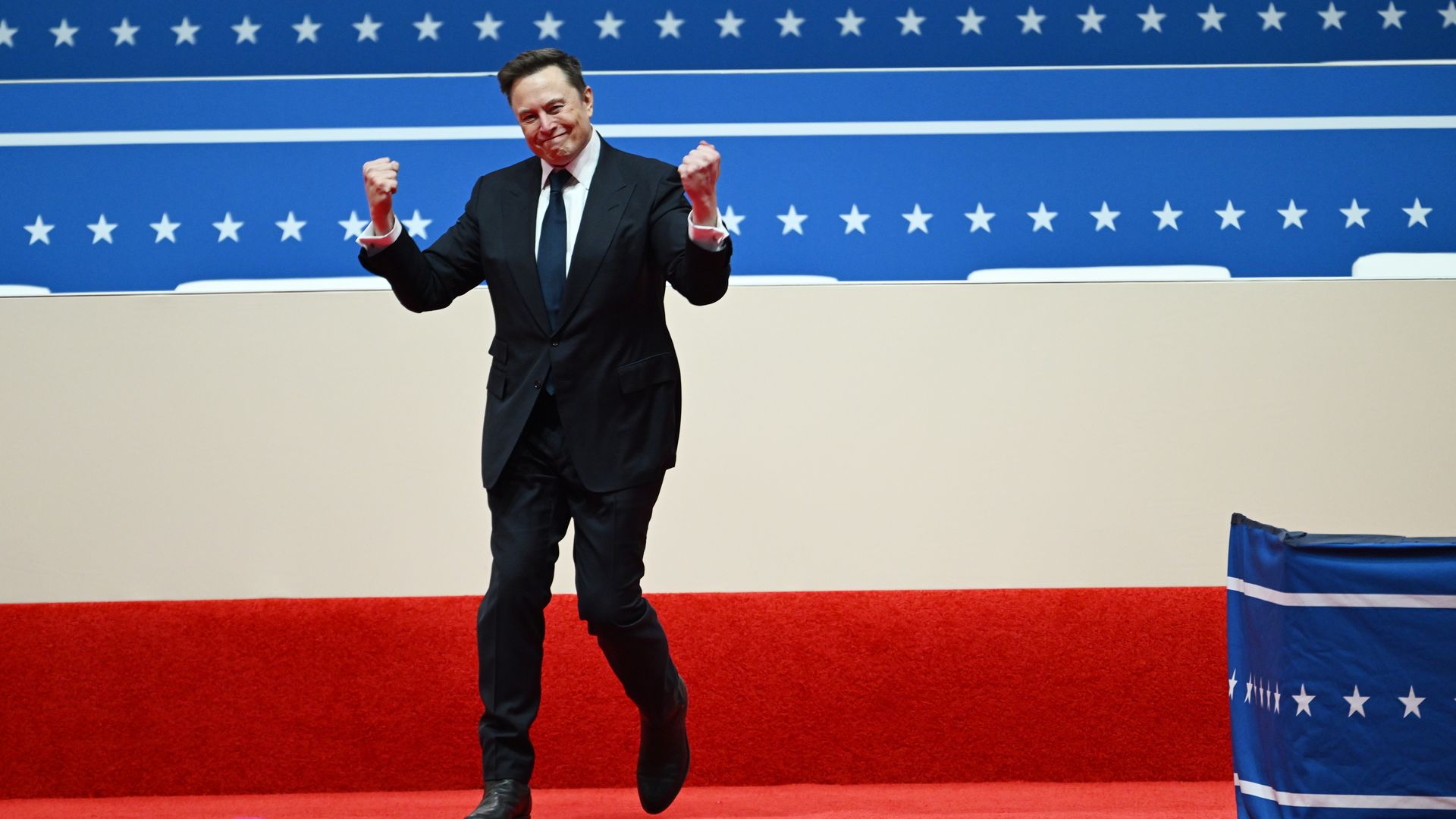
Hours after President Trump announced a major artificial intelligence investment, it faced skepticism from one of his closest allies: DOGE head Elon Musk.
Why it matters: Musk publicly undermining the $500 billion project, led by OpenAI and other tech titans, could draw Trump's ire.
- Trump tasked Musk with slashing federal spending with the new Department of Government Efficiency.
- The pair's budding relationship has grown more entwined since Trump won back the White House, but this is one of their most public disagreements to date.
What he's saying: "They don't actually have the money," Musk said on X late Tuesday night in response to OpenAI's announcement of the project.
- A spokesperson for the White House did not immediately respond to Axios' request for comment on Musk's post.
Catch up quick: "The Stargate Project," a joint venture funded by SoftBank, OpenAI, Oracle and MGX intends to invest $500 billion over the next four years building new AI infrastructure in the U.S.
- The project will create hundreds of thousands of jobs, the company said. Trump called it a "monumental undertaking."
- Arm, Microsoft, Nvidia, Oracle and OpenAI are the initial technology partners.
Driving the news: Musk said he had it on "good authority" that SoftBank secured "well under" $10 billion.
- "Wrong, as you surely know," OpenAI CEO Sam Altman responded to Musk. He urged him to put the country ahead of his own companies.
- "I genuinely respect your accomplishments and think you are the most inspiring entrepreneur of our time," Altman said earlier.
Between the lines: Musk and Altman have had a fraught relationship after a falling-out over the direction of OpenAI, which both men co-founded, and Musk is deep in the latest of several lawsuits he has brought against OpenAI.
Go deeper: Trump announces billions in private sector AI investment
3. Training data
- The White House requested resignation letters from the three Democrats on the Privacy and Civil Liberties Oversight Board, a key intelligence program watchdog agency, leaving it with just one member. (Axios)
- Real estate mogul and Project Liberty founder Frank McCourt says MrBeast may join his bid to buy TikTok's U.S. arm. (Axios)
- The makers of the Oscar-nominated "The Brutalist" defended their use of AI voice tool Respeecher to edit actors' Hungarian language dialogue. (Variety)
4. + This

The vending machine at the train station in Switzerland. Candy, drinks and ... a pregnancy test?
Thanks to Scott Rosenberg and Megan Morrone for editing this newsletter and Matt Piper for copy editing it.
Sign up for Axios AI+
