Axios AI+

March 18, 2026


A quick reminder that it's time to get in your brackets if you want to compete against the bots in our Axios AI+ challenge (password: beattherobots). On the men's side, Dan Primack's Pro Rata challenge is here (password: BFD). Today's AI+ is 1,196 words, a 4.5-minute read.
1 big thing: Hollywood shifts from fear to AI adoption


Hollywood is investing heavily in AI, positioning it as infrastructure, not as a replacement for creators.
Why it matters: Like most industries, those in entertainment have moved from resistance to experimentation, and now selective adoption.
State of play: Streamers like Netflix, Peacock and Prime Video are already actively building AI into production and the viewer experience.
- Netflix recently announced a deal to acquire Ben Affleck's startup that uses AI to support the post-production process, while Peacock rolled out a new AI avatar of TV personality Andy Cohen to help viewers discover content within its app.
- Plus, high-profile creatives and directors are starting to lighten their negative rhetoric around AI.
- "I am not for AI if it replaces a creative individual," said filmmaker Steven Spielberg at SXSW, but he added that he sees the value of it "in many disciplines."
Driving the news: Albert Cheng, head of AI Studios at Amazon MGM Studios, has embraced the "creator in the loop" model, where AI is integrated across production workflows with strict guardrails where humans still make the decisions.
- "AI [use] must be human-centered. That is a North Star. We had to think through how AI can be applied to each of our workflows, and also make sure that people are driving the creative process."
- "We'll always use human writers, actors, directors, heads of departments, among others. These are all very important. And part of that is the construct of copyright protection. ... In order for us to protect copyright, we need to have human inputs in all parts of the creative process," he added.
Currently, Amazon Studios is using AI to map scenes before filming and support post-production effects.
- The result has been faster production and fewer bottlenecks, said Cheng. "You can shoot something and see near-final visuals the same day," he added.
- The time and cost savings decrease the amount of time between seasons and are being reinvested in the creation of more content and storytelling, says Cheng.
Zoom out: AI isn't just changing how content is made, but it's also reshaping how films and shows are distributed and consumed.
- At Prime Video, AI is already powering personalized recommendations, shorter, AI-generated synopses and accessibility features like dialogue enhancement and audio descriptions.
Zoom in: Cheng works hand in hand with Raf Soltanovich, who oversees technology for Prime Video and Amazon MGM Studios, to help build AI-powered tools in support of creators.
- Soltanovich says the goal is a flywheel between tech and creativity.
- "Powerful, forward-thinking creators are really leaning in to deeply understand what is possible, and how this can actually help elevate their storytelling," says Soltanovich.
- It has also helped the technical staff better understand the creative concerns and the additional research or investment needed to tell better stories, Soltanovich added.
What to watch: AI could reshape the economics of entertainment and lower the barrier to entry.
- "We can actually fit five movies into what we would typically spend on one," says Cheng. "If anything, I think [AI] can actually increase, improve and expand the possibilities."
- Cheng believes AI studios could be the next wave of entrepreneurship as the tech allows more individuals to "be their own content studio."
What's next: AI has been a critical piece of the ongoing negotiations between SAG-AFTRA and the Alliance of Motion Picture and Television Producers, which began last month.
The bottom line: What used to be universal fear is now curiosity.
2. Nvidia eyes China comeback with H200 chips
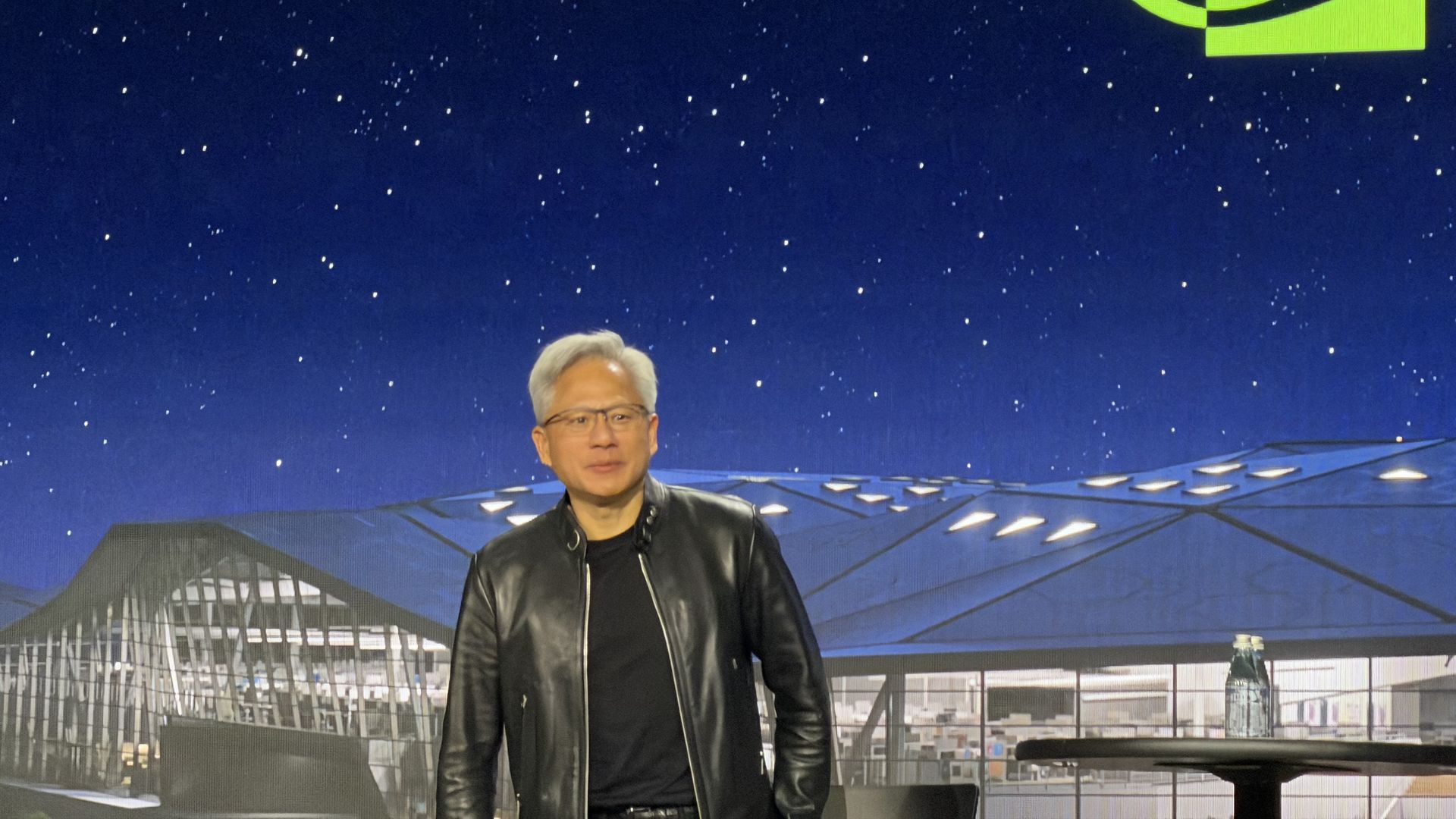
Nvidia CEO Jensen Huang said the company is in the process of restarting manufacturing of its H200 chips for shipments to China.
Why it matters: Nvidia is eager to re-enter the crucial Chinese market, but its efforts have been hampered by U.S. export restrictions and Beijing's push to build a domestic chip industry.
Driving the news: "We've been licensed for many customers in China for H200," Huang said, speaking to reporters at the company's GTC event in San Jose, California. "We have received purchase orders from many customers, and we're in the process of restarting our manufacturing."
Catch up quick: Nvidia in late February said that small amounts of H200 products for China-based customers had been approved by the U.S. government, but that it did not know whether any imports will be allowed into China.
- Beijing has to approve any sales into the country, and has been pressing domestic companies to use Chinese-made chips — part of an effort to boost the domestic industry led by Huawei Technologies.
- The H200, though from Nvidia's previous generation of products, is a more powerful chip than anything offered in the country.
The intrigue: Nvidia is also preparing to sell a version of its Groq inference chips to the Chinese market, sources told Reuters.
Scaring with "science fiction"
Huang also cautioned that some in the tech world are "scaring everybody about a science fiction version of AI," something he said strikes him as arrogant.
- His comment comes after Anthropic drew red lines around U.S. government use of AI, specifically around fully autonomous warfare and for mass surveillance of Americans.
Zoom in: Asked by Axios if there are places that AI shouldn't go, Huang responded that there are a lot more places that the technology needs to go, including protecting against cyberattacks.
- "We have to just continuously learn and be a little bit more humble about what we know and don't know," Huang said. "Scaring everybody about a science fiction version of AI is a little bit too arrogant."
- "Warning people is one thing," he said. "Scaring people is a completely different thing."
The big picture: Huang has used the event to tout not just Nvidia's range of new chips and technologies, but also the giant potential for the market. On Monday, Huang forecast that Nvidia will generate more than $1 trillion in revenue by 2027 from its mainstay AI chips.
- Yesterday, Huang told reporters that his prediction of $1 trillion in revenue by 2027 only reflects sales of Blackwell and Rubin systems and suggests there is plenty of upside from other products, including CPU-only systems and storage.
3. Training data
- OpenAI released mini and nano versions of GPT 5.4, offering faster and lower-cost access to its latest AI engine. (CNET)
- Google is expanding access to its "personal intelligence" features to all U.S. users after previously limiting the Gmail integration feature to paid users. (Engadget)
- Microsoft reorganized its AI efforts, putting former Snap executive Jacob Andreou in charge of consumer and business versions of Copilot, with AI chief Mustafa Suleyman now focused on the company's internal model development effort. (GeekWire)
- Amazon CEO Andy Jassy told employees that AI should allow the company's AWS unit to reach $600 billion in annual revenue by 2036, double an earlier estimate and up from just under $130 billion last year. (Reuters)
4. + This
Nvidia CEO Jensen Huang flashed a slide of AI-native companies at GTC, which was quickly compiled into this list and separated by sector.
Thanks to Megan Morrone for editing and Matt Piper for copy editing.
Sign up for Axios AI+
