Axios AI+

February 23, 2024

Ina here. Today's AI+ is 1,124 words, a 4.5-minute read.
1 big thing: AI's hot job belongs to everyone

Illustration: Natalie Peeples/Axios
Chief AI officer is one of the hottest new job titles, but some experts say AI strategy should be everyone's job, Ryan reports.
Why it matters: Many organizations have decided that AI is too important and complicated to rely on one executive to develop and manage their strategy.
Catch up quick: Organizations raced to develop AI ideas and leadership in 2023, culminating in President Biden ordering every federal agency to hire a chief AI officer (CAIO) by the start of 2024.
- While many agencies have yet to appoint their CAIO, the role quickly won the label of hottest new job.
Driving the news: Department of Justice and SAP are two of the latest organizations to appoint a CAIO.
- The DOJ appointed Jonathan Mayer as both the chief AI officer and the office's first chief science and technology advisor.
- Mayer is an assistant professor in Princeton's computer science and public and international affairs departments.
The big picture: Some C-suite teams have found it difficult or impossible to source a CAIO with all the skills they need, while others tell Axios that hiring a CAIO is simply the wrong approach.
- Alternatives include AI project teams, ethics committees and even "fractional CAIOs," who are folks that devote part of their time to AI leadership, sometimes at multiple organizations at once.
- Rafee Tarafdar, chief technology officer at Infosys, tells Axios that assigning sole responsibility for AI strategy to one person will generate lower returns than requiring all departments to sponsor AI initiatives.
- "Companies need a dot connector with the technical expertise, strategic vision and ability to get executive-level buy-in," says Ram Chakravarti, chief technology officer at BMC Software, and that's akin to finding an AI "unicorn," he tells Axios.
Between the lines: Because AI can disrupt both business models and specific tasks, the CEO might need to act as CAIO.
- CAIOs are "just not scalable," Chris Bedi, the chief digital information officer at ServiceNow tells Axios.
- Each senior executive needs to ask "how do I transform my own function with AI?" Bedi thinks, because there won't be enough talented CAIOs to go around and many will lack the resources and authority to successfully lead a transformation of each in an organization.
What's next: Fractional CAIOs are a middle way for uncertain CEOs and boards in need of an AI expert brain and for top AI talent that doesn't want to be locked down to one organization.
The other side: "Companies will be most successful with a strong CAIO who channels company-wide strategic priorities to guide AI efforts," Domino Data Lab CEO Nick Elprin tells Axios.
- Relying on a bottom-up or decentralized approach to AI development "risks spreading resources too thin and creating a lot of noise and distraction," Elprin says.
The bottom line: Widespread adoption of AI in an organization will depend on mobilizing big sets of skills and people.
2. Reddit has finally filed for its IPO

Illustration: Annelise Capossela/Axios
Reddit, the online forum, has officially filed to go public on the New York Stock Exchange, Axios' Kia Kokalitcheva reports.
Why it matters: The company has been hoping to list since confidentially filing in 2021, but the market downturn forced it to pump the brakes.
The big picture: The offering makes Reddit among the largest social media companies to go public since Snap's listing in 2017 and Pinterest's float after that.
- Reddit's IPO will also be a test for the potential return of tech and media IPOs this year.
- The company was valued at $10 billion when it raised funding in 2021, though advisors are reportedly suggesting an IPO valuation of about $5 billion, according to Bloomberg.
Between the lines: The company reportedly signed an exclusive deal this week giving Google the ability to use Reddit's data to train its artificial intelligence models for $60 million a year, according to Reuters.
- It also lists the rise of AI as a risk, should users get content from chatbots and other services rather than directly from Reddit.
- Meanwhile, OpenAI CEO Sam Altman is listed as Reddit's third largest shareholder after Tencent and the Newhouse family's Advance Publications, according to the Hollywood Reporter.
By the numbers: Reddit brought in $804 million in revenue in 2023, with a net loss of just under $91 million.
- In 2022, it had $667 million in revenue and a net loss of almost $159 million.
- It has more than 100,000 active communities; 73.1 million average daily active uniques; 267 million average weekly active uniques and 1 billion cumulative posts.
- The San Francisco-based company's largest shareholders include Advance Publications (Condé Nast's owner), Fidelity, Quiet Capital, Sam Altman, Tencent and Vy Capital.
The intrigue: Reddit is reserving IPO shares it will make available for purchase to some of its most engaged users, though this initial document doesn't specify the amount.
- It's also setting aside about 1.3 million of its Class A common stock to fund "community-related programs that empower Redditors to bring their ideas to life."
3. AT&T believes outage was not a cyber attack
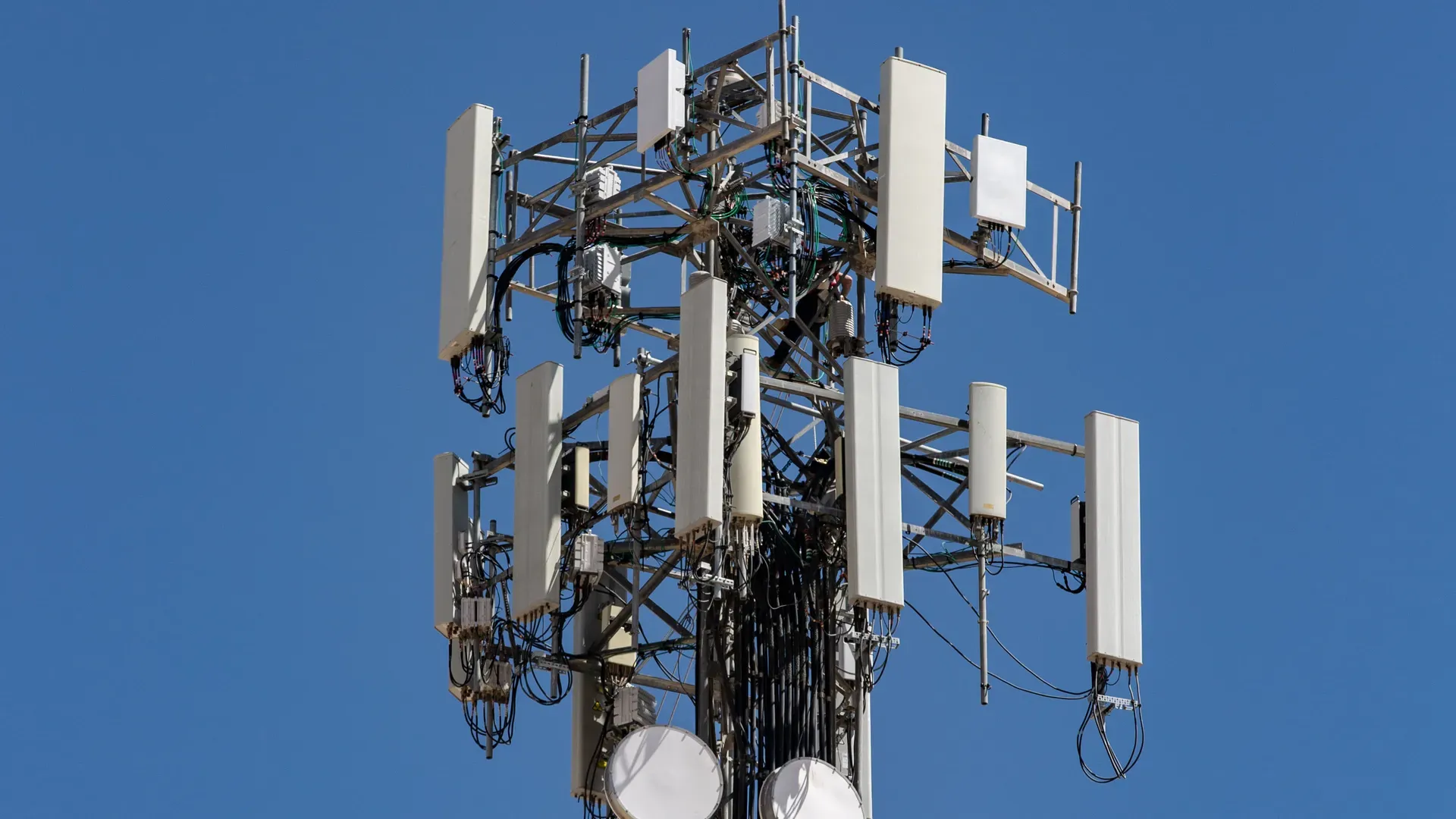
A cell tower in California. Photo: George Rose/Getty Images
AT&T says Thursday's outage, which left thousands of customers without service and unable to call 911, was "not a cyber attack," the company believes.
Why it matters: Despite threats from nation-state hackers in China and Russia, it's still statistically more likely that a network outage would be caused by misconfigurations or faulty settings, reports Axios' Sam Sabin.
- The FCC, DHS and the FBI were reportedly all investigating the incident on Thursday, which may have led people to assume it was a cyberattack.
- White House spokesperson John Kirby said there was "no reason" to think the incident was due to a cybersecurity issue, although AT&T is still investigating the root cause.
- "We are continuing our assessment of today's outage," AT&T's website said late Thursday evening.
Between the lines: When faced with a service outage, customers tend to jump to the worst case scenario that cybercriminals or nation-state hackers are the culprits.
- That's often because movies and television depict hackers as tech-savvy villains eager to start the ultimate cyber war — even if that's not entirely true.
Reality check: AT&T said that a network misconfiguration likely caused Thursday's outage, not a cyberattack — and that's the case for most network outages, according to data from the Uptime Institute.
- Doug Madory, director of internet analysis at Kentik, said in a post on X (formerly Twitter) that if the outage was tied to a cyberattack, all devices would have been down, not just a handful.
- A U.S. cyber official told CNN that although the investigation is ongoing, "there has so far been no indication that the outage was caused by malicious cyber activity."
Between the lines: AT&T's outage was widespread and felt longer than the typical, short-lived service outage — providing ample time for people to dream up the worst case scenarios.
The intrigue: Media often focuses on the drama in cybersecurity, like organized crime, data extortion and cyberwar, Theresa Payton, CEO of Fortalice Solutions and former CIO at The White House, tells Axios.
- That hyper-fixation in the media has now encouraged the general public to expect the worst during a network outage, she added.
4. Training data
- Nvidia stock surged another 16% yesterday on the promise of AI and some are worried about another hype bubble. (Axios)
- Google has temporarily stopped generating images of people through its Gemini AI assistant, amid criticism over how it was handling issues related to race. (Bloomberg)
- Stability AI previewed a new version of its text-to-image engine that uses a mix of transformer and diffusion technologies. (VentureBeat)
5. + This
Hockey is great with two goalies, but it's downright amazing when it's all goalies.
Thanks to Scott Rosenberg and Megan Morrone for editing this newsletter.
Sign up for Axios AI+

Scoops on the AI revolution and transformative tech, from Ina Fried, Madison Mills, Ashley Gold and Maria Curi.