Axios AI+ Government

January 30, 2026


It's Friday, so that means we've got a full issue teed up for you on the intersection of AI and policy.
Today's newsletter is 1,438 words, a 5.5-minute read.
1 big thing: Inside Josh Hawley's anti-AI strategy
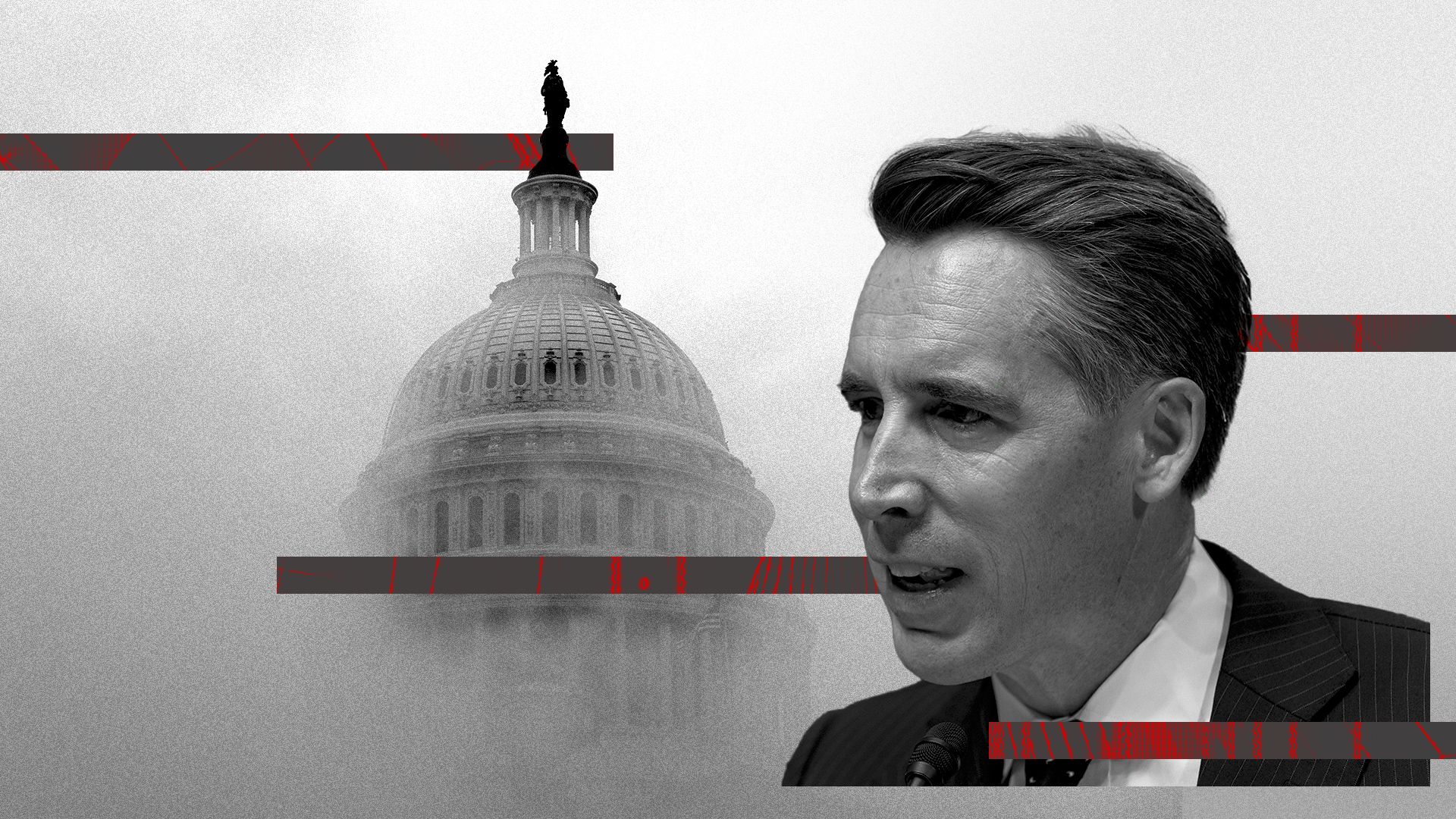
Josh Hawley (R-Mo.) has become one of the most vocal Republican skeptics of AI, betting that kids' safety, job fears and rising costs can turn his party against Big Tech.
Why it matters: Hawley, a potential 2028 presidential contender who has a habit of breaking from Republicans and President Trump, is positioning himself as a key anti-AI voice at a time when tech's influence in Washington has never been stronger.
- Keeping people's electricity rates down during a massive buildout of AI data centers and protecting children from online chatbot harms are two populist issues Republicans should be rallying around, he told Ashley in an interview.
- "I think it's important that [Republicans] be the party that is absolutely standing on the side of working people, and is absolutely standing on the side of the vulnerable, in this instance, of children."
Zoom in: Hawley is breaking with many Republicans by opposing efforts to block state AI rules and sponsoring bills that would directly constrain AI companies.
- Hawley opposed pushes by Sen. Ted Cruz (R-Texas) to put a moratorium on state-level AI regulation in spending bills.
- He's introduced a number of bills, some bipartisan, to enshrine AI regulations that tech and AI companies have specifically spoken out against.
- Hawley's proposed legislation would bar AI companies from training models on copyrighted works, require companies to disclose AI-related layoffs, restrict AI collaboration with China, and limit minors' access to chatbots.
Context: Hawley says his view that Congress needs to regulate AI hardened after heart-wrenching conversations with parents whose children were harmed after interacting with AI chatbots, which hit home for him as the father to young children.
"I think we've got a moral imperative to make sure that AI is actually good for people," Hawley said.
- "I have no doubt that these companies are going to get filthy rich, but is it going to be good for children? Is it going to be good for parents? Is it going to be good for the American worker? I think we have a moral obligation to see that," he said.
Referring to a number of cases where minors died by suicide or hurt themselves after interacting with an AI chatbot, Hawley said:
- "I couldn't believe that this was actually happening. Talking to these parents, seeing the evidence of the chats, seeing the widespread nature of this, just convinced me, to my core, that we've got to do something here to protect kids."
Hawley is urging Republicans to see the political incentives to take a more skeptical approach to AI.
- It's both an economic and cultural issue, he says: "This is a real thing for folks who already feel their bills are too high. The idea that some Silicon Valley company will come in and jack up utility prices — that's not speculative."
- Hawley also raised concerns about AI chatbots challenging religious beliefs, which he called "crazy stuff" that Congress needs to "put a stop to."
Hawley said he's spoken to Trump about "the issue with consumers [paying higher electrical bills due to data centers], and I obviously appreciate his position on it. We talked about child safety."
The bottom line: While Hawley presses for AI guardrails, the Trump White House is prioritizing rapid AI acceleration and a hands-off approach embraced by the industry.
2. Georgia emerges as a data center battleground
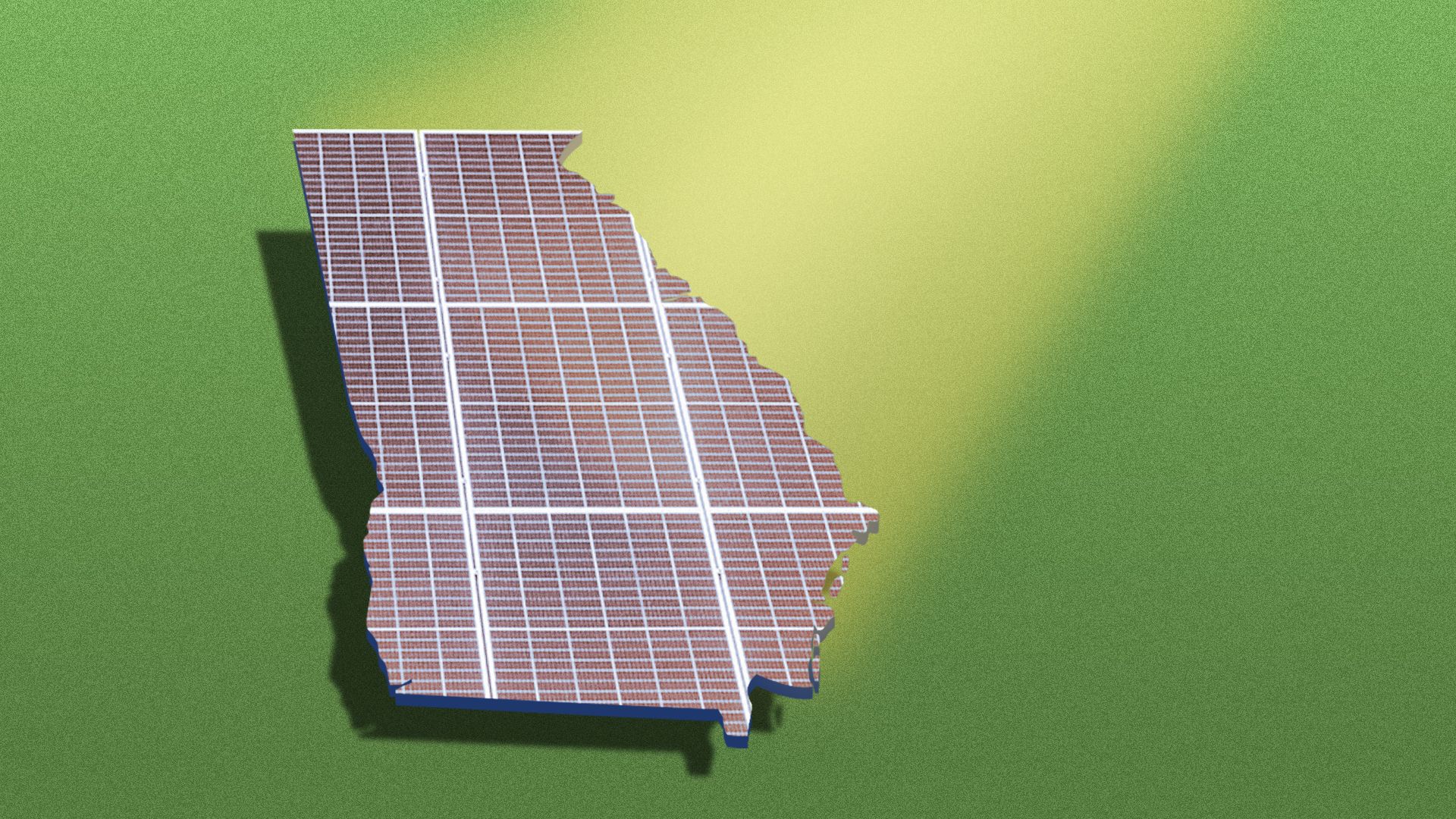
The rapid buildout of AI data centers in Georgia is colliding with voter concerns about affordability.
Why it matters: Tech companies are flocking to Georgia for AI energy demands, and people across the political spectrum are pushing back.
- In a state where key midterm elections could rebalance power statewide and nationally, candidates are laser-focused on getting the messaging and policy solutions right.
Zoom in: Democratic state Rep. Ruwa Romman's HB 1012 would place a temporary moratorium on new data center construction in Georgia.
- The goal is to give officials time to study water usage, energy consumption and the real revenue and economic impacts instead of just projections, said Romman, who is running for governor.
- Romman added that data would then inform regulation.
Romman echoes Sen. Bernie Sanders (I-Vt.), though Romman said she was already looking into the idea of a moratorium when she heard the progressive standard-bearer had a similar solution in mind.
- "I'm actually working on an email to shoot his chief of staff to let him know that we're working on this," said Romman, contending that "any policy that happens at the federal level gets implemented first at the state level."
- Other Democrats are sounding more like Republicans and promising voters that data center-related costs will be paid by Big Tech.
- The two ideas are not at odds, according to Romman, who noted that in order for Big Tech to pay, policymakers first need to understand how much it actually costs.
The intrigue: Last year, Georgia Democrats flipped two seats on the Public Service Commission for the party's first wins in a non-federal statewide election in nearly 20 years, winning both races by more than 25 points as data center construction and rising utility rates were central to mobilizing voters.
- "This continues to be the one issue that has shown up everywhere around the state. It doesn't matter if it's a blue area or red area. It doesn't matter if somebody votes in a specific way. Historically, this is a massive concern for Georgians," Romman said.
- In Georgia, data center opposition didn't start on the left but in rural areas, Romman said: "It was just straight-up typical nimby-ism coupled with, 'Hey, I don't want to lose that river.'"
Friction point: One of the biggest data centers currently planned in Georgia is being built on land owned by the father of Republican Lt. Gov. Burt Jones, who is also running for governor.
What we're watching: Sen. Jon Ossoff (D-Ga.), who is in a competitive race this year, hasn't veered into this issue — yet.
3. OpenAI and Palantir execs to headline forum

An annual gathering of top government officials and tech executives is scheduled for March 24 in Washington, D.C., according to a news release shared first with Maria.
Why it matters: The Hill & Valley Forum serves as a meeting for policymakers and private sector leaders to chart out tech and national security priorities.
- Organizers said they are fielding requests from Trump administration officials to speak at the forum.
Driving the news: This year's event is anchored by the country's 250th anniversary, with speakers set to reflect on how far the U.S. has come on technology and what's next.
- Speakers include Anduril's Trae Stephens, Foxconn's Young Liu, Khosla Ventures' Vinod Khosla, OpenAI's Brad Lightcap, Palantir's Shyam Sankar, Ramp's Eric Glyman and Qualcomm's Cristiano Amon.
- A dinner is expected the evening of the event; at last year's dinner in Union Station, Commerce Secretary Howard Lutnick delivered remarks.
Jacob Helberg, state undersecretary for economic growth, energy and the environment, co-founded the forum and is likely to make an appearance, event organizers said.
- Helberg previously worked as senior adviser to Palantir CEO Alex Karp.
The bottom line: The forum underscores the influence of Silicon Valley executives in shaping Washington's national security and tech policy agenda.
4. The Output: South Korea, social media and more

Here's our guide to catch you up on the AI policy news you may have missed this week:
🌉 New AI hub: The Commerce Department is planning to open a new national AI center in San Francisco, per Bloomberg.
🇰🇷 South Korea spotlight: The country's new AI laws are facing pushback from local tech startups and civil society groups, according to The Guardian.
🇨🇳 China watch: A quarter of young Americans think China has more global power and influence than the U.S., compared with 12% of Americans ages 65 and older, per a new Carnegie Endowment for International Peace survey our Axios colleague Josephine Walker covered.
🤖 AI drafting regs: The Trump administration is planning to use AI to write federal transportation regulations, ProPublica reported.
⚖️ Social media reckoning: Meta and YouTube are about to face a landmark trial in Los Angeles over claims their platforms deliberately addict and harm young people, kicking off a wave of high-profile lawsuits that could reshape the social media landscape, Maria and Ashley reported earlier this week.
🔕 Bailout alarm bell: Sen. Elizabeth Warren (D-Mass.) wrote to OpenAI's Sam Altman "to seek assurances that the company will not seek an open-ended federal bailout should it fall prey to the gap between its spending and its actual revenue."
🪖 Military AI clash: Anthropic and the Pentagon are at odds over military AI use, sources tell Reuters.
Thanks to Mackenzie Weinger and David Nather for editing and Matt Piper for copy editing.