Axios AI+ Government
August 28, 2026


It's Friday! Europe's sweeping approach to AI regulation is about to get a reality check. Let's dive in.
Today's newsletter is 1,224 words, a 4-minute read.
1 big thing: Europe's AI Act gets real
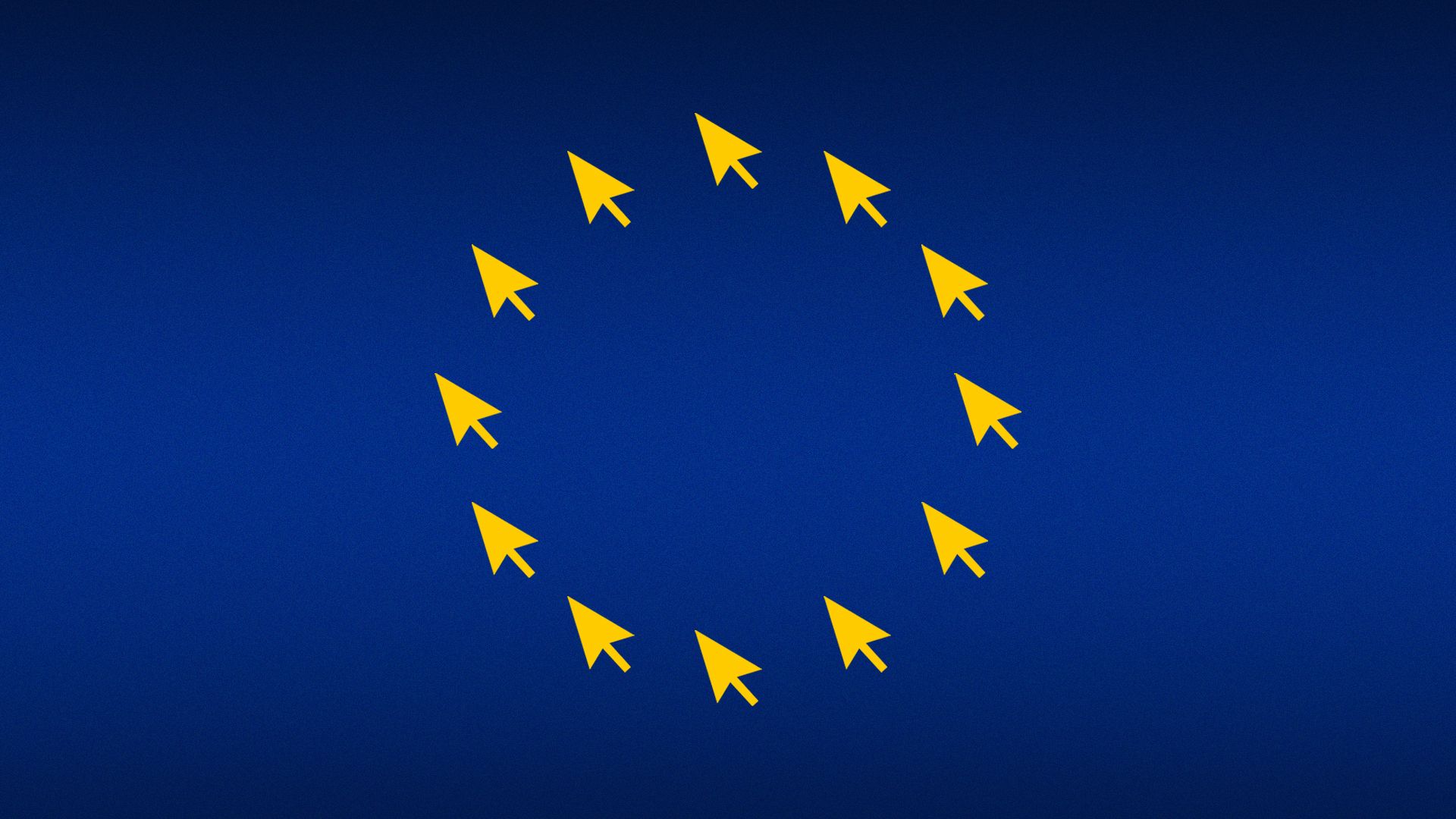
Europe's landmark AI law has moved from an idea to enforcement.
Why it matters: Brussels will soon learn whether it can turn its sweeping AI rulebook into regulation that companies can actually follow — and if it can become a global benchmark for AI standards.
Driving the news: A major enforcement deadline arrived Aug. 2.
- Most notably, new transparency and disclosure requirements are in effect for chatbots and AI-generated content.
- Europe's AI Office has not gone after any companies covered under the law for misconduct yet, but it can now request information from companies or ask for access to models.
What they're saying: "This is a messy piece of legislation," Patrick Van Eecke, a partner at Cooley in Brussels who advises companies on AI Act compliance, told Axios in an interview.
- He said Aug. 2 marked the point when ordinary users may start to encounter the impacts of the act through being notified they are seeing AI-generated material.
The big picture: The AI Act could become a global standard without being a copy-and-paste rulebook for companies. Execution among companies might get messy, but wherever compliance ends up will be influential as companies decide how to operate around the world.
- "We need a standard. This technological moment is happening really quickly. And right now, at least the EU AI Act gives us a standard," Amy Worley, managing director and data protection officer at Berkeley Research Group, told Axios.
- Transparency notices required under the AI Act have already spread, she said, adding that watermarking can also serve as a litigation defense for companies.
Case in point: Anthropic announced that future Claude models will generate text that contains a watermark to comply with the EU AI Act.
- Anthropic says watermarked text will be indistinguishable to readers, but that it plans to offer a "watermark detection API" to users soon.
- Google and Meta both said in July they would adopt and develop transparency and watermarking tools. Meta said it would work with the EU AI Office to keep its approach to compliance "practical, interoperable and genuinely useful."
- OpenAI is publishing training data summaries in compliance with the act, it said, along with embedded "provenance signals." Microsoft's compliance with the act involves internal governance and risk management changes.
What's next: The transparency requirements that took effect in August are only one part of the AI Act's rollout.
- Rules for major categories of high-risk AI systems, such as uses around education, biometrics and migration, along with AI uses in physical products, come later — in December 2027 and August 2028.
- That means it will be years before the full impact of the law can be assessed.
The bottom line: Europe may not get the rest of the world to copy its AI law exactly. But it may not need to.
- If companies start treating the AI Act as the default benchmark for transparency and risk management, Brussels will have shaped global AI rules even where its law doesn't directly apply.
2. Judge blocks Pentagon's Anthropic blacklist


A federal judge yesterday struck down the Pentagon's blacklisting of Anthropic as a supply-chain risk, ruling that the government's actions violated Anthropic's constitutional rights.
Why it matters: The ruling marks a major legal victory for Anthropic in its months-long fight with the Trump administration over how the military can use its AI models.
Driving the news: U.S. District Judge Rita Lin ruled that the Pentagon's designation of Anthropic as a supply-chain risk was unlawful.
- "The empty invocation of national security is not a blank check to punish and retaliate against government critics," Lin wrote in her 59-page decision.
- "Though the Department of War is undisputedly free to select the AI vendor of its choice, the evidence demonstrates that the broad measures imposed on Anthropic were illegal and baseless."
- Lin noted that the Pentagon continued pursuing work with Anthropic even after the designation: "None of that is consistent with a genuine fear that Anthropic is a saboteur who would poison its software to harm national security."
What they're saying: "We welcome the court's ruling that this supply chain risk designation was unlawful," an Anthropic spokesperson said in a statement.
- "We remain focused on working productively with the government to harness AI for our national security so all Americans benefit from this technology."
Catch up quick: The dispute kicked off earlier this year after Anthropic and the Pentagon clashed over the military's use of the company's AI models.
- The Defense Department sought to use Claude for "all lawful purposes," even in the most sensitive military and intelligence applications.
- Anthropic insisted that two areas remain off-limits: mass surveillance of Americans and fully autonomous weapons.
- The standoff escalated, with the Pentagon designating Anthropic a national security and supply-chain risk, leading the AI company to sue.
What's next: The government is expected to appeal the ruling.
- Anthropic is also fighting a separate Pentagon designation under a different statute in the D.C. Circuit.
3. Meta deal highlights kids' safety deadlock
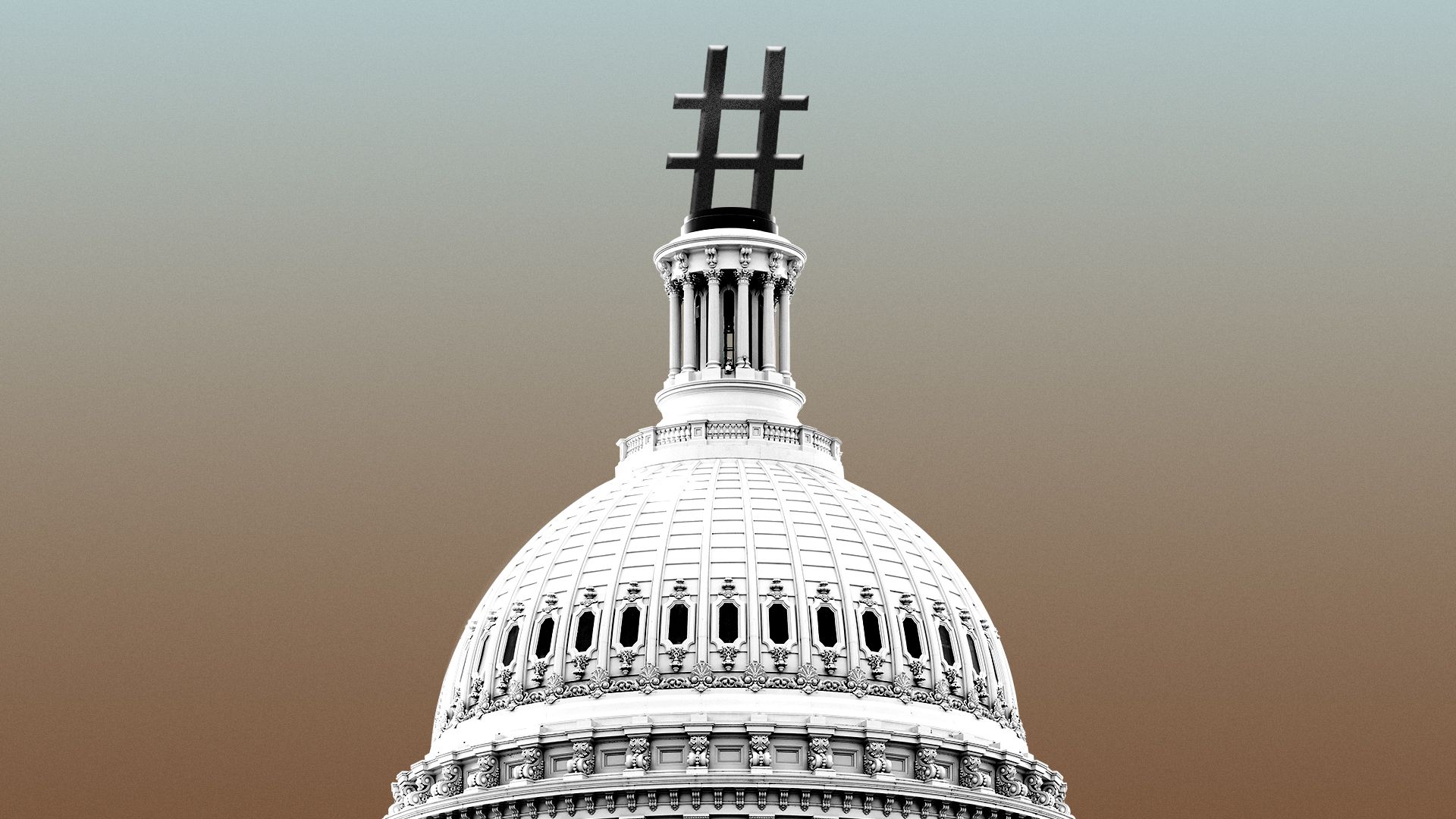
Meta's landmark settlement over claims its products harmed children underscores years of congressional deadlock over kids' online safety legislation.
Why it matters: The settlement will force Meta to make changes to its products and pay billions after Congress repeatedly failed to pass federal rules to protect children online.
- But Meta is just one company, and its product changes will not be written into statute.
Driving the news: The company this week agreed to settle with U.S. states in a landmark deal over allegations Meta's Facebook and Instagram were designed in ways that harm children.
What they're saying: "I think legislation would have been the best answer to this issue. It would be better to have this done by a legislature, which can immediately bind all of our competitors to the same rules," a Meta official said in a call with reporters Wednesday.
- "We didn't get there this Congress" with the Kids Online Safety Act, but "this deal is designed to lead us to basically the same place," the official said.
Context: The company helped to derail KOSA in 2024, and continued to oppose the legislation after it was reintroduced in 2025.
4. The Output: AI pledges, diplomacy and more
Here's our guide to catch you up on the AI policy news you may have missed this week:
🌎 AI diplomacy: Commerce Secretary Howard Lutnick will hold fireside chats with OpenAI CEO Sam Altman and Nvidia CEO Jensen Huang next week during the U.S.-led G20 Innovation Ministerial in Chapel Hill, North Carolina, per Axios' Mike Allen.
- We'll be there: Stay tuned for the news you need to know.
📊 Data dive: The Trump administration has struck data-sharing deals with major technology firms to help track how AI is affecting jobs and hiring, acting Labor Secretary Keith Sonderling told our Axios colleague Courtenay Brown.
✍️ AI pledge: More than 15 candidates have signed an "AI Pact," committing themselves to policies including safety reviews for advanced models, legal recourse for AI harms and restrictions around developing data centers, per Wired.
- Nearly all of its current signers are Democrats, with independent Nebraska Senate candidate Dan Osborn the exception.
👀 Flock watch: Sen. Josh Hawley (R-Mo.) is launching an investigation into Flock Safety's "collection, retention, and dissemination of the data" from its AI-powered surveillance cameras, Axios' Andrew Solender reported.
Thanks to Mackenzie Weinger and David Nather for editing and Matt Piper for copy editing.