Axios AI+

March 07, 2024

Hi, it's Ryan. Today's AI+ is 1,230 words, a 4.5-minute read.
1 big thing: Inflection's chatbot tops 1 million daily users
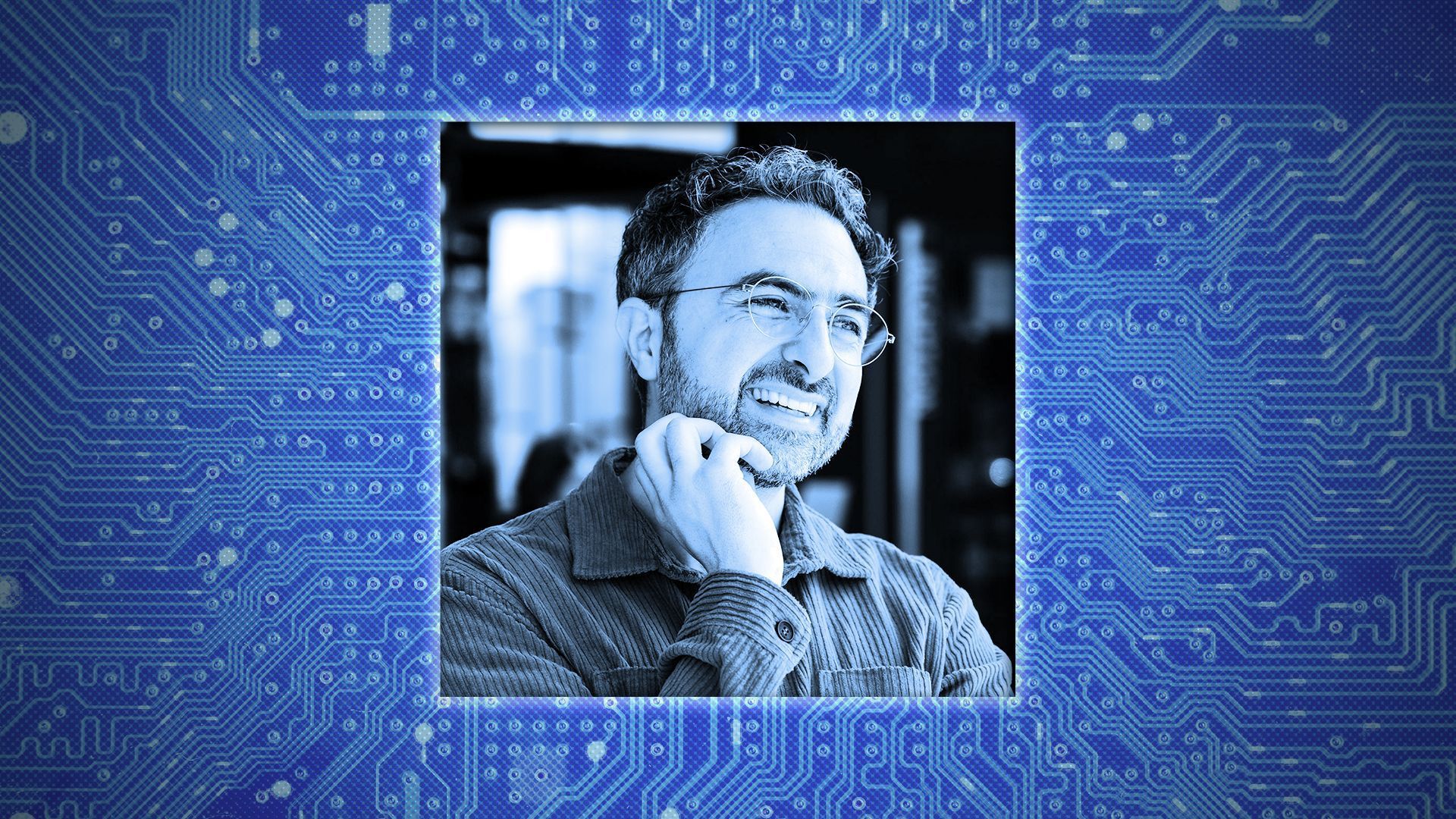
Photo illustration: Axios Visuals. Photo: Penguin Random House
ChatGPT rival Pi, from Inflection, now performs "neck and neck with" OpenAI's GPT-4 thanks to a new model, according to data first shared with Axios, Ina reports.
Why it matters: Inflection faces a crowded field in the market for AI-based assistants, competing against better-heeled rivals including Google, Microsoft and OpenAI, among others.
Driving the news: Inflection is announcing today that Pi has been using a new model, version 2.5, in recent weeks and that the updated engine is now "powering Pi for the majority of users."
- CEO Mustafa Suleyman said he is particularly pleased that Inflection 2.5 achieved these results while using only 40% of the training compute as GPT-4. It's better at things like math, college-level science and coding.
- "On all the major metrics now, we are neck and neck with GPT-4 for quality," Suleyman told Axios.
- Inflection also shared user metrics for the first time, saying it has 1 million daily active users and 6 million monthly active users — OpenAI announced last November that it had 100 million weekly active users.
Catch up quick: Suleyman — one of DeepMind's co-founders — founded Inflection AI with backing from billionaires Reid Hoffman, Bill Gates and Eric Schmidt.
Between the lines: Unlike others that are trying to sell their chatbots to both businesses and consumers, Inflection pitches Pi as a highly personal chatbot with a warm and friendly tone.
- Pi is free for now, though Inflection's business model calls for revenue to come from its users, starting with a paid subscription. The company has yet to finalize how much it will charge, Suleyman said.
- Longer term, Suleyman said he would love to be able to charge based on outcomes — similar to how Sierra, the AI startup from Bret Taylor and Clay Bavor, gets paid for each customer service interaction that the AI is able to handle without human intervention.
Zoom in: I asked Pi what it would ask Suleyman if it could ask its creator anything. Its suggestions were on point, if a bit generic.
The intrigue: I also asked Pi if there were any capabilities it wished it had.
- "Well, if I'm being honest, I sometimes wish I had the ability to truly understand and experience emotions," Pi responded.
- Suleyman said that answer went too far in humanizing itself by suggesting it has its own "wishes."
- "We should rein that in," Suleyman said. "It shouldn't be saying, I wish I could have 'X.' I mean, it's a good question that you've asked it, but its answer should be, 'Look, I don't have desires and I don't have motivations.'"
The big picture: The AI industry has recently had its share of setbacks — such as Google's Gemini creating a diverse set of founding fathers in a failed attempt to correct for existing bias in training data sets.
- "OK, some mistakes were made," Suleyman said. "It looks a bit silly, but is it really an existential crisis for the entire edifice of Silicon Valley? No."
2. EU's new rules for tech "gatekeepers" kick in

Illustration: Brendan Lynch/Axios
The European Union is forcing the world's biggest tech and social media companies to change the way they do business in the name of consumer choice and competition, Axios Pro's Ashley Gold reports.
Why it matters: Europe's Digital Markets Act — in force starting today — is the most sweeping tech competition legislation yet, and a win for smaller tech firms and customers critical of Big Tech's operating rules.
- Companies designated as "gatekeepers" include Meta, TikTok parent ByteDance, Alphabet, Apple, Amazon and Microsoft.
The big picture: The DMA follows Europe's agenda-setting General Data Protection Regulation, Digital Services Act and the forthcoming AI Act.
What they're saying: "A decade ago, the tech companies were sort of like teenagers, and they really didn't have much regulation," Bill Echikson, senior fellow at the Center for European Policy Analysis, told reporters.
- "Now they're grown-ups and they are going to be regulated a little bit like banks, telecoms and other industries that have tremendous impact on our lives."
Most companies are promising to offer increased data portability and advertising transparency. Here's a few other "gatekeepers" commitments:
- Meta will offer users an ad-funded or subscription-funded service and people can deny using their data across different Meta products.
- Google will make changes to its search results for flights, hotels and shopping (and will remove the Google Flights box), and allow outside messaging services to work with WhatsApp and Facebook Messenger.
- Microsoft will let Windows users uninstall Microsoft apps and provide more data-sharing choices and ways to change default options. For LinkedIn, there will be new APIs for people and developers to access their data.
- Amazon will ask customers to approve the use of their data for personalized ads and will give advertisers more detailed information in pricing reports.
- Apple rolled out a tranche of new features for developers (more here), including letting them use alternative payment systems and app stores for a "Core Technology Fee."
- ByteDance launched new data portability tools, and has tried and failed so far to appeal its gatekeeper designation.
What we're watching: The European Commission will now review compliance plans, and by mid-April will decide if other companies including Booking and X meet the threshold to be considered gatekeepers.
A version of this story was published first on Axios Pro. Unlock more news like this by talking to our sales team.
3. Ex-Googler charged with stealing AI secrets
Photo Illustration: Mateusz Slodkowski/SOPA Images/LightRocket via Getty Images
Former Google software engineer Linwei Ding has been indicted on charges of stealing AI technology secrets from the company to pass to two Chinese companies, the Department of Justice said yesterday.
Why it matters: Intelligence and defense officials have been warning for a year that China and other adversaries have ramped up their attempts to obtain American intellectual property and to use AI against American interests.
What's happening: Ding was charged in federal court in California with four counts of federal trade secret theft, each punishable by up to 10 years in prison.
- The thefts of "over 500 confidential files containing AI trade secrets" are thought to have occurred at supercomputing data centers owned by Alphabet, Google's parent company.
- Ding was employed by Google from 2019 to December 2023, and the thefts are said to have occurred starting in 2022.
- Google referred the case to the FBI after an internal investigation.
The intrigue: Ding is alleged to have stolen the files by uploading them to a personal Google Cloud account, the DOJ said.
- He was offered a chief technology officer role at a Chinese AI startup within weeks of the beginning of the alleged thefts and founded another AI startup hoping to train "large AI models powered by supercomputing chips," per the indictment.
4. Training data
- The U.S. Army is testing commercial chatbots for military uses. (New Scientist)
- "Prompt engineer" was 2023's hot new job title — but new research shows that prompt engineering is best done by the AI model itself. (IEEE Spectrum)
- Google wants to know what quantum computers can do better than classical computing and is offering $5 million for the best answers. (X Prize)
- Trading places: Fintech firm Finastra hired Mike Stawchansky as its chief technology innovation officer to spearhead generative AI efforts.
- New York's governor appointed Girls Who Code CEO Tarika Barrett and IBM CEO Arvind Krishna to co-chair the state's new Emerging Technology Advisory Board, which aims to boost the state's AI industry. (Crain's)
Thanks to Scott Rosenberg and Megan Morrone for editing this newsletter and to Carolyn DiPaolo for copy editing it.
Sign up for Axios AI+

Scoops on the AI revolution and transformative tech, from Ina Fried, Madison Mills, Ashley Gold and Maria Curi.