Searching for smart, safe news you can TRUST?
Support safe, smart, REAL journalism. Sign up for our Axios AM & PM newsletters and get smarter, faster.
Searching for smart, safe news you can TRUST?
Support safe, smart, REAL journalism. Sign up for our Axios AM & PM newsletters and get smarter, faster.
Denver news in your inbox
Catch up on the most important stories affecting your hometown with Axios Denver
Des Moines news in your inbox
Catch up on the most important stories affecting your hometown with Axios Des Moines
Minneapolis-St. Paul news in your inbox
Catch up on the most important stories affecting your hometown with Axios Minneapolis-St. Paul
Tampa-St. Petersburg news in your inbox
Catch up on the most important stories affecting your hometown with Axios Tampa-St. Petersburg
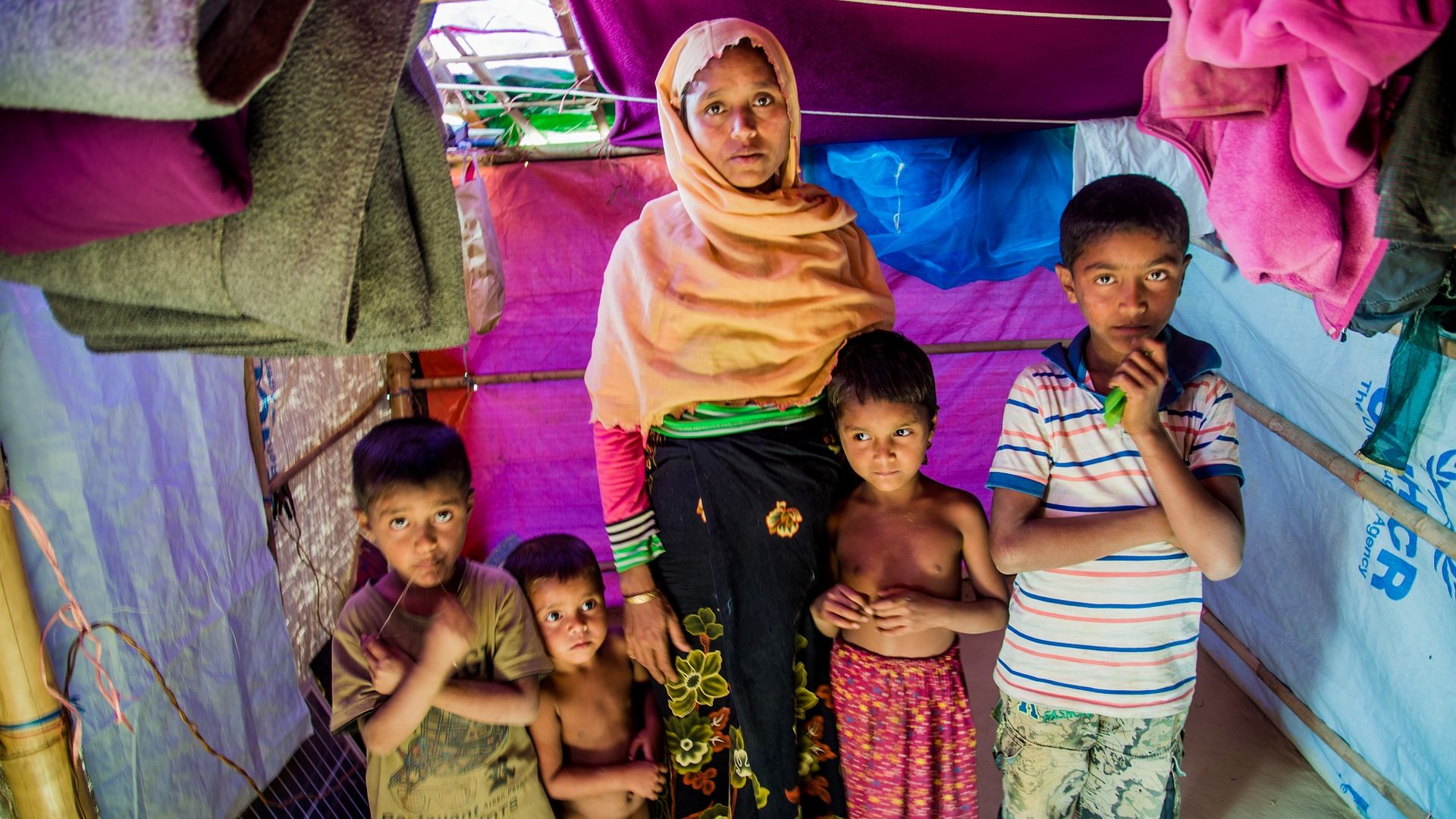
A Rohingya woman and her children at Cox's Bazar refugee camp in Bangladesh. Photo: Masfiqur Sohan / NurPhoto via Getty Images
"First, massacres, rapes and the wholesale destruction of villages by the Myanmar military... forced nearly 700,000 Rohingya Muslims to flee to Bangladesh ... Now, the food supply appears to be another weapon that’s being used against the dwindling numbers of Rohingya in Myanmar," AP reports:
What's happening: "The Rohingya Muslims, who have been loathed by Myanmar’s Buddhist majority for decades, are locked down in their villages — sometimes even in their homes — and prevented from farming, fishing, foraging, trade and work, the refugees and aid groups say."
- "In other words, they can no longer do what they need to do to eat. While restrictions on freedom of movement and access to food have long been in place, they have tightened dramatically in recent weeks."
- Why it matters: "[I]nterviews ... with the most recent refugees show growing desperation, as the noose tightens around their communities in what U.N. officials have said may be a genocide."