Metro unveils new details of its $80M Gold Line bus plan

Add Axios as your preferred source to
see more of our stories on Google.
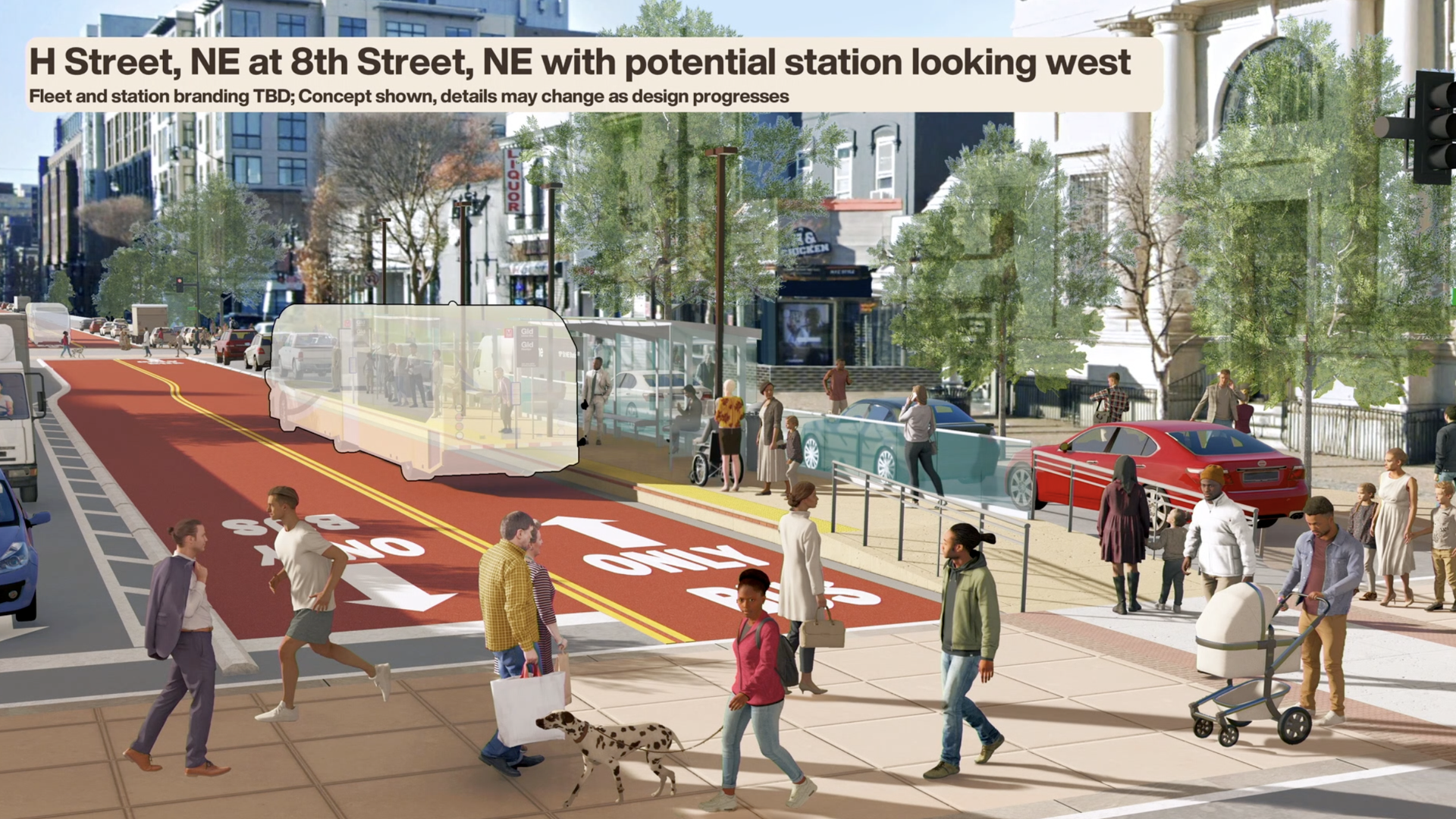
How the Gold Line might look on H Street NW. Image courtesy of Metro.
Metro's Gold Line would zip through downtown to H Street and down to the new Commanders stadium through dedicated bus lanes. Every five minutes, 24/7.
- Metro on Tuesday unveiled fresh details about its ambitious proposal for east-west transportation in Washington, seeking at least $80 million to kick-start the project.
Why it matters: D.C. needs more transit investments as it builds out the 65,000-seat NFL stadium and surrounding community.
- But money is tight and Metro will need Mayor-elect Janeese Lewis George's buy-in on everything from funding to reordering streets, which gets into some of city life's most fraught topics: traffic and parking.
Driving the news: Metro's new designs show a phased approach that begins with service from Farragut Square to Union Station and further east to RFK and Benning Road.
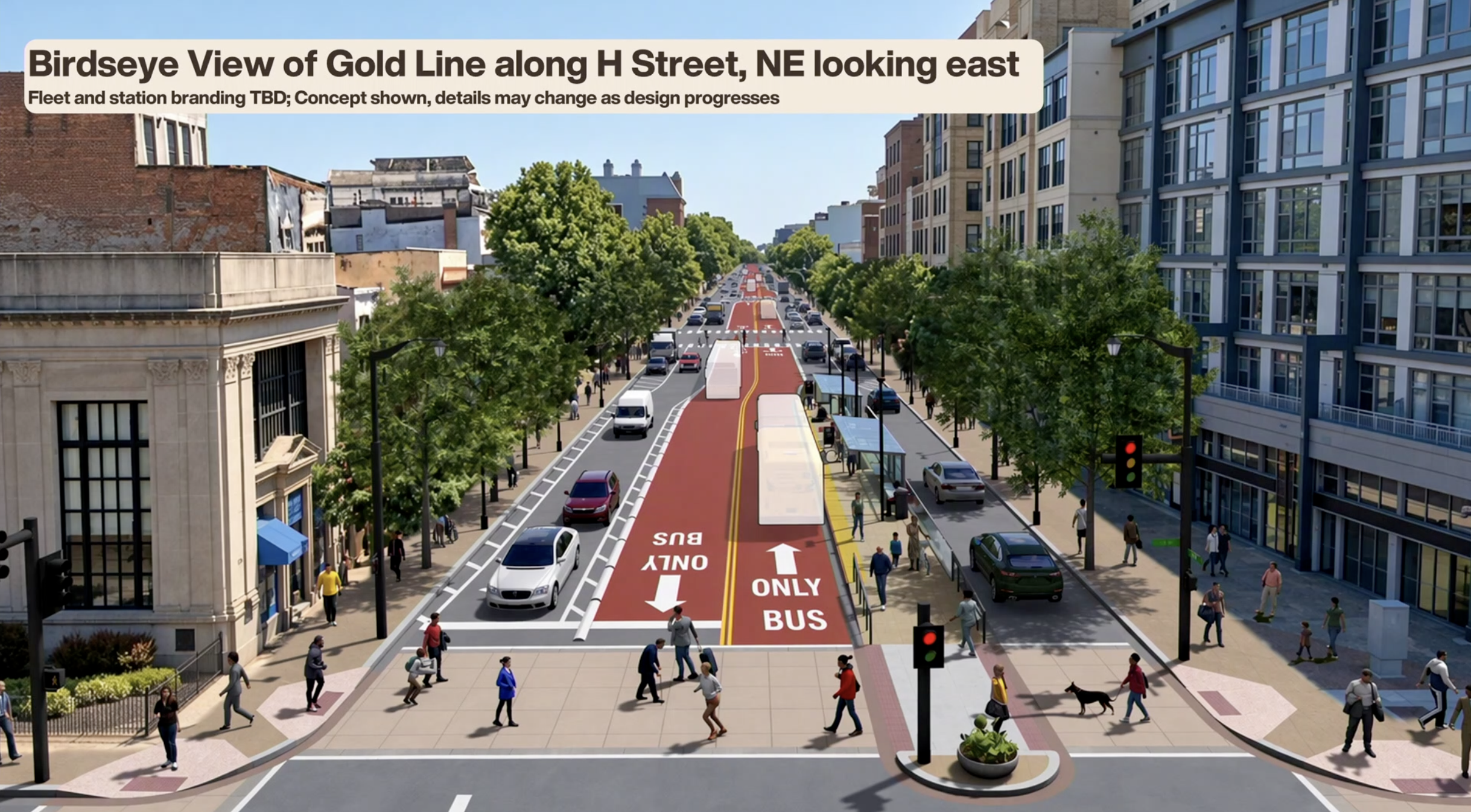
- Gold Line buses would run on new dedicated lanes in the center of H Street (unlike the ill-fated streetcar that got stuck in traffic). That would keep the curb freer for delivery trucks and rideshare cars but also would remove many parking spaces.
- From Farragut Square to Gallery Place, the buses would use existing red carpet bus lanes.
- The Gold Line fleet would be new three-door, 60-foot buses.
- A future phase would connect to Georgetown and Rosslyn.
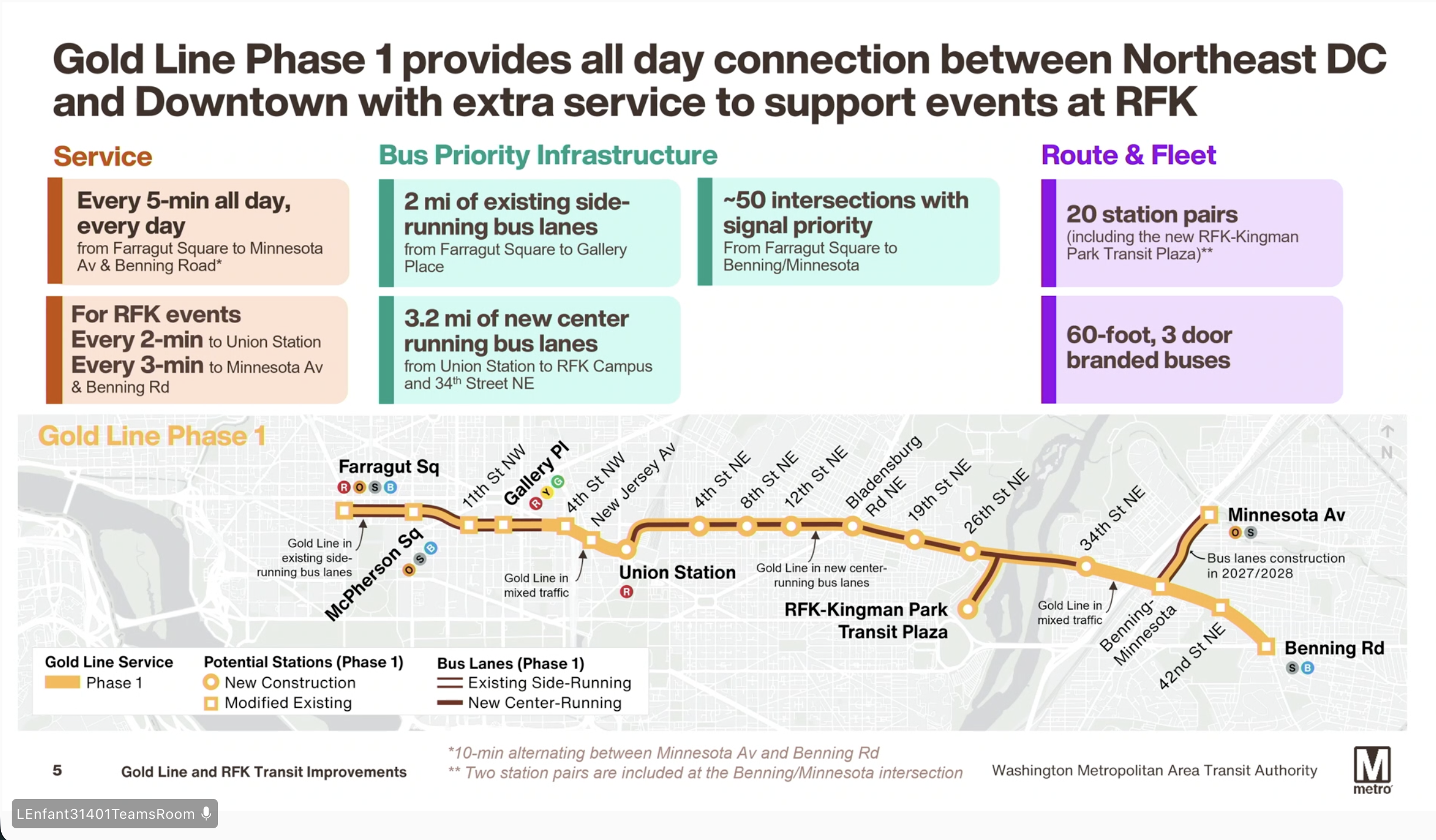
Zoom in: To speed up service, Metro's plan envisions about 50 intersections with signal priority, so buses would get to move first through the lights.
- It's also trying to make it easier to transfer to the Red Line at Union Station by locating the stop 2-5 minutes from the Metrorail entrance.
Good to know: Metro has released its designs so that the public can weigh in online through Dec. 18.
- Metro is planning an open house at Atlas Performing Arts Center on the evening of Nov. 30.
- Residents early next year can share their ideas about how the buses should look.
What's ahead: Metro hopes to begin service in summer 2030, ahead of the stadium opening that fall — on top of expanding the Stadium-Armory Metro station to accommodate more people.
- Metro anticipates 26,000 to 38,000 stadium-goers to use rail and bus.