How the feds could give D.C.'s next mayor 107 new parks

Add Axios as your preferred source to
see more of our stories on Google.
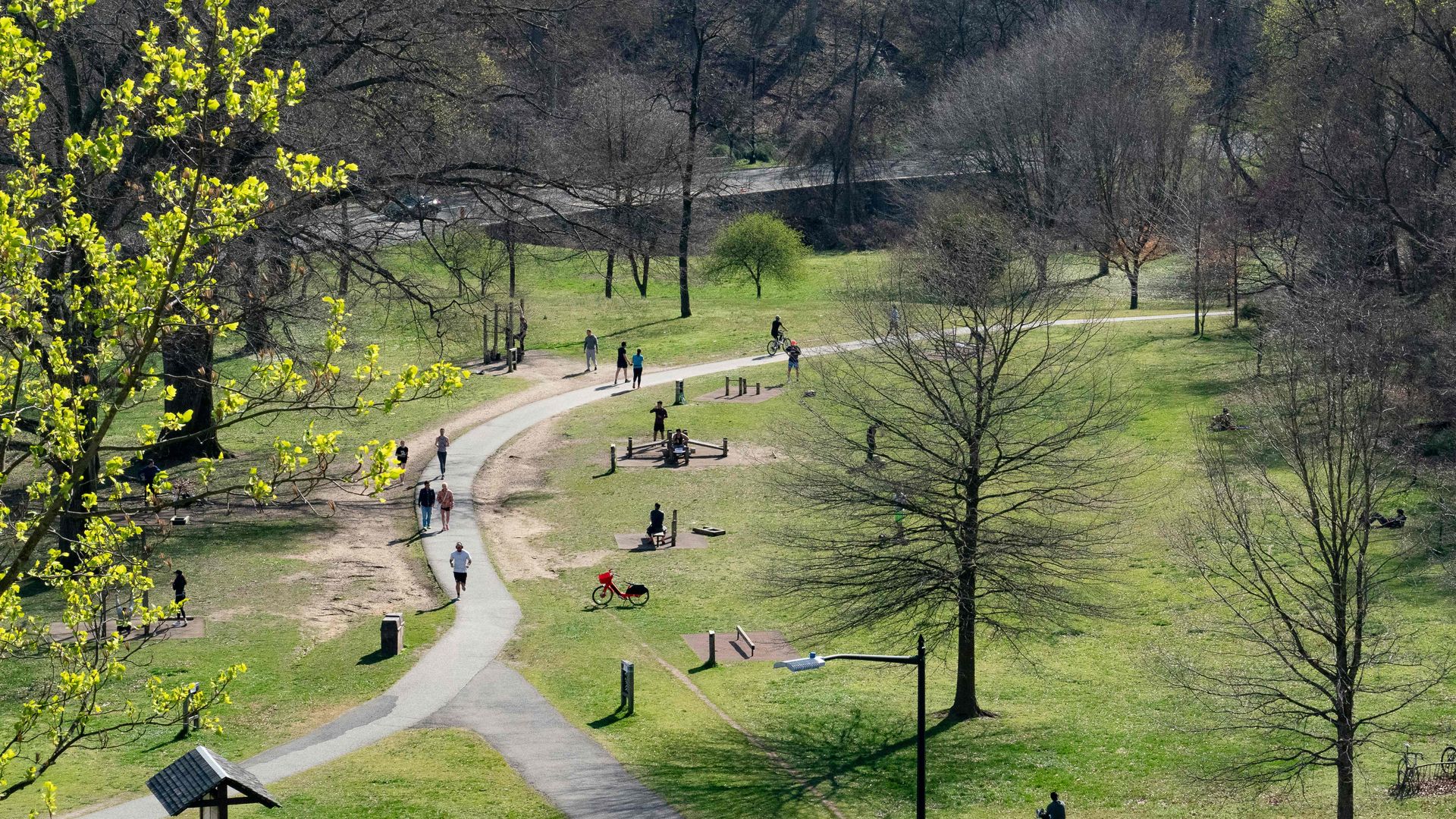
NPS owns much of D.C.'s parkland, like Rock Creek. Photo: ALEX EDELMAN/AFP via Getty Images
A new report asks D.C.'s next mayor to seek control of more parks.
Why it matters: About 90% of D.C.'s parkland — think Rock Creek Park, but also empty grassy triangle lots in your neighborhood — is owned by the National Park Service, a bureaucratic logjam for creating new community parks.
Driving the news: Getting more of that land in local hands would help "to make our parks more beautiful, welcoming, and usable," say the report's authors, former mayor Anthony Williams and Council member Matt Frumin.
- They offer four major suggestions, including expanding the city's parks department and creating a position like New York City's "director of the public realm."
- There are many kinds of NPS land — "small parks" (smaller than one acre, which could be places for public art and community meeting places) and "neighborhood parks" (bigger parcels that could hold playgrounds, sports fields, picnic areas).
- The report also envisions "destination/downtown parks," with creative uses like cafes or concessions — if D.C. owned the land.
Between the lines: Gripes about NPS land range from unshoveled snow to lack of public bathroom access.
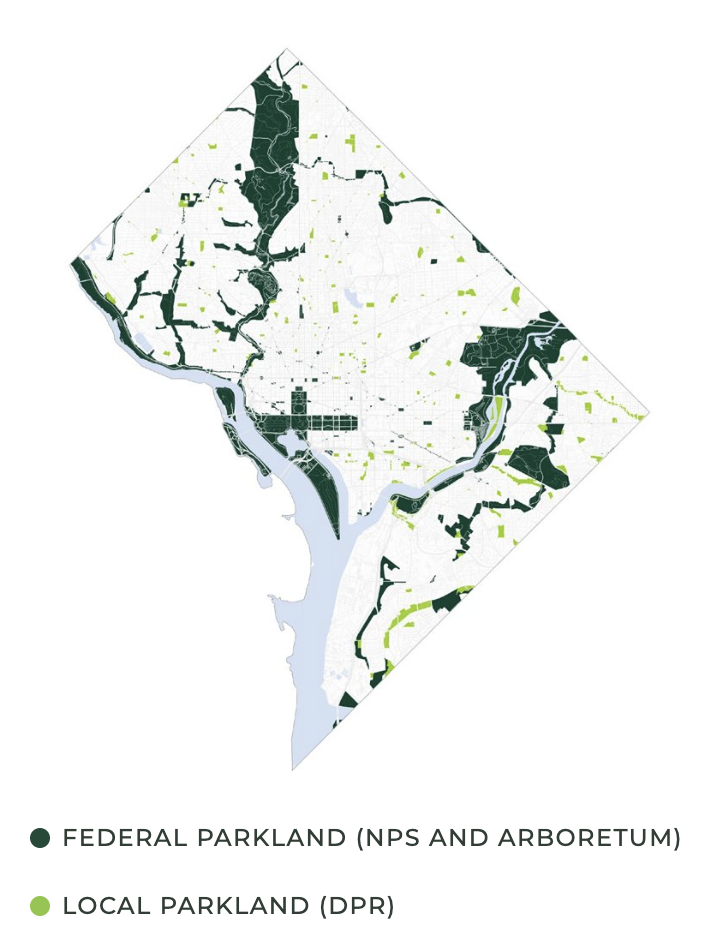
Follow the money: The report envisions taking on 2,440 acres across 107 locations — costing the District about $13.6 million annually to service.
- The task force that wrote the report suggests creating an "entrepreneurial parks fund," seeking sponsorships, advertising and concessions to make funding self-sustaining.
Zoom out: We're in an era of opportunity to build more city. The feds are offloading large obsolete office buildings in Southwest, which could one day become three new neighborhoods near the National Mall.
- Parks could be another way D.C. takes more control from the feds, creating more hometown spaces.
The bottom line: The upshot is that locals are "better equipped to respond to changing neighborhood park needs like building a dog park, fixing a playground or basketball court, or even maintaining wilderness in densely populated areas," the report says.