D.C. United's $300M Audi Field pitch faces skepticism

Add Axios as your preferred source to
see more of our stories on Google.
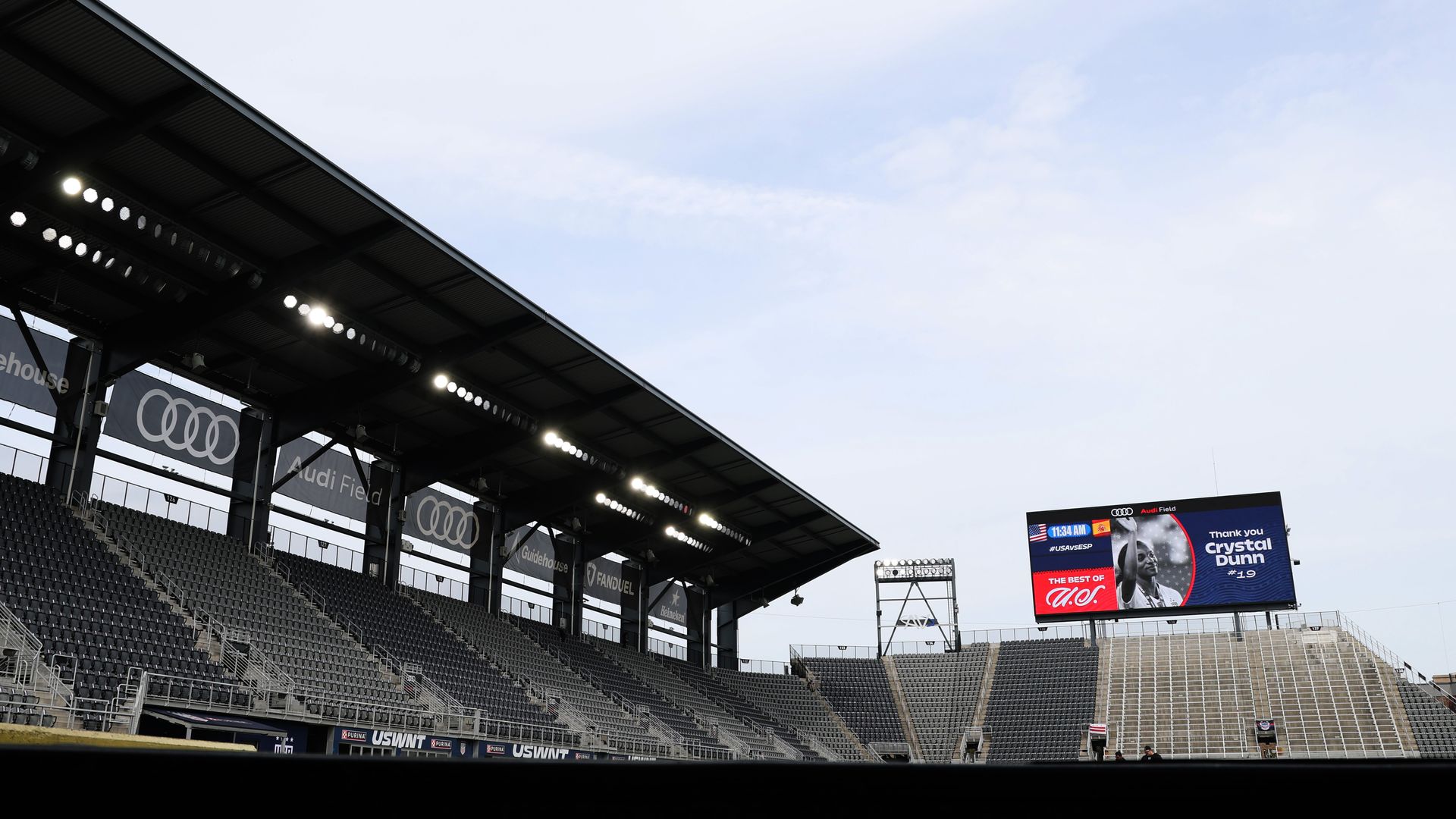
Photo: Georgia Soares/USSF/Getty Images
D.C. council members didn't sound sold on spending $300 million in public funds to put a roof over Audi Field and expand the stadium.
Why it matters: D.C. United says a bigger, covered stadium could bring more concerts to D.C. and support the growth of women's sports. But the request comes as the city is already spending heavily on other sports venues.
Friction point: But with $1.5 billion in taxpayer money already committed to the Commanders stadium and Capital One Arena's modernization — and new upgrades proposed for Nats Park — council members questioned if the Audi Field expansion was really necessary.
- "It sounds like we need to do a lot more studying," Councilmember Elissa Silverman said during a council hearing on Friday, to gauge financial returns on the city's investment and also neighborhood concerns like added traffic.
- "It sounds like we're a little premature in moving forward with this."
State of play: D.C. United said the project would support a shift in the MLS calendar that will have more games being played during the winter. It's a $620 million plan in full — including financing for an affordable housing project for seniors across the street.
- It would expand the stadium to 30,000 seats and add new amenities and space to support the Washington Spirit, which are in the final year of their lease and currently in negotiations with United.
- The growing portfolio of teams also includes another women's soccer team, DC Power; the XFL football team DC Defenders; and a women's volleyball team launching next year, DC Flight.
- "The roof opens the door to much more," D.C. United CEO Jason Levien said.
The team is also betting on drawing in musical performers that are skipping D.C. venues for Baltimore. A study the team commissioned forecasts the project could bring in 64 additional events a year.
What's ahead: The outgoing Bowser administration is calling for more economic modeling. "How did the number $300 million come about?" asked deputy mayor for economic development Nina Albert, sitting next to Levien.
- Council Chairman Phil Mendelson adjourned the hearing by suggesting Levien and Albert find time to discuss their differences — including undertaking more studies, if needed.