Kennedy Center closure redraws D.C.'s arts map as Theatre Week begins

Add Axios as your preferred source to
see more of our stories on Google.
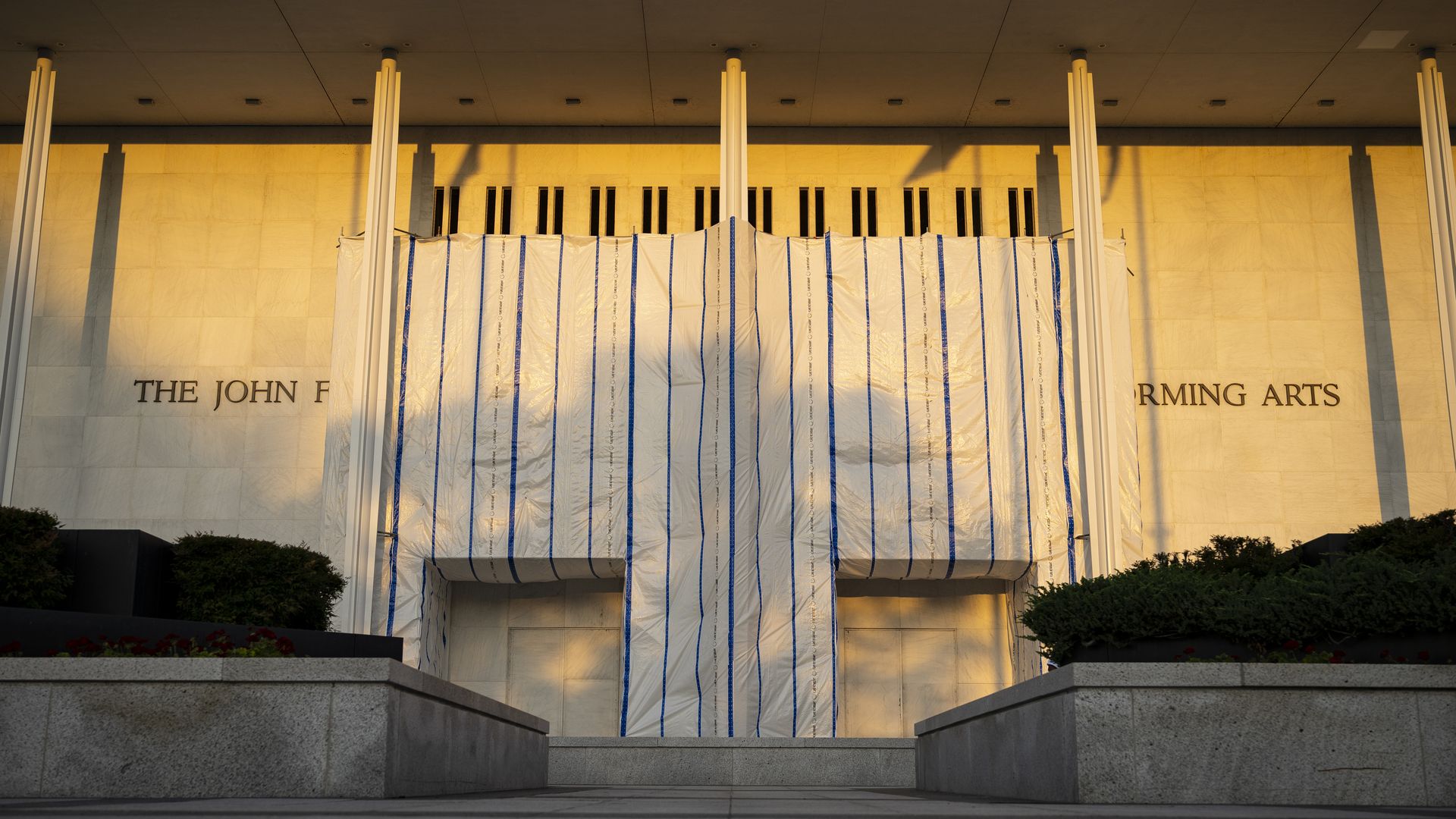
The Kennedy Center's closure is redrawing D.C.'s theater map. Photo: Graeme Sloan/Getty Images
DC Theatre Week returns Thursday as Washington's performing arts map is being redrawn.
Why it matters: The Kennedy Center's closure has scattered performances across the region — from Broadway tours to ballet and the National Symphony Orchestra — while putting a new spotlight on Washington's broader theater network.
- "The amount of activity and artistry that was happening in that building is just so hard to comprehend now that it's gone," Theatre Washington president and CEO Amy Austin tells Axios.
Driving the news: Theatre Week runs Sept. 24-Oct. 11, with $25, $45 and $65 tickets to more than 25 productions across the region.
- It's a snapshot of a busy fall: Austin says 28 productions opened across the region in September alone.
- A free "Make A Scene!" concert takes over the Wharf's floating stage Sept. 29, with giveaways and musical performances.
- New this year: Nearly 45 area restaurants are offering specially priced theater menus or late-night bites.
The big picture: Washington isn't lacking for stages. But replacing what happened under one Kennedy Center roof is another matter.
- The National Symphony Orchestra is effectively becoming a "regional touring orchestra" this season, its director told the Post, swapping its 2,465-seat Concert Hall for six venues across the DMV.
Zoom in: Dance Theatre of Harlem, originally slated for the Kennedy Center, performs "Firebird" at the National Theatre this weekend.
- Broadway tours are largely landing at the National, Austin says, while opera has moved to venues including Lisner and Baltimore's Lyric.
- Local theaters are stepping up, too. Shakespeare Theatre Company has hosted displaced Kennedy Center artists, while Arena Stage continues to launch Broadway-bound productions, including "Damn Yankees."
Meanwhile, others are preparing for more demand. Atlas is renovating a new dance space and seeking philanthropic partnerships.
One of the toughest things to replace, Austin says: the Kennedy Center's massive orchestra pits, particularly for opera and other large-scale productions.
Yes, but: What's been lost extends far beyond performances.
- Austin points to the Kennedy Center's free programming, education department, apprenticeships and internships, children's theater and development of new work — plus the career boost of having the institution on an artist's résumé.
What she's saying: "You can't realize the impact because it's so big," she says. "It was one of our local theaters as much as it was the nation's theater."
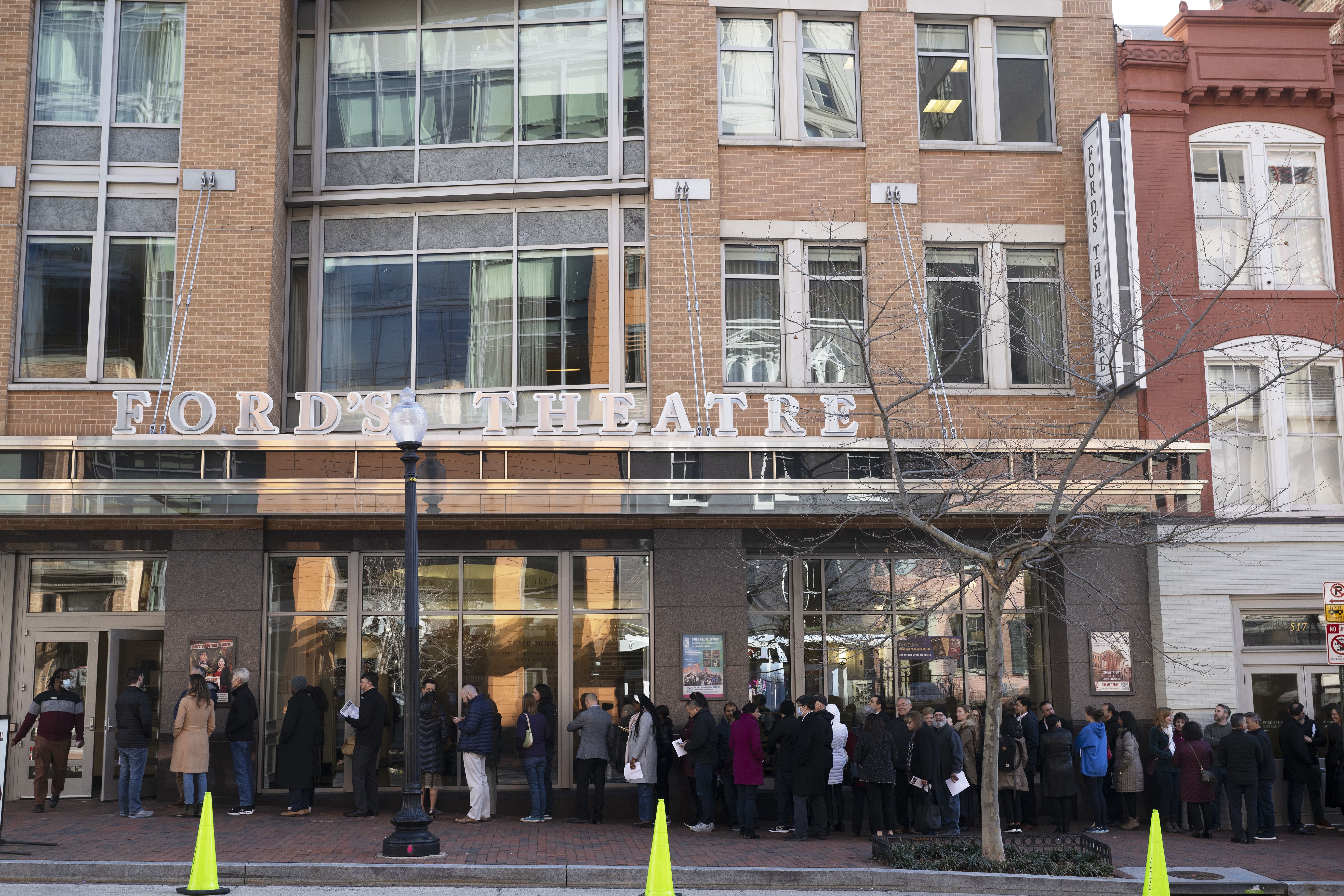
Friction point: MS NOW reported Tuesday that Trump administration officials have discussed attaching the president's name to Ford's Theatre — another major D.C. stage with federal ties.
- The White House strongly denied the report to Axios, calling it "completely false." The Interior Department also denied the report to MS NOW.
- Ford's is operated through a partnership between the nonprofit Ford's Theatre Society and the National Park Service, which administers the historic site.
Silver lining: The disruption is introducing some Washingtonians to a theater scene they hadn't explored.
- Austin says she's encountered avid theatergoers who rarely ventured beyond the Kennedy Center to Washington's wider network of nearly 90 professional theater organizations.
- "There's a lot of opportunity to say, 'Oh, I had no idea there was this much culture in our nation's capital,'" she says.
What's next: So far, Austin says, displaced performers and organizations have found new homes — including the NSO, which opens its season Saturday, Sept. 26 at Strathmore.
- But the longer-term effects may take years to understand.
- "It's just not the same as it contained in a national arts center," Austin says. "It's a different experience."