D.C. traffic feels brutal right now. Here's why

Add Axios as your preferred source to
see more of our stories on Google.
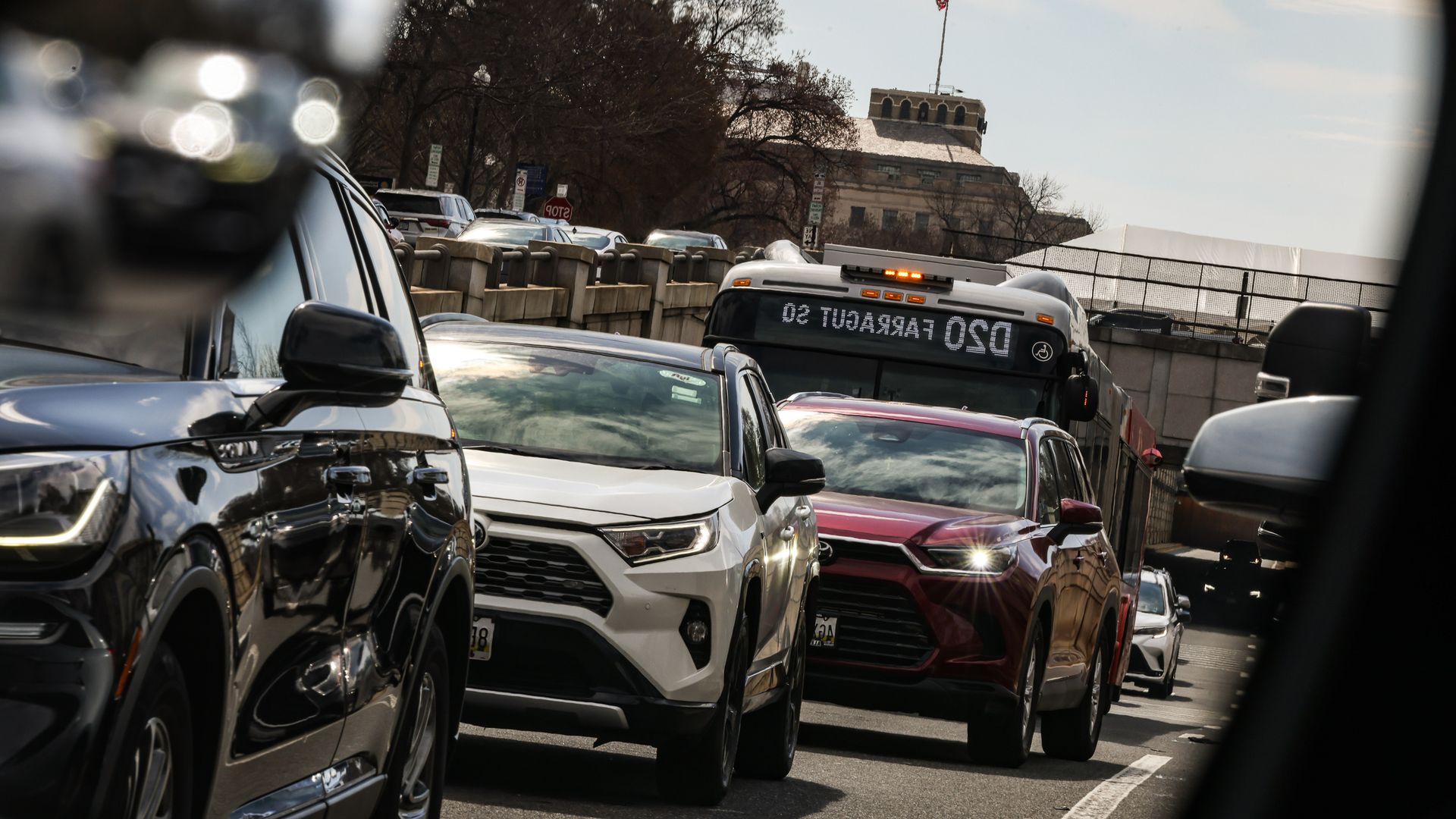
The gridlock feels off the grid. Photo: Valerie Plesch/Bloomberg via Getty Images
If you're wondering why D.C.-area traffic feels bonkers-to-bumper right now, you're not alone.
Why it matters: Washington's post-Labor Day traffic is always bad. But commutes have felt so brutal this week that everyone and their political commentators are honking about it on social media.
So, what gives: Blame Congress being back in session? Dupont Circle construction? The Roosevelt Bridge?
- Not so fast (or slow), WTOP traffic expert Dave Dildine tells Axios.
⚡ We're experiencing the "September shock," he says. "It's a well-known phenomenon, but it's poorly understood."
The intrigue: There may actually be less traffic on the roads now than there was this summer.
- Year after year, Dildine says, daily freeway traffic around Washington is typically heaviest June through August.
- But summer travel is spread across longer days, vacations and more flexible schedules.
- Once school and regular office hours resume, those trips get squeezed back into traditional AM/PM rush hours.
Translation: The traffic isn't necessarily multiplying. We're all just hitting the road around the same time.
- Even a 2% increase in traffic during an already packed rush hour can produce a disproportionately nasty backup, Dildine says.
Between the lanes: The geography of gridlock changes, too.
- Summer is "outside the Beltway season," Dildine says, with congestion concentrated on getaway routes like I-95 and toward the Bay Bridge.
- Fall is "inside the Beltway season" — think D.C., Arlington and lower Montgomery County.
Yes, but: Road work is about to pile on to the September shock.
- The upcoming two-month closure of Rock Creek and Potomac Parkway's Waterside Drive on Monday is expected to have "significant impacts," Dildine says.
- And pleasant fall weather means more paving, festivals and people out and about. "I always say nice weather, worse traffic," Dildine says. "That's the rule of law."
Brace yourself: The sneakiest snarls won't come during the workweek.
- Dildine calls them the "11th rush hour" — those random fall Saturdays when festivals, football and other activities collide.
- "There is often a Saturday afternoon that is horrible, and it comes out of nowhere," he says.
One more thing: "Shorter days can mean longer delays." As darkness begins overlapping with rush hour, speeds slow and crashes can further snarl commutes, Dildine says.
The bottom line: With gas above $4 a gallon, Metro is looking good.