Outdoor Living Brief
Your next backyard might be designed by AI

Add Axios as your preferred source to
see more of our stories on Google.
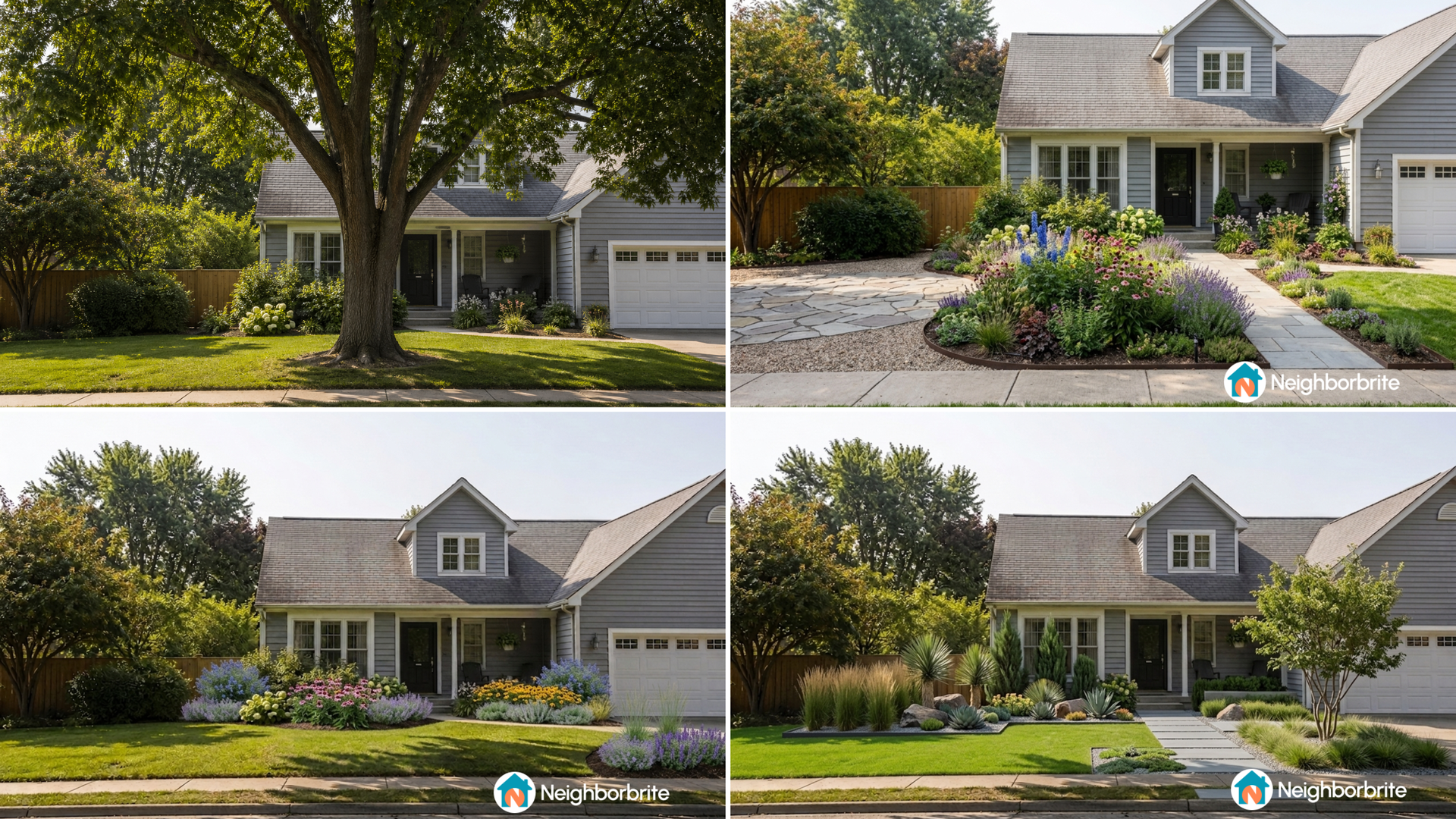
Top left is the before on Neighborbrite, while the three other frames are design variations. Photos: Courtesy of Neighborbrite
A robot can't yet mulch or weed your flower bed but for a growing number of homeowners, AI is now their landscape designer.
Why it matters: Gardening can be challenging and time-consuming, but for long, the only alternative was shelling out thousands for professional designers with impossible project minimums for the small yards many D.C. residents are trying to upfit.
- So what happens? The project stalls. The eyesores remain. The native flowers never get planted.
Luis Benavides noticed this gap and the steep learning curve when it comes to landscaping while he and some neighbors in Utah wanted to transform their yards to be more drought-resistant and save water.
- "People don't imagine how a yard could look beautiful without a grass lawn. If they can't imagine it, they don't do it. But once they can see it, that's when things change," he tells Axios.
So in 2023, Benavides co-founded Neighborbrite, a freemium AI-powered landscape design tool built to help solve this problem. "We are fulfilling a job that no one was doing," adds the CEO.
How it works: Start by uploading a photo of your yard and selecting your preferred design style like cottage, modern or naturalistic. The system will generate up to four batches of renderings with a free plan.
- From there, the tool starts introducing its premium add-ons like plant identification and recommendations based on your climate. (The D.C. area is in the warm-temperate 7b/8a USDA Hardiness Zone as of the new 2023 map.)
- Plans for homeowners cost $25 a month.
- For landscape professionals — one of the largest groups of users — Benavides says, Neighborbrite costs $50 or $150 a month, depending on the suite of tools needed.
The big picture: Neighborbrite now has over 720,000 registered users who have generated over 17 million designs in the last three years.
- And it's just one player in a growing marketplace of technology-enabled landscape design tools, which also includes Yardzen and LandscapeDesignsAI.
Reality check: AI tools can lower the barrier to landscaping — but the technology behind them comes with environmental costs.
- Data centers that power AI systems require significant water and energy, raising questions about the net impact of using AI to design biodiverse, climate-resilient spaces.