Homes Brief
What to know before buying a bidet

Add Axios as your preferred source to
see more of our stories on Google.
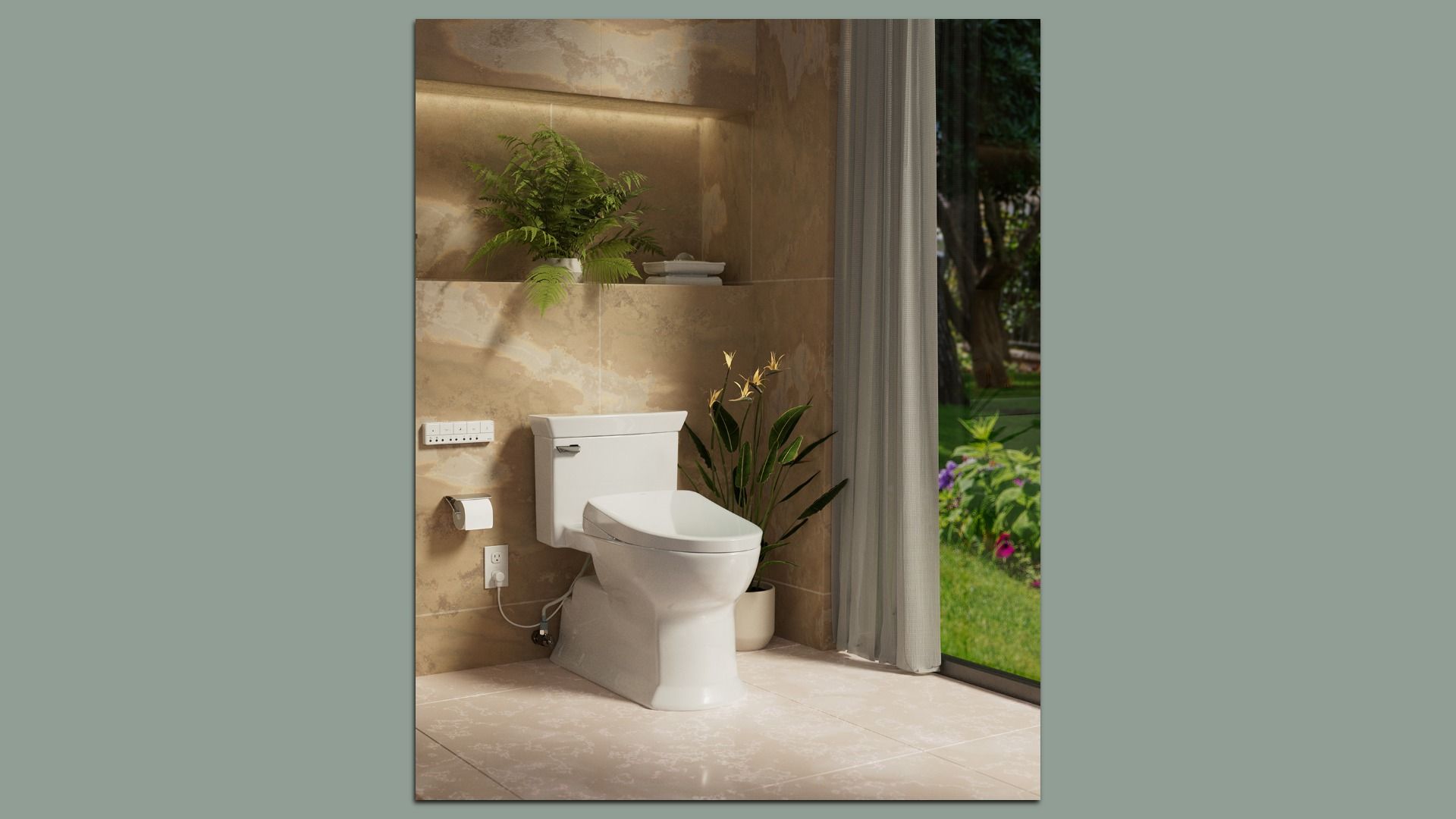
The Washlet S7A requires an outlet within 3 feet of the toilet. Photo: Toto
Not every bidet fits every bathroom — it depends on your space, power access and toilet style.
The big picture: If you're thinking about taking the plunge and buying a bidet, there are several things to consider.
- For this guide, we're focusing on toilets with butt-spritzing add-ons and not stand-alone bidets.
But first, let's address the elephant in the bathroom: No, the bidet nozzle does not touch the user — that's a common misconception, Toto's Bill Strang says.
- "It comes out well below where your rumpus is," he tells Axios.
State of play: There are different options to choose from.
- Non-electric hose attachments clip onto your existing toilet for as little as $25-$200. Most installs take under 10 minutes and don't require a plumber, according to Tushy CEO Justin Allen.
- Electric bidet seats replace your toilet seat and add features like heated seats, warm water, pressure controls and air drying. Most will set you back a few hundred dollars.
- Smart toilets are fully integrated units — the bidet and toilet are one appliance — which can cost thousands.
Before buying, you need to check:
- Toilet shape: See if yours is round or elongated, because most bidet seats specify compatibility — and won't work with French curve toilets — Strang says.
- Outlet access: Electric seats need a 120-volt GFCI outlet near the toilet, Strang adds.
Need warm water? Non-electric attachments connect to your toilet's cold water supply only.
- If you want warm water but aren't ready for an electric seat, you'll need a model that also connects to your sink's hot water valve — and a sink that's close enough to reach.
Finally, a warning: If you buy a bidet, you may tell everyone you know about it — and might not stop at one. Allen says Tushy customers frequently return to buy units for other bathrooms, or as gifts.