Behind the failed push to bring a casino to Tysons

Add Axios as your preferred source to
see more of our stories on Google.
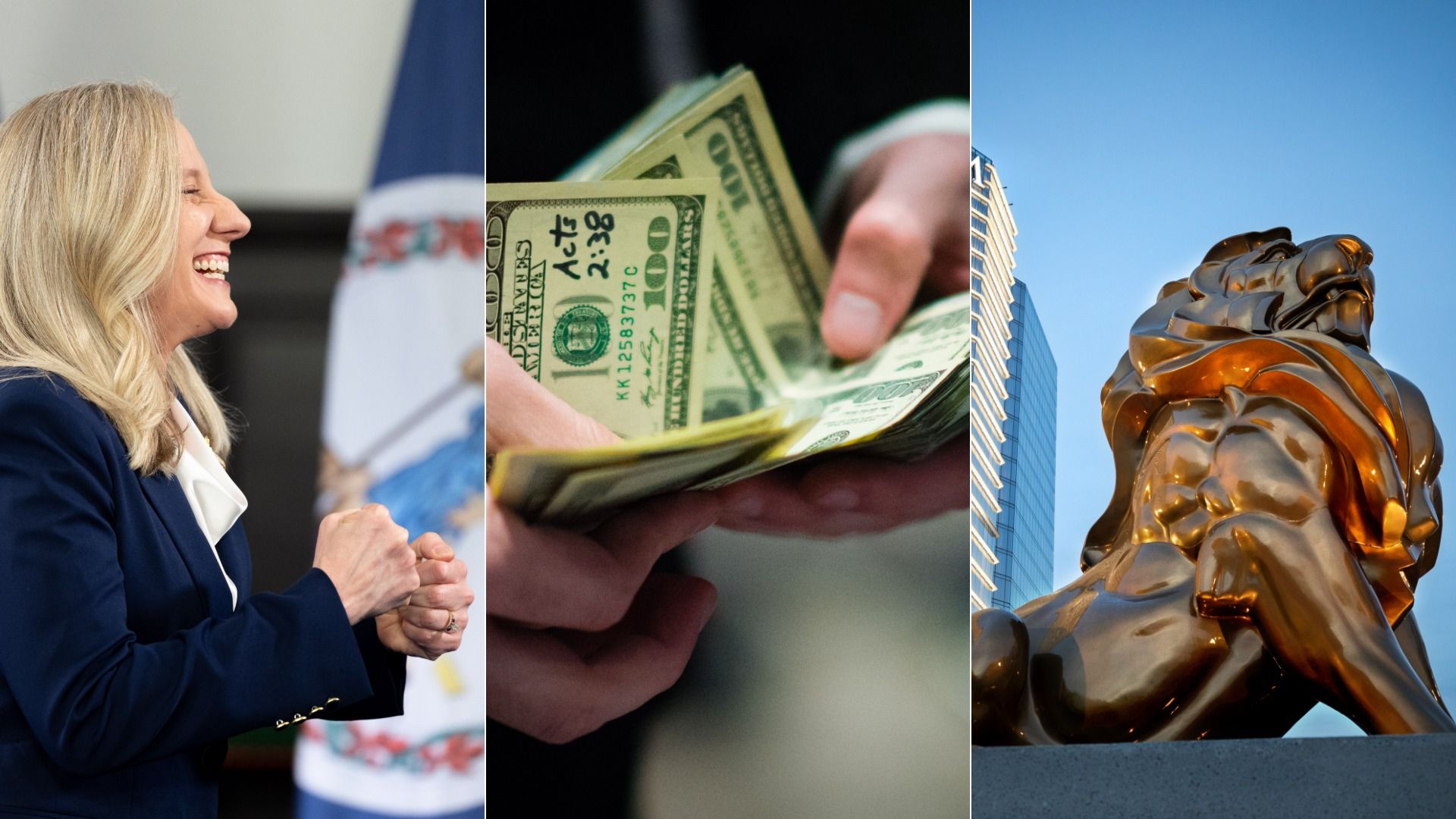
Gov. Spanberger rejected the Tysons casino bill after fierce opposition from locals — and MGM Casino, across the river (right). Photos: Mike Kropf/Getty Images, Sarah L. Voisin/The Washington Post via Getty Images, and Evelyn Hockstein/For The Washington Post via Getty Images
In January, a splashy announcement tore across local news — National Harbor was getting the Sphere, the futuristic, orb-shaped concert venue straight outta Vegas. Jackpot for Maryland.
- What wasn't said: The immersive theater had flirted with picking Fairfax County, two sources knowledgeable about the talks tell Axios. Virginia's loss was Maryland's $1 billion gain.
Why it matters: As the DMV tries reinventing its economy (stadiums! orbs! mega-spas!), there's one lucrative but controversial idea Gov. Abigail Spanberger isn't rolling the dice on: a casino in Tysons.
Driving the news: Spanberger on Thursday vetoed the casino bill — a move many saw as a no-brainer, given the opposition in Northern Virginia over concerns like traffic and riffraff.
- But with the county's fiscal pressures, and failure to land other big venues, labor and business bigs both spent months trying to convince Spanberger that Fairfax shouldn't pass up this $11 billion mega-project. And they promise to keep fighting.
The big picture: The teachers union had hoped gambling revenue could pay for raises. The building trades wanted the construction jobs. Cooks and custodians talked of working at a 24-hour casino.
- And Tysons landowners were salivating at the once-in-a-lifetime deal spanning 1.5 million square feet, branded the Entertainment District.
"It's not a seedy casino," said Virginia Diamond, NoVA's biggest labor boss. On an empty lot across from the underused Spring Hill Metro station, down the road from Tysons Galleria and the Maserati dealer, Diamond had recently rallied support in front of TV cameras. Her rank-and-file stood beside posters of a glamorous-looking resort, to be built right there.
- Standing nearby were her partners in business, Comstock.
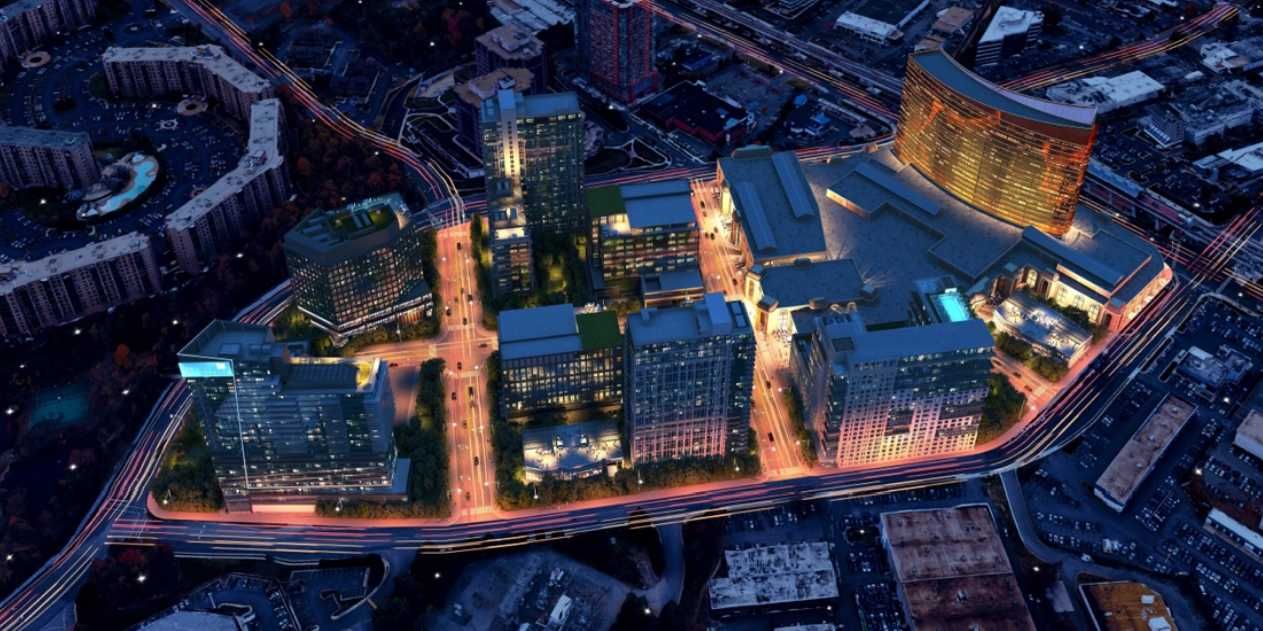
Until now, local developer Comstock has mostly stuck to the Dulles corridor. It so badly wanted to build the casino, spending $3.5 million on lobbyists and politicking to get the bill through Richmond.
- The man who muscled it to Spanberger's desk was Scott Surovell. He's a rising state senator from Fairfax. With a big assist from powerful southern Virginia lawmakers, including Louise Lucas, who saw casino dollars padding the state's budget.
Surovell still says Fairfax needs a casino because it depends too much on office jobs.
- Which means Tysons — once called America's Next Great City — suffers from the same telework problems crushing downtown D.C. Fairfax can't keep betting on office real estate, he says, or hiking property taxes to fund schools and basic services. Though home to rich ZIP codes, the county is cash-strapped. It just imposed an unpopular meals tax to keep up.
- The casino development is also a convention center, hotel, and a shot in the arm. "The county's economic development plan is stuck in 1990s thinking," he says.
But the local leaders in Fairfax never went for it.
The other side: "He's dead wrong," says Jeff McKay, the top elected official in Fairfax County and chief casino foe. His fellow board supervisor Jimmy Bierman: "The idea that Tysons can't keep big businesses is pathetic nonsense."
- They didn't think the bill was a fair deal anyhow: 70% of the revenue would go to the state coffers. A county-commissioned study found Fairfax's return on the gambling taxes would be more modest than anticipated, about $20 million.
- "That's a bad deal for my taxpayers," says McKay, and he blames Surovell, whose campaigns have taken $204,000 from Comstock: "It raises a lot of money … for the patron, who's raised a lot of political contributions."
The intrigue: There are signs MGM Resorts may have allied with the Tysons resistance, retaining several lobbyists in Richmond.
- Surovell and several insiders I spoke to believe that MGM was funding a nonprofit that blasted mailers against the Tysons casino. The group — which is called Communities First VA — doesn't have to disclose its donors, and its founder, Democratic strategist Bradley Beychok, told me that "the premise that opposition to this casino is linked to one entity is preposterous." But he didn't deny MGM's rumored hand.
What's ahead: Spanberger cited local opposition in her veto. But Surovell's still pitching.
- "I will not stop," Surovell said.
💭 Keep reading after the credits for my educated guess of winners and losers. Town Talker is a column about money and power in Washington. Tell me about the talk of your town: [email protected]
The likely winners and losers of the veto:
WINNERS:
- Jeff McKay
- Local supervisors whose constituents hate it
- Locals who hate traffic
- Bradley Beychok, a Democratic operative who's running the dark money nonprofit
- MGM Casino at National Harbor
- Prince George's County, who wants MGM to own the DMV
- Valerie Plame and ex-spies who think a casino near Langley = nightmare
LOSERS:
- Labor unions
- Scott Surovell
- Louise Lucas
- Gamblers
- Comstock
- Caesars, the Nevada casino giant that's expressed interest