Skip the Tidal Basin: D.C.'s best cherry blossoms are blooming here

Add Axios as your preferred source to
see more of our stories on Google.
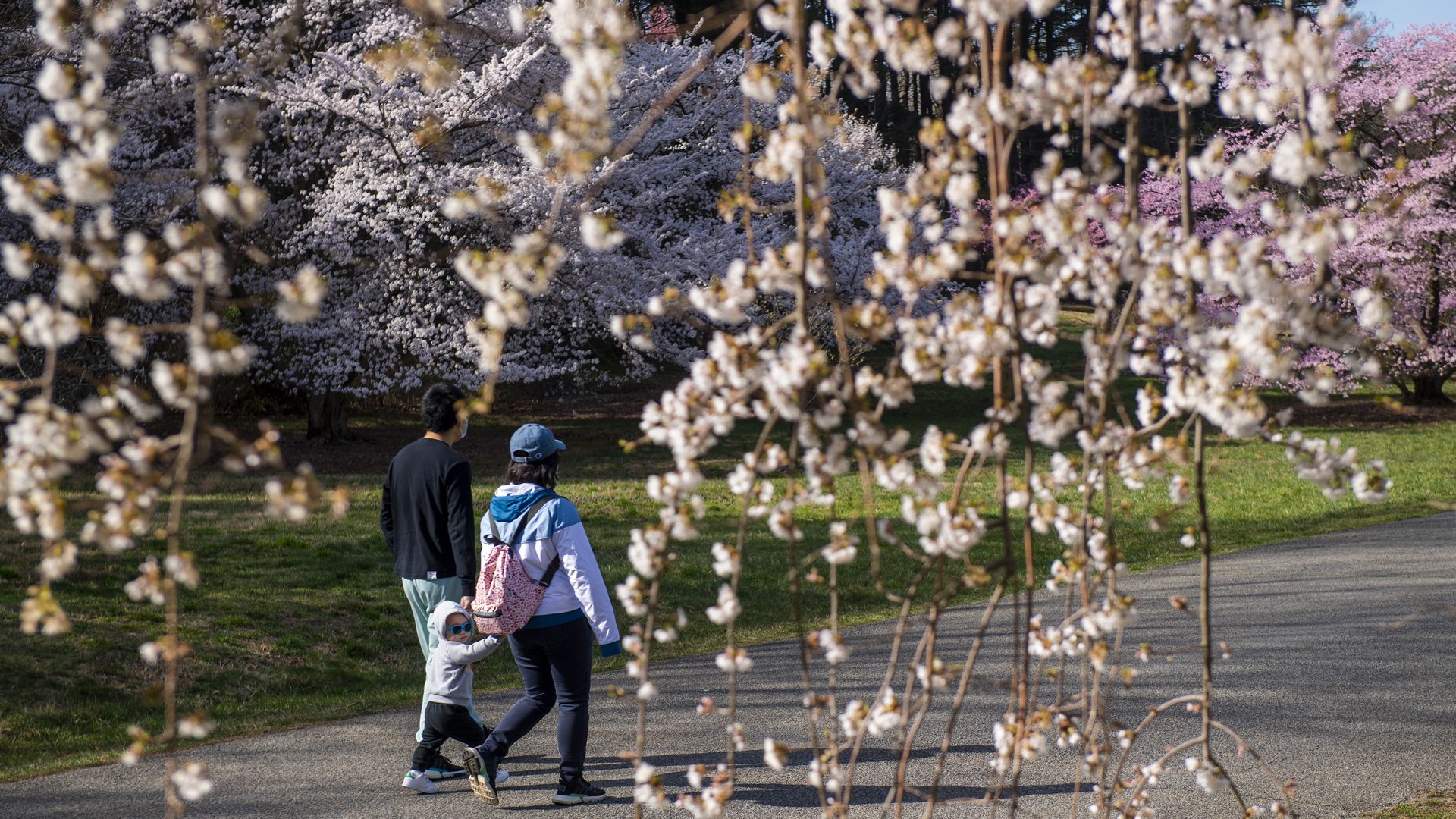
Catch the cherry blossoms without trunk-to-trunk crowds at the National Arboretum. Photo: Amanda Voisard/for The Washington Post via Getty Images
Hot pink take: The best cherry blossoms in D.C. aren't at the Tidal Basin.
- They're at the National Arboretum — where you can actually enjoy them without the crowds.
Why it matters: The sprawling public park has the most diverse collection of cherry trees in the U.S. — nearly 100 varieties — including homegrown hybrids that have quietly reshaped landscapes nationwide.
The best part: It's all free — with 450+ acres of room to roam, picnic and (thankfully) park.
State of play: The Tidal Basin's yoshinos should hit peak bloom March 29–April 1. But the arboretum's 1,000 trees stretch the season from March into late April — with waves of blooms instead of one big blush.
- "I think we're going to have a crazy season," says director Richard Olsen — possibly lasting into early May.
What's new: A self-guided "Beyond the Tidal Basin" tour has blossomed to 40 stops across the Arboretum grounds — now with a phone-friendly digital guide. (Wear comfy shoes.)
- Visitors can take in popular trees like the weeping cherries — among the oldest — and yoshino clones of the Tidal Basin's original trees from 1912.
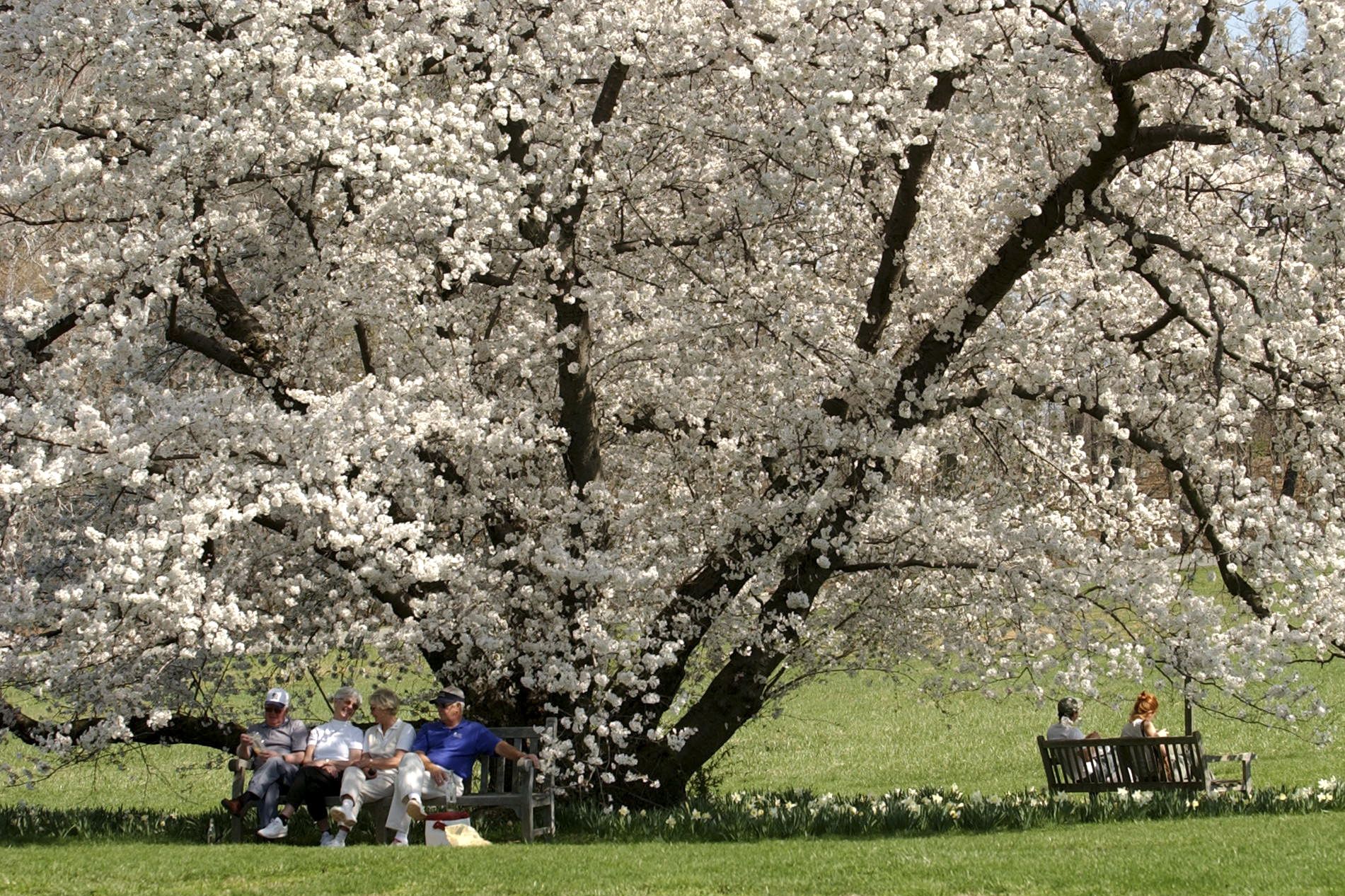
The intrigue: Tucked away is a research field where the USDA center tests future cherry varieties — some of which could end up planted across the country.
- The arboretum's cherry breeding program dates to the 1970s, led by Roland Jefferson — its first Black botanist — who meticulously documented and cloned historic trees, including those from the Tidal Basin.
- Cherries are notoriously finicky — often taking a decade or more to bloom. "You've got to have a lot of irons in the fire," Olsen tells Axios.
Fun fact: The work goes far beyond cherries. The arboretum has introduced nearly 700 plants over the last century, changing American landscapes.
Zoom out: If you're not strictly cherry-focused, this is where the arboretum really shines.
- Olsen says we might even catch a rare "super bloom" this year, when multiple species peak together — magnolias, forsythias, camellias and beyond.
A tree to go: The arboretum helped propagate Stumpy, the beloved Tidal Basin cherry that was recently removed — though Olsen would argue there are bigger celebri-trees.
- Don't miss the Yamaki Pine ("Peace Tree") — an over 400-year-old bonsai that survived Hiroshima and was gifted to the U.S. in 1976.
- Says Olsen: "It speaks to healing, diplomacy and cultural friendship."