Metro's faster trains and "Better Bus" launch mark biggest overhaul in decades

Add Axios as your preferred source to
see more of our stories on Google.
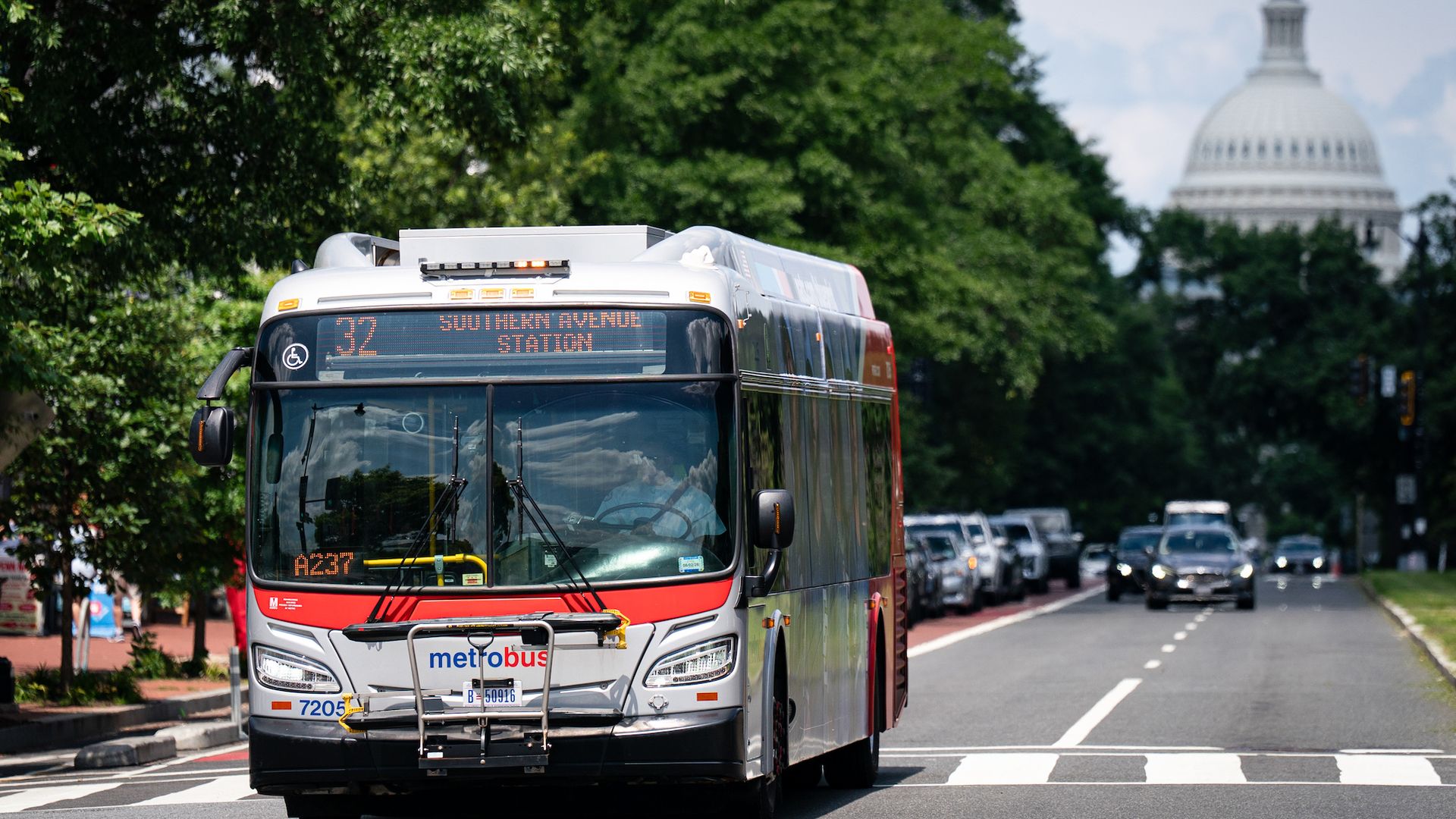
Metrobus gets a total overhaul. Photo: Al Drago/Bloomberg via Getty Images
Metro is unveiling major changes to its rail and bus system this month to increase efficiency and accommodate rising ridership — all without raising fares.
Why it matters: Trains are expected to run faster and longer, while the entirely new "Better Bus" system launches Sunday — the first major overhaul in 50 years.
🚆 State of play: Metro just rolled out major improvements to rail service with longer weekend hours and more frequent trains.
- Trains start an hour earlier, at 6am, on Saturdays and Sundays. They run an hour later, until 2am, on Fridays and Saturdays.
- Red Line trains run every 4 minutes during peak weekday rush — up from every 5 minutes (the heat may slow things).
Meanwhile, the Silver Line is split into two service patterns and additional trains will run during peak service times.
- Ashburn ↔ Downtown Largo
- Ashburn ↔ New Carrollton
🚌 What's next: Metro's long-anticipated "Better Bus Network" launches Sunday with changes to all Metrobus routes and schedules.
- The goal: create a more efficient, equitable and energy-saving system.
Highlights include:
- All-new route names focusing on regional letter prefixes for easier navigation (e.g., "A" for Arlington/Alexandria, "M" for Montgomery County, "D" for downtown D.C. and "C" for crosstown).
- The elimination of 500-plus stops to streamline service and focus on safer, more accessible and evenly spaced stops.
- New routes, including direct lines to popular destinations (e.g., National Harbor to L'Enfant Plaza) and points with better access to supermarkets or transfer hubs.
- More buses on busy routes with frequent service (between 12 and 20 minutes) — plus greater all-day and weekend coverage, as opposed to just during rush hour.
- Over 7,000 new signs to help make the network easier to navigate.
Between the lines: Montgomery County Ride On and Prince George's County TheBus are also changing service on June 29 and June 30, respectively.
Friction point: Despite extensive community input over three years, some residents have raised concerns about eliminated stops, like one outside a senior center in Edgewood.
The big picture: WMATA aims to make bus the backbone of the D.C.-area's transportation system by 2030. Many of the changes are an attempt to solve transportation disparities and provide access to underserved communities, given 60% of Metrobus riders are low-income and 83% are people of color.
- Metro plans to introduce more bus lanes and zero-emission vehicles.
See all of the changes here.