A 65,000-seat Commanders stadium — plus what's inside the RFK deal

Add Axios as your preferred source to
see more of our stories on Google.
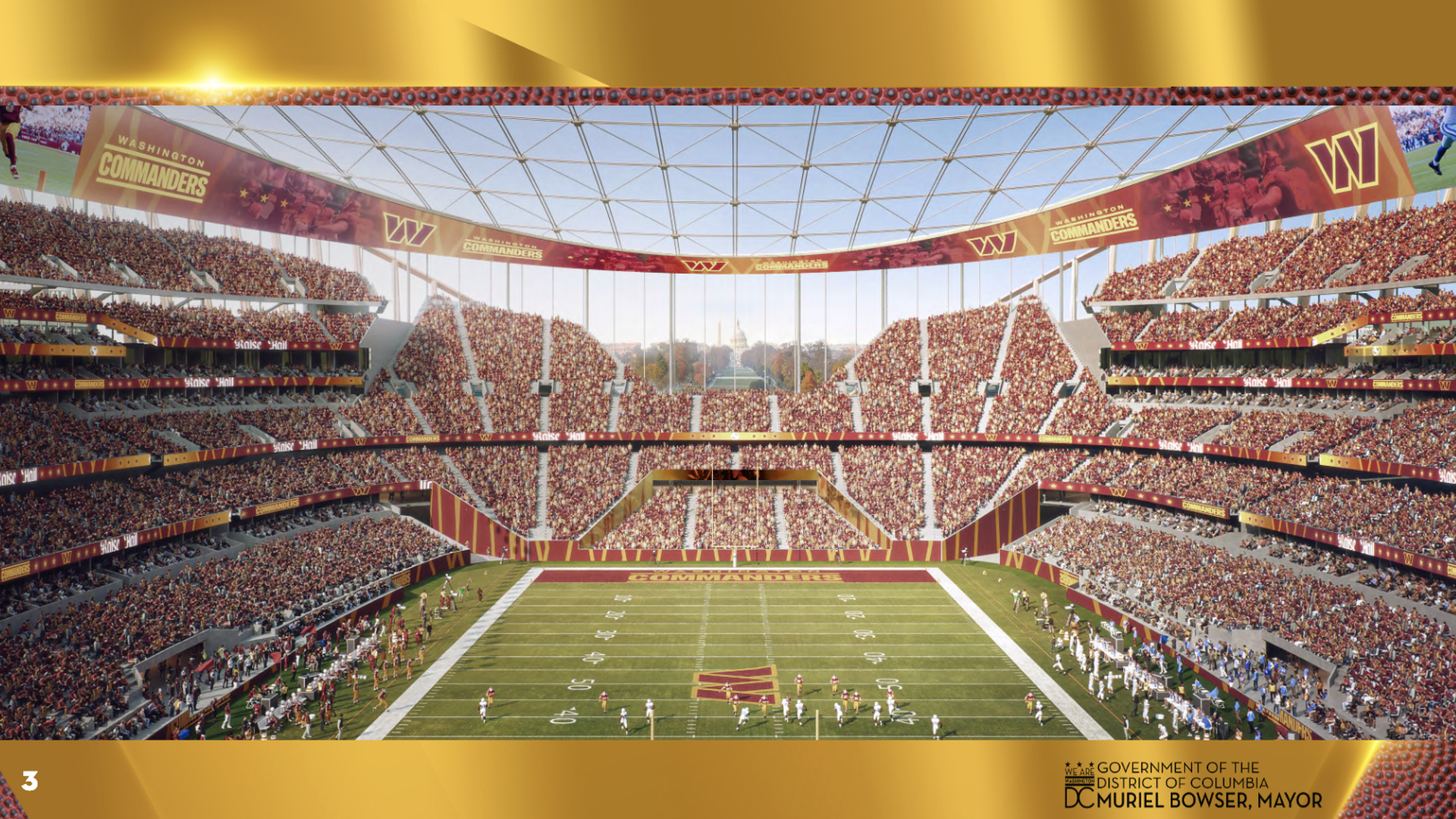
A concept rendering courtesy of D.C. government
D.C. wants to redevelop the RFK Stadium site into a new entertainment district with a 65,000-seat Commanders stadium, plus 6,000 new homes, Mayor Muriel Bowser and the NFL announced Monday morning.
Why it matters: The $3.7 billion project would build a new neighborhood on the Anacostia River, and bring the NFL back to Washington. It's up to the D.C. Council to approve it.
By the numbers: The Commanders will pay $2.7 billion for the Super Bowl-ready, roofed stadium. D.C. officials called it the largest private investment in the District's history.
- The Bowser administration wants D.C. to pitch in around $1 billion.
What they're saying: "Welcome home," Bowser said to kick off the unveiling, next to NFL Commissioner Roger Goodell and franchise owner Josh Harris.
- All three spent their childhoods in D.C. during the franchise's Super Bowl-winning glory days.
The 170-acre blueprint
The new stadium would replace the current RFK Stadium, awaiting full demolition.
- The franchise wants to hold 20-30 major events every year, like the NCAA Final Four or a Taylor Swift concert, on top of 200 other events like conventions and gatherings, Commanders officials told the press.
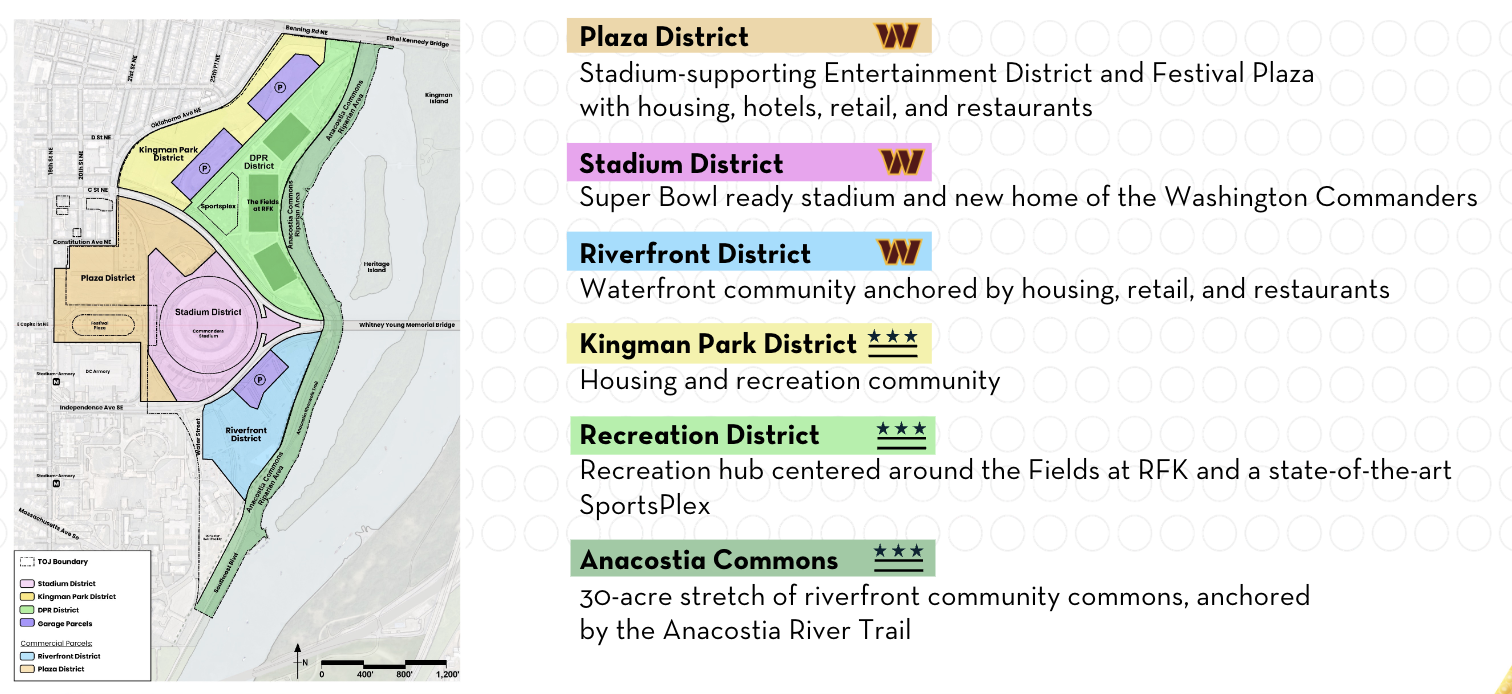
The big picture: A new community would emerge between a handful of mini-districts, per the designs.
- A "Plaza District" bordering the Hill East community has a "Festival Plaza" planned in front of the stadium. It envisions other entertainment offerings, housing, hotels, retail and restaurants.
- The "Riverfront District" places more homes, retail and restaurants along the Anacostia waterfront.
- The "Kingman Park District" would bring more housing and recreation facilities to the area.
- And the Anacostia River Trail will anchor a 30-acre stretch of land running along the waterfront.
On top of that, a public recreation district will build upon the Fields at RFK, an outdoor complex with turf fields.
- D.C. says it will build a $89 million SportsPlex for indoor track and gymnastics, among other features not found in the city's existing public rec centers.
Taxpayer investment
Bowser wants to invest $500 million in public funds for infrastructure under the footprint of the stadium, repurposing existing fees on businesses that helped pay Nats Park's debt.
- Events DC's reserves would be tapped for $181 million to spend on parking facilities.
- D.C. will also kick in $202 million for additional site infrastructure, including utilities, roadways and a Metro study into whether to build a new rail station closer to the action.
Follow the money: The taxpayer money comes from the six-year capital budget, which Bowser administration officials stressed is separate from the city's operating budget. The latter is the budget that funds city services like teacher salaries, social programs, and day-to-day expenses.
- D.C. is also committing a future contribution of $175 million through stadium revenue bonds around 2032. That brings the public funding north of $1 billion.
The scale
You can line up 18 City Centers side-by-side, or fit four Wharfs — or all of Glover Park — in the sprawling RFK site.
What's ahead
The D.C. Council will review the deal and hold public hearings. The Bowser administration hopes lawmakers will give approval this summer.
- Four council members attended the mayor's unveiling, including business committee chair Kenyan McDuffie.
- Seven votes are required for approval.
Friction point: Council Chair Phil Mendelson previously said he is opposed to public funding toward the stadium. And D.C. has a difficult budget year ahead, with cuts expected to public services due to federal job cuts and a predicted mild recession.
- Council member Charles Allen said the "proposal announced today is a bad deal." He supports more housing development on the site, along with retail, live performances, and other amenities.
The team hopes for stadium groundbreaking in fall/winter 2026.
- Target opening: Fall 2030