How the Education Department shutdown could affect DMV student loans


Add Axios as your preferred source to
see more of our stories on Google.
President Trump's unprecedented move last week to close down the Department of Education presents big questions for student loan borrowers.
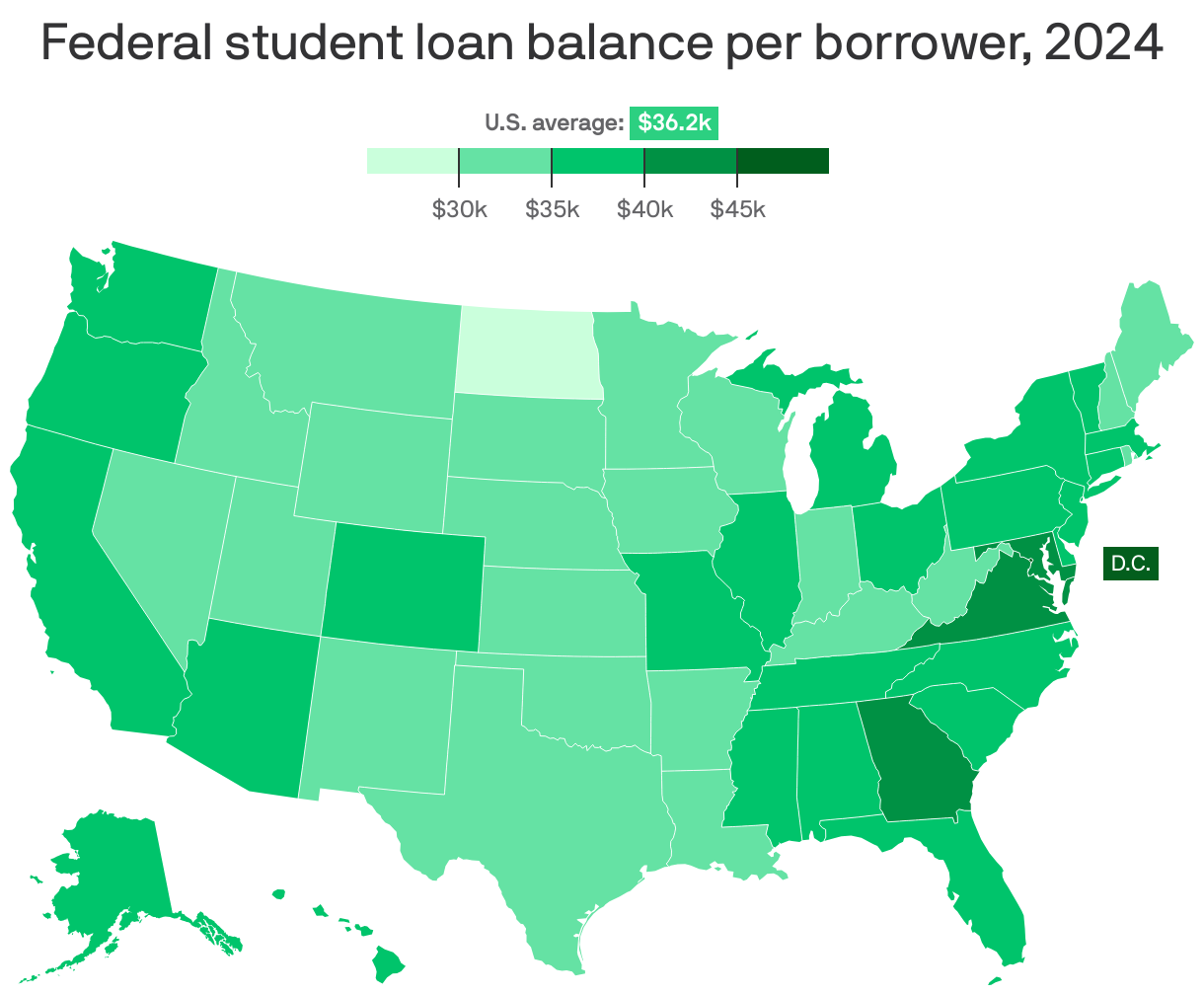
Why it matters: D.C.-area borrowers have some of the highest student debt in the nation, according to the Federal Student Aid Data Center.
By the numbers: District borrowers owe around $54,800 on average — totaling a collective balance of $6.4 billion.
- Maryland leads the nation among states: Its borrowers owe almost $43,700 on average, with a collective total of around $36 billion. Virginia comes in at No. 3 with just over $40,000 per borrower on average, and a total of around $43 billion.
- Context: The national average per borrower is about $36,200.
The big picture: The Education Department has played a key role in managing some $1.5 trillion in student debt for more than 40 million borrowers, and a vast majority of its budget is allocated to the office that oversees student loans.
- Even before moving to abolish the agency, the Trump administration blocked student loan forgiveness and repayment plans, slashed staffing, and wiped the federal watchdog agency tasked with overseeing student loan servicing and collections.
The latest: Trump said Friday that the Small Business Administration will now handle student loans.
- "The Department of Education is not a bank, and it must return bank functions to an entity equipped to serve America's students," the executive order says.
- The SBA separately announced plans last week to cut 43% of its workforce, or 2,700 of its nearly 6,500 staffers.
State of play: During the transition, there could be slower processing times for loans, applications and payments, and the potential for more administrative errors.
- While it's possible there could be a pause in borrowers' payments for a period, they would still eventually be due.
- Pell grants, subsidized loans and work-study grants are mostly congressionally appropriated. While the Education Department manages them, it would take an act of Congress to get rid of them.
Threat level: There is a lot of uncertainty about what's going to happen.
- "If you're a current federal borrower and you're concerned, the best proactive step is to save your information," NerdWallet's lending expert Kate Wood told Axios.
- Go to studentaid.gov and screenshot or download your repayment history, she added.
Zoom out: Most of the rest of the department's $268 billion budget goes to ensuring K-12 students get equal access to a quality education.
- This includes dispensing supplemental funding to high-poverty K-12 school districts that provide vital child care services for many low-income and rural communities across the country.
- The department also enforces federal civil rights laws to prohibit discrimination.
What they're saying: "Virginia is ready to take full responsibility for K-12 education," Virginia Gov. Glenn Youngkin said in a statement.
- "We have implemented a high-expectations agenda that sets rigorous standards, holds schools accountable for results and prioritizes resources to the students and schools that need the most support."
"While the President is busy mocking Maryland students' test scores and trying to shutter the doors of the Department of Education, we're fighting for Maryland's students and educators," Maryland Gov. Wes Moore wrote last Thursday in a post on X.
- "Leadership means lifting people up, not punching down."
What we're watching: Trump's directive will likely face legal opposition because eliminating a federal department requires an act of Congress.
- However, the administration can cut key funding in the meantime.