DMV population growth outpaces the country's

Add Axios as your preferred source to
see more of our stories on Google.
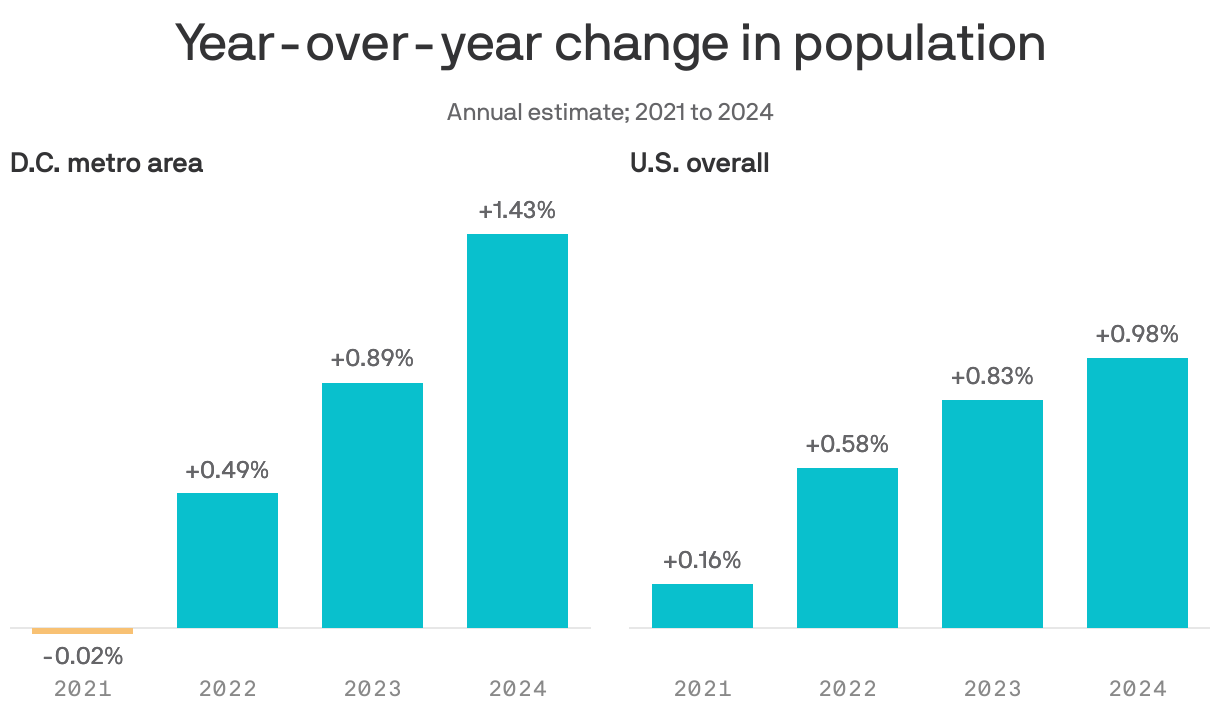
The Washington metro region is growing faster than the country overall, per the U.S. Census Bureau.
Why it matters: The number of DMV residents dropped during the COVID-19 pandemic, per Census data, hurting everything from the office market to the restaurant scene. But the region has since bounced back — and then some.
Driving the news: The Washington area's population grew 1.4% between 2023 and 2024, per the Census Bureau. There were 6,436,489 people living in the DMV last year.
- By comparison, the total U.S. population rose by 1% during that time.
This comes as President Trump has pushed for federal workers to return IRL, and as local employers like the Washington Post and Amazon have promoted five-days-a-week office policies.
The intrigue: The DMV actually has a higher population now than it did pre-COVID; it saw a 2.8% bump between 2020 and 2024.
Zoom out: This isn't just a D.C. thing; many cities are outpacing the country in population growth.
- The number of people living in U.S. metro areas rose by almost 3.2 million between 2023 and 2024, says the Census Bureau — a gain of about 1.1%.
- Nearly 90% of metro areas grew from 2023 to 2024.
Between the lines: Cities can thank international migration for this latest population spike.
- "All of the nation's 387 metro areas had positive net international migration between 2023 and 2024, and it accounted for nearly 2.7 million of the total population gain in metro areas," the bureau said in a statement accompanying the new data.
How it works: The bureau bases these estimates on data for births, deaths and migration.
What's next: Demographers and other researchers will be keeping a close eye on how Trump administration policies might affect immigration levels.
- And it's possible DOGE's mass firing of federal employees could impact the DMV's numbers.