
Federal downsizing could create a new D.C. neighborhood

Add Axios as your preferred source to
see more of our stories on Google.
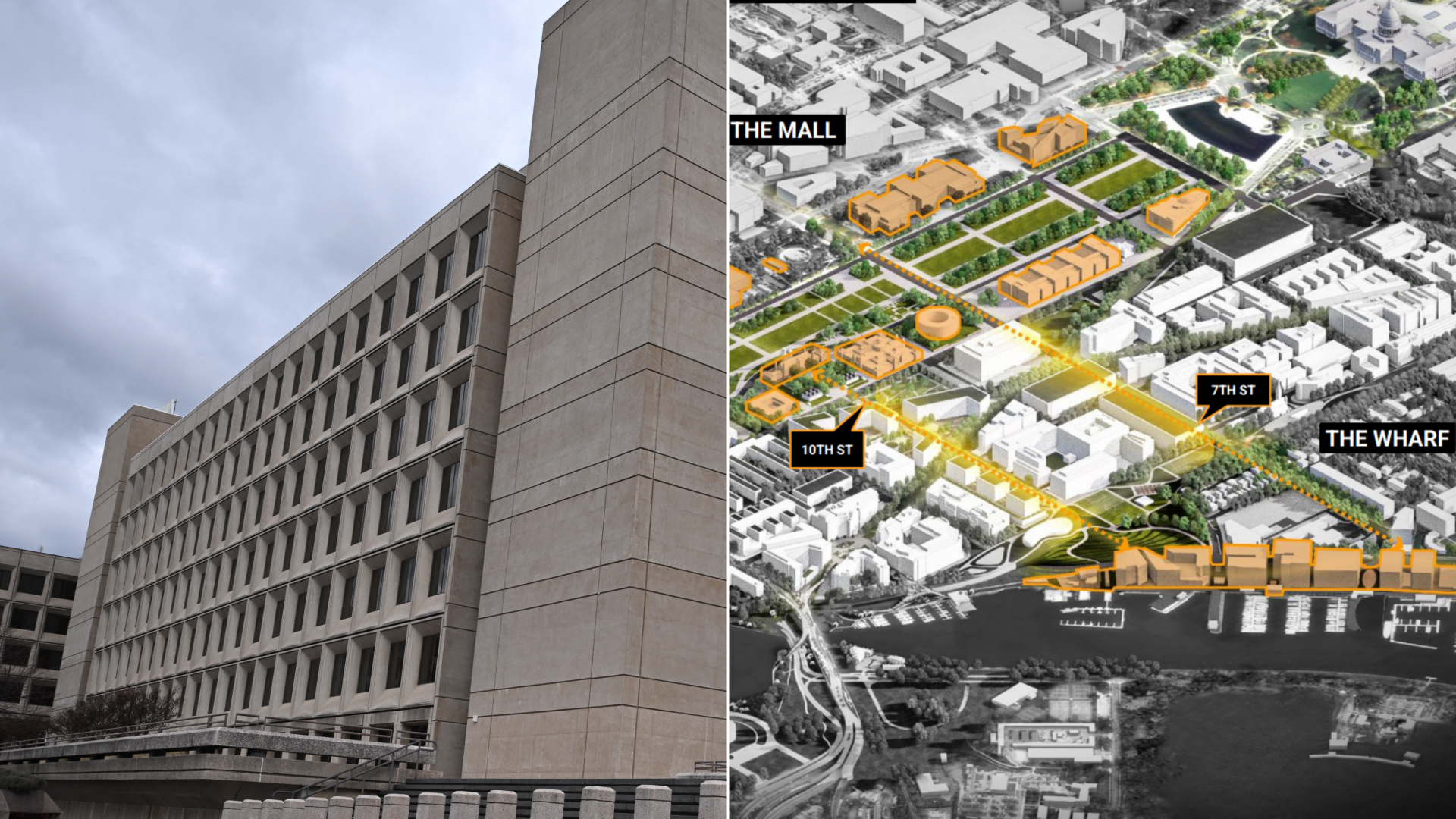
The Department of Energy building (left) and a reimagined connection between the Mall and Wharf. Images: Brendan SMIALOWSKI / AFP and Skidmore, Owings & Merrill
The federal government's plan to shrink its footprint could create a new neighborhood between the National Mall and the Wharf.
Why it matters: The Trump administration wants to get rid of underused federal offices. It would be a rare win-win for D.C. leaders and the president.
The big picture: The federal Public Buildings Reform Board is eyeing 20-plus properties in the DMV to consolidate or let go, the Washington Post reported.
- But they're currently focused on a cluster of buildings between the National Mall and Wharf — which would be huge for the District.
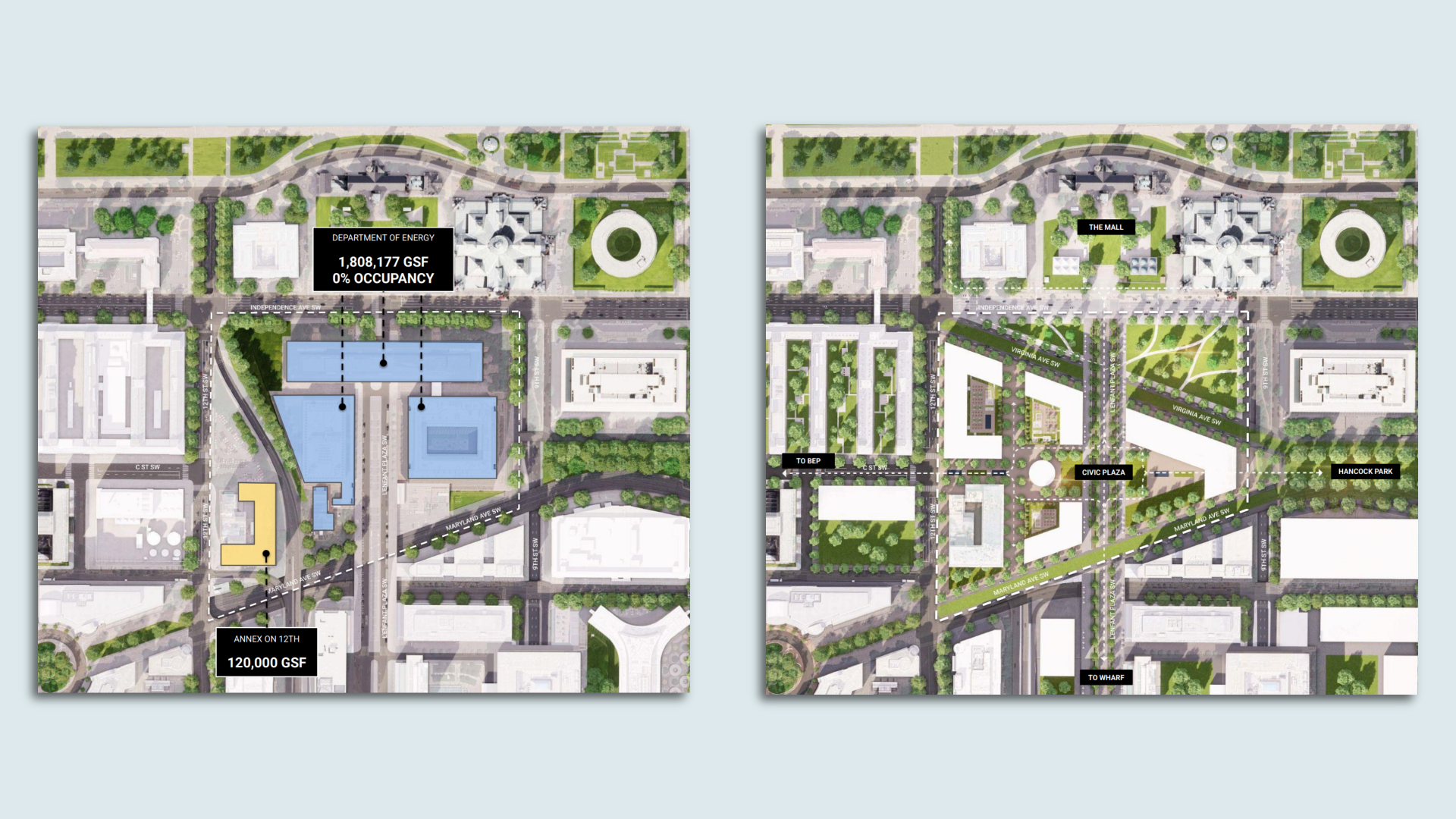
- The board is looking at offloading those buildings, including ones belonging to the Department of Energy, the Bureau of Engraving and Printing, and the Agriculture Department, per the Post.
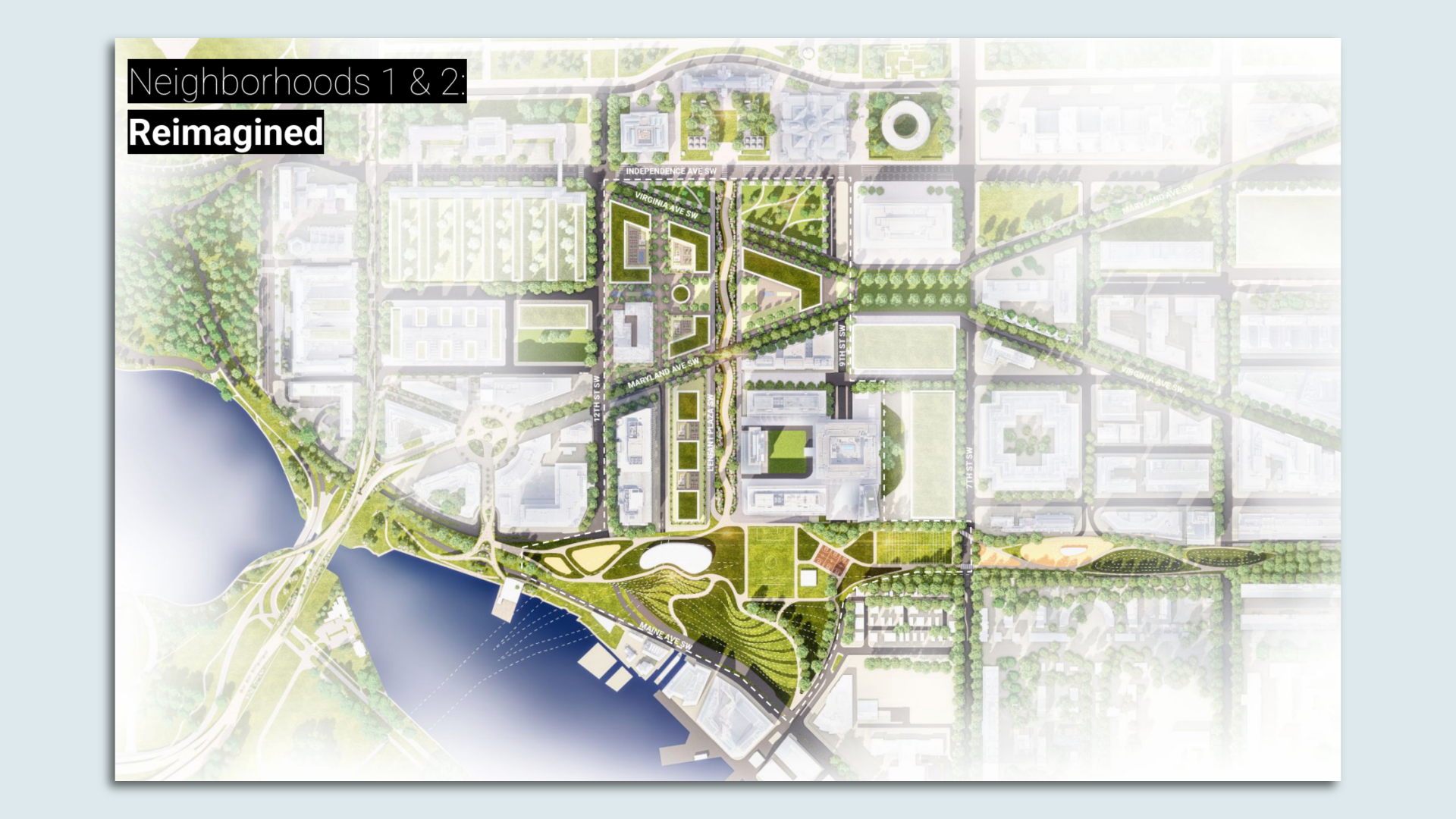
- Housing, shops and plazas could take the place of what's currently a federal fortress separating Southwest D.C. from the rest of the city.
State of play: Architecture firm Skidmore, Owings & Merrill has some visual ideas:
What they're saying: "This is truly an unprecedented opportunity to save taxpayer dollars, to improve the federal government's mission and to greatly improve the economic prospects of the District of Columbia," board member Dan Mathews, a Biden appointee to the buildings reform board, said at a meeting last week.
- The federal footprint could shrink up to 50% in that area, added Michael Peters, Trump's pick to manage government buildings nationwide, the Post reported.
Cheat sheet: The Public Buildings Reform Board has been working on downsizing Uncle Sam's real estate holdings nationwide since it was created by Congress in 2016.
- Members are appointed by the president. Before leaving office, Biden extended the board's work through December 2026.
- In its first two reports, it recommended selling property totaling $775 million.
- Next, it's eyeing real estate valued up to $1.8 billion, per the board's presentation from last month's meeting.
- The White House's Office of Management and Budget has the final say on their proposals.
Between the lines: Mayor Muriel Bowser is a fan of Trump's move to get more federal workers back in the office because it helps the city's downtown economy.
- But Bowser also wants the federal government to give up underused buildings so they can be turned into something new.
- The city can collect taxes on property no longer owned by the feds.
Reality check: A new neighborhood between the Mall and Wharf won't happen fast.
- High interest rates are discouraging new projects. And converting offices into homes gets complicated when a building is an awkward shape.
- "A good building to convert to residential is skinnier, and federal office buildings are usually not like that," developer Philippe Lanier told the Post.