D.C. sues Amazon for excluding majority Black ZIP codes from Prime delivery

Add Axios as your preferred source to
see more of our stories on Google.
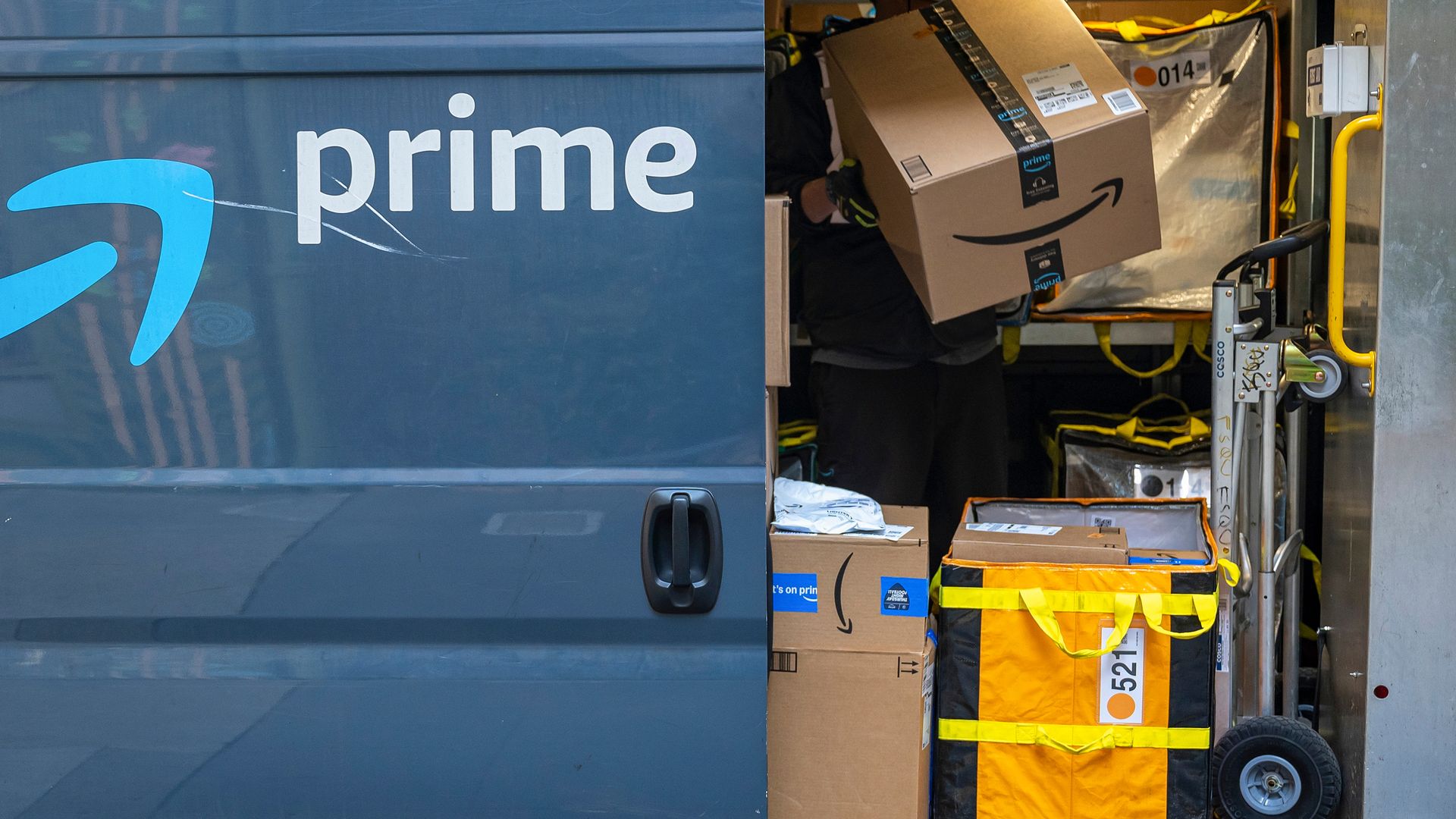
An Amazon delivery van. Photo: David Paul Morris/Bloomberg via Getty Images
The D.C. Attorney General's Office (OAG) is suing Amazon for allegedly duping residents in majority Black and low-income D.C. ZIP codes into paying for Prime membership delivery benefits they aren't actually receiving.
The big picture: Amazon has since 2022 secretly withheld its quick delivery service to 48,000 Prime members in Northeast and Southeast ZIP codes that include Anacostia, Kenilworth, Deanwood and Fort Dupont, the OAG alleges in a release Wednesday.
- Amazon decided to use third-party delivery services like the U.S. Postal Service and UPS in the 20019 and 20020 ZIP codes instead of its branded trucks without informing Prime users living there of the switch, and knowing these carriers would provide slower service, claims the OAG.
- "When consumers complained of slow delivery, Amazon concealed the exclusion and misled the consumers to believe it was a coincidence," says the OAG's release.
The lawsuit seeks to reverse the decision and pay financial damages to affected Prime members, who pay $139 a year.
What they're saying: "While Amazon has every right to make operational changes, it cannot covertly decide that a dollar in one ZIP code is worth less than a dollar in another," Attorney General Brian L. Schwalb said in a statement.
- "We're suing to stop this deceptive conduct and make sure District residents get what they're paying for."
The other side: "The claims made by the Attorney General, that our business practices are somehow discriminatory or deceptive, are categorically false," Amazon spokesperson Kelly Nantel told Axios in a statement.
- There have been targeted acts against Amazon drivers in these ZIP codes, says Nantel, and Amazon decided to adjust its services there solely to protect its workers.
- "We're always transparent with customers during the shopping journey and checkout process about when, exactly, they can expect their orders to arrive," Nantel told Axios.
Amazon has offered to work with the OAG to reduce crime in these areas, per Nantel.
By the numbers: In 2021, prior to Amazon's delivery switch, over 72% of Prime packages in 20019 and 20020 were delivered within two days, per the OAG's release.
- In 2023, after the switch, that number dropped to 25% of Prime packages in 20019 and 24% in 20020 — compared to 74% District-wide.