D.C. tears down Adams Morgan streateries to build anew

Add Axios as your preferred source to
see more of our stories on Google.
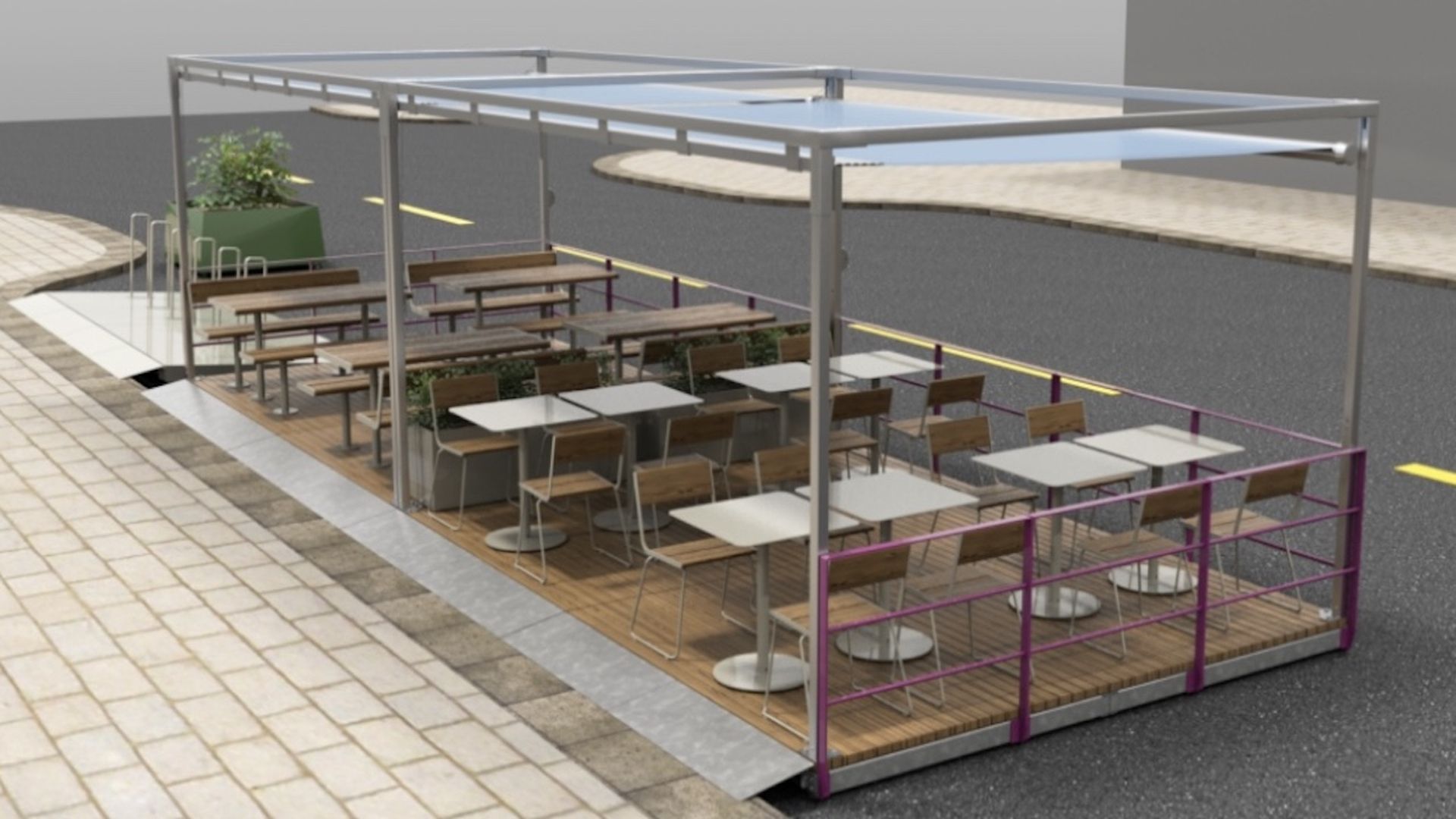
The new streatery model. Rendering: courtesy of Adams Morgan BID
D.C. is demolishing Adams Morgan streateries to make way for new structures under a pilot program that could bring more changes to the city's streetscape.
Why it matters: The new streateries will be safer, more accessible and more attractive, according to the District Department of Transportation, which, a spokesperson tells Axios, is developing guidelines for a permanent program to be announced soon.
The big picture: Outdoor dining structures were a lifeline for businesses in the pandemic, but their future is uncertain as the city's temporary streatery program approaches an end-of-year expiration date.
- This test run signals that the city is willing to invest in streateries long-term, which could end the Wild West of outdoor dining and set parameters for a new al fresco era.
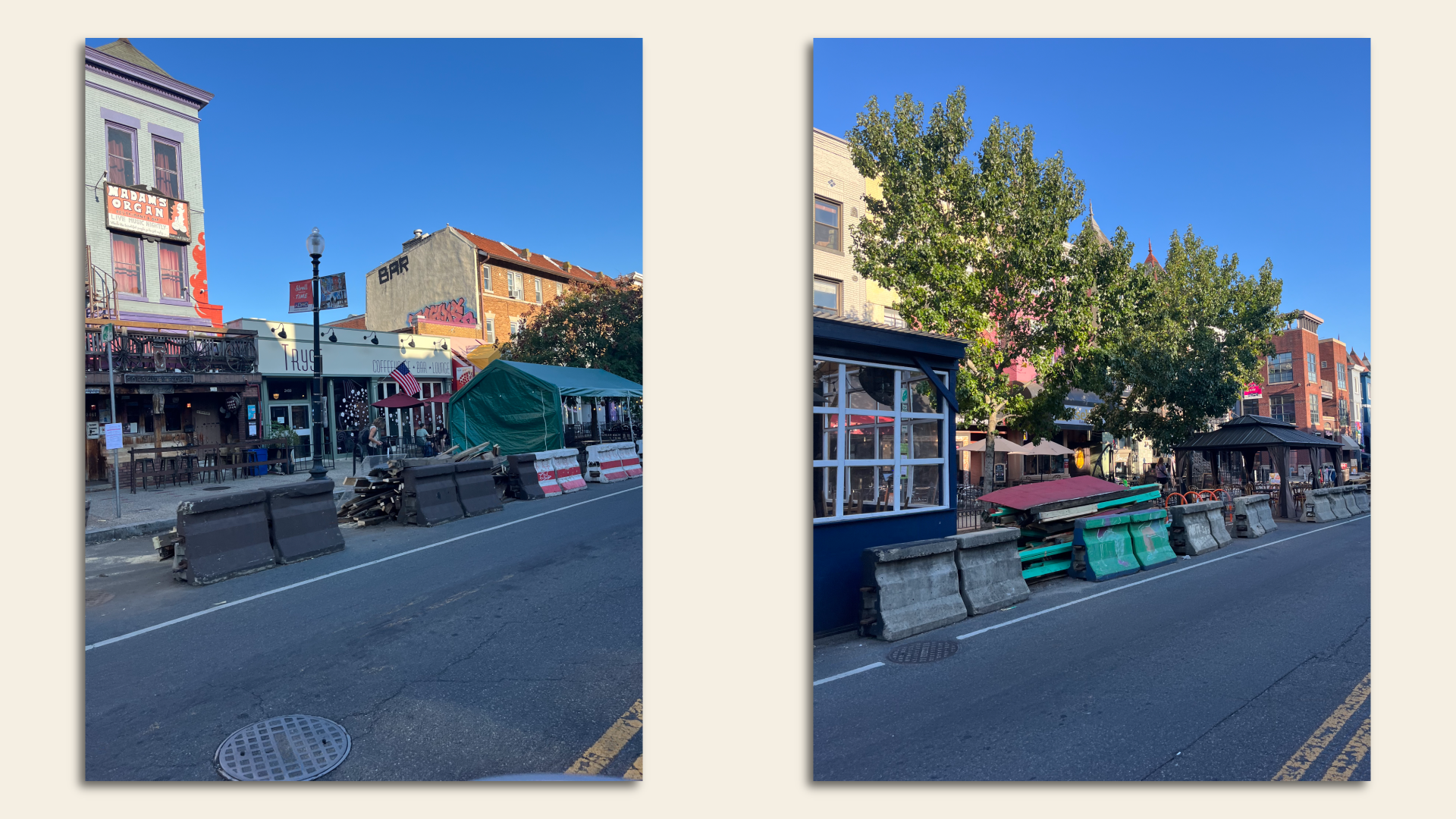
Driving the news: DDOT is building new streatery structures for 33 small businesses along 18th Street, stretching from Columbia to Kalorama roads.
- The goal is to complete them by the end of the month, a spokesperson for the Adams Morgan BID tells Axios.
- But first, existing streateries in public roadways and alleys are being demolished.
Zoom in: The new design is meant to increase street access for the public and for commercial loading into businesses and to incorporate features that comply with the Americans with Disabilities Act.
- In DDOT guidelines shared with Axios, streateries must be protected by jersey barriers. There are height limits (13 feet) as well as bans on flashy lighting, televisions and live entertainment.
- Some are required to rest on platforms for ADA accessibility and all must have at least one ADA-compliant table.
How it works: The city is funding the pilot program, working with the Adams Morgan BID, but all area businesses with streateries have to pay a variety of fees, including $500 per barrier and $20 per square foot for public space rental.
- In the draft materials, DDOT mandates that businesses using public roadways and alleys for streateries must submit new applications by the end of the year and comply with the new guidelines or take their existing structures down.
What they're saying: "We just have to deal with it and abide by the new rules," Jo-Jo Valenzuela, owner of The Game and Tiki on 18th, tells Axios.
- He operates one of the most elaborate tropical-themed streateries on the strip and is downsizing to comply with the new guidelines. Even though he's losing about 20 seats, the longtime bartender supports the new program.
- "Speaking for business people, it's definitely a big help. [The streatery] makes us visible, attracts foot traffic, and was a lifesaver [in the pandemic]. Plus Adams Morgan became lively and more fun; the dynamics changed when streateries arrived."
Zoom out: Cities have struggled with what to do with streateries since the end of the pandemic. Many people love them for livening up the streetscape and boosting business for restaurants and bars. Others gripe about shabby appearances and narrowed roadways and sidewalks (e.g., Ted Leonsis). Also: less parking space.
- This summer, New York City mandated that businesses rebuild their structures to meet certain parameters and take them down in winter.
In the D.C. area, some local jurisdictions, including Silver Spring, have ended streatery programs, while others, including Alexandria, have created permanent pedestrian zones.
What we're watching: Some restaurants, including Le Diplomate or Compass Rose, invested in elaborate, expensive streateries that may need to be altered or taken down should the program expand citywide.