D.C.'s most distinguished (and hardest-working) dogs

Add Axios as your preferred source to
see more of our stories on Google.
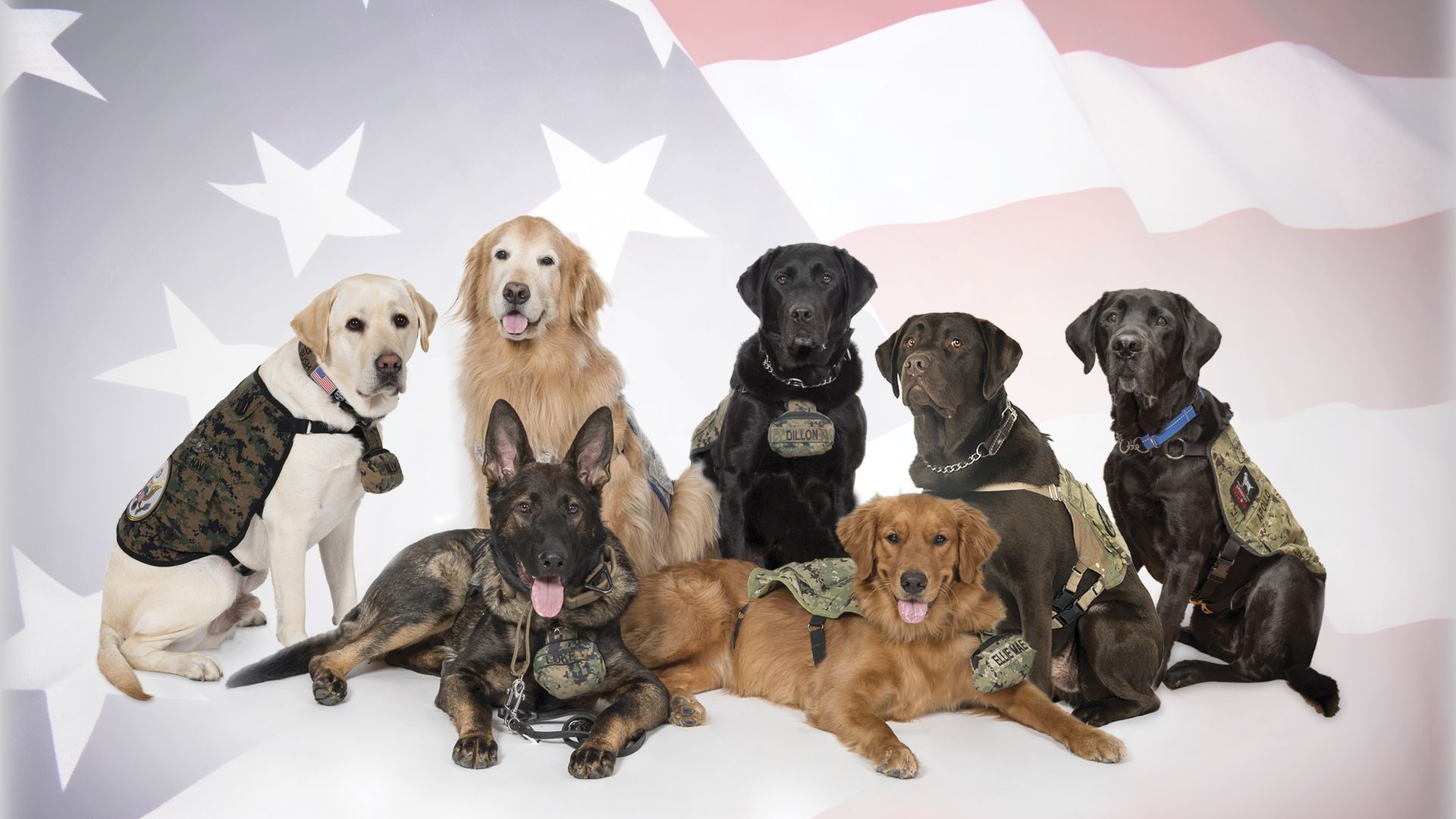
Walter Reed's facility dogs report to duty. Photo: courtesy Walter Reed
They've served presidents and wounded warriors. Medals of achievement fill their military uniforms. They'll jump into action for a treat or a good scratch.
Meet D.C.'s most distinguished dogs: the Walter Reed National Military Medical Center canines.
Why it matters: The "facility dog program," now in its 17th year, employs some of Washington's most skilled and well-known working dogs, and it's been used as a model for therapeutic canine care at military institutions across the country.
State of play: High-profile pups have been honorarily enlisted in recent years, including Sully H.W. Bush (yes, full family name). George H.W. Bush's beloved service Labrador made global headlines guarding the late president's casket. One of the president's last wishes was that Sully could continue to serve veterans and their families at the "hospital of American presidents."
- Biscuit, the "official pup" of the Washington Capitals, joined Sully last year after being raised — adorably, in the public eye — by the pro hockey team. He still has more Instagram followers than Caps defenseman John Carlson.
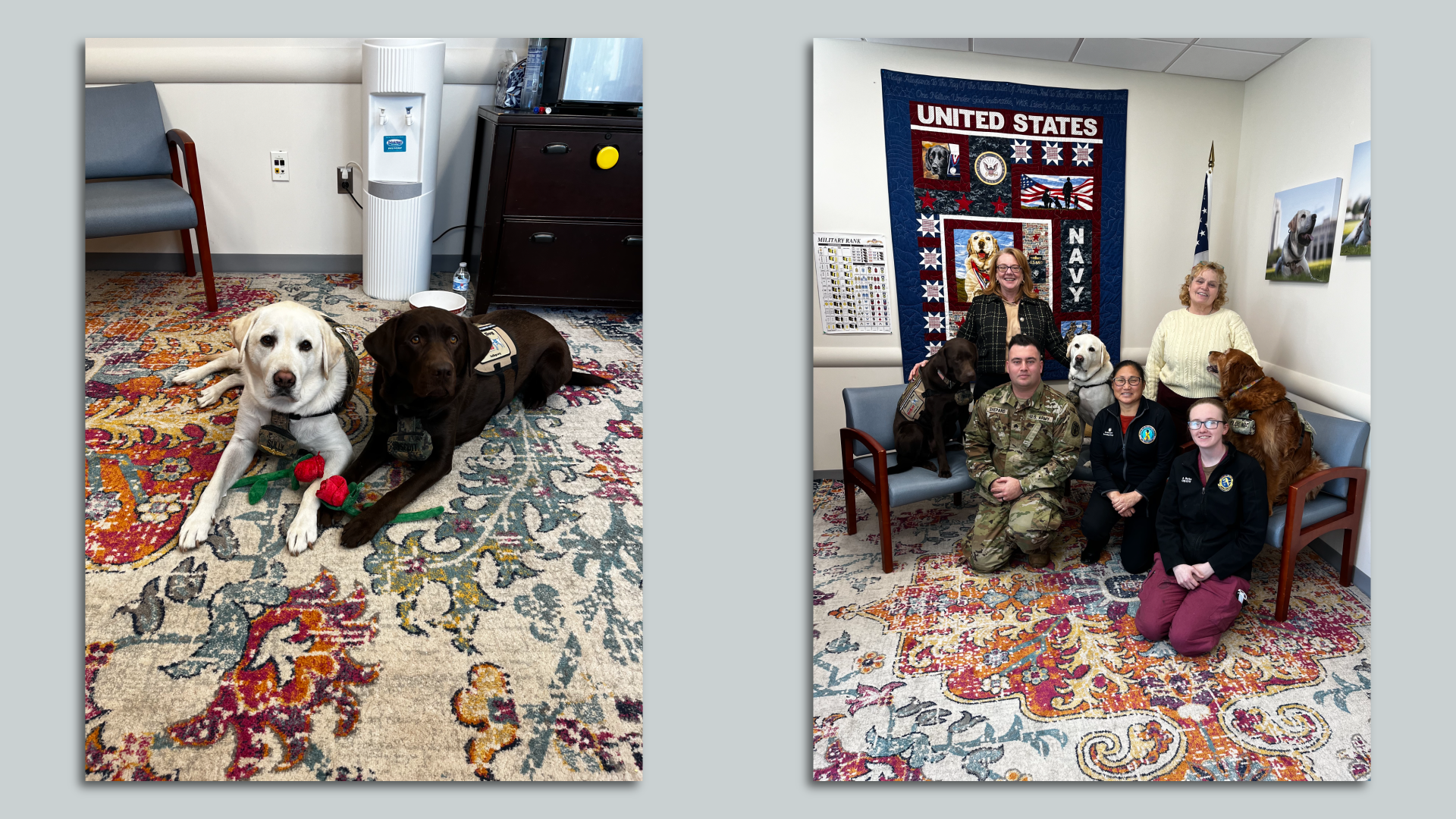
By the numbers: There are currently seven facility dogs — mostly labs, golden retrievers, and a German shepherd — each beloved and vital in their own way.
- The pups collectively average 2,500 contacts with patients and over 200 working hours a month. The team sometimes gets so many requests for dog visits a day that it's tough to fulfill them (but they always do).
- In return: endless attention, petting and treats. And if a dog gets overstressed? They're released from duty immediately.

How it works: The elite cadre of canines are all "career changers," highly trained and social service dogs that are selected for Walter Reed's next-level assistance program.
- Many like Sully and Biscuit start with New York-based nonprofit America's VetDogs (think boot camp for service pups), where they're trained to assist veterans with injuries, PTSD, and disabilities.
- Once in the facility program, their handlers — around 12 civilian and active-duty service members — identify the dogs' strong suits based on training, age, and personality.
Zoom in: "There's a dog for every situation," project manager Amy O'Connor, a licensed social worker, tells Axios. Calmer dogs may assist in the chemo clinic. More energetic pups work in pediatrics.
- Corpsman Luke, a 5-year-old German shepherd "who's perfect," may visit terminal patients or a Puppies and Pancakes family event.
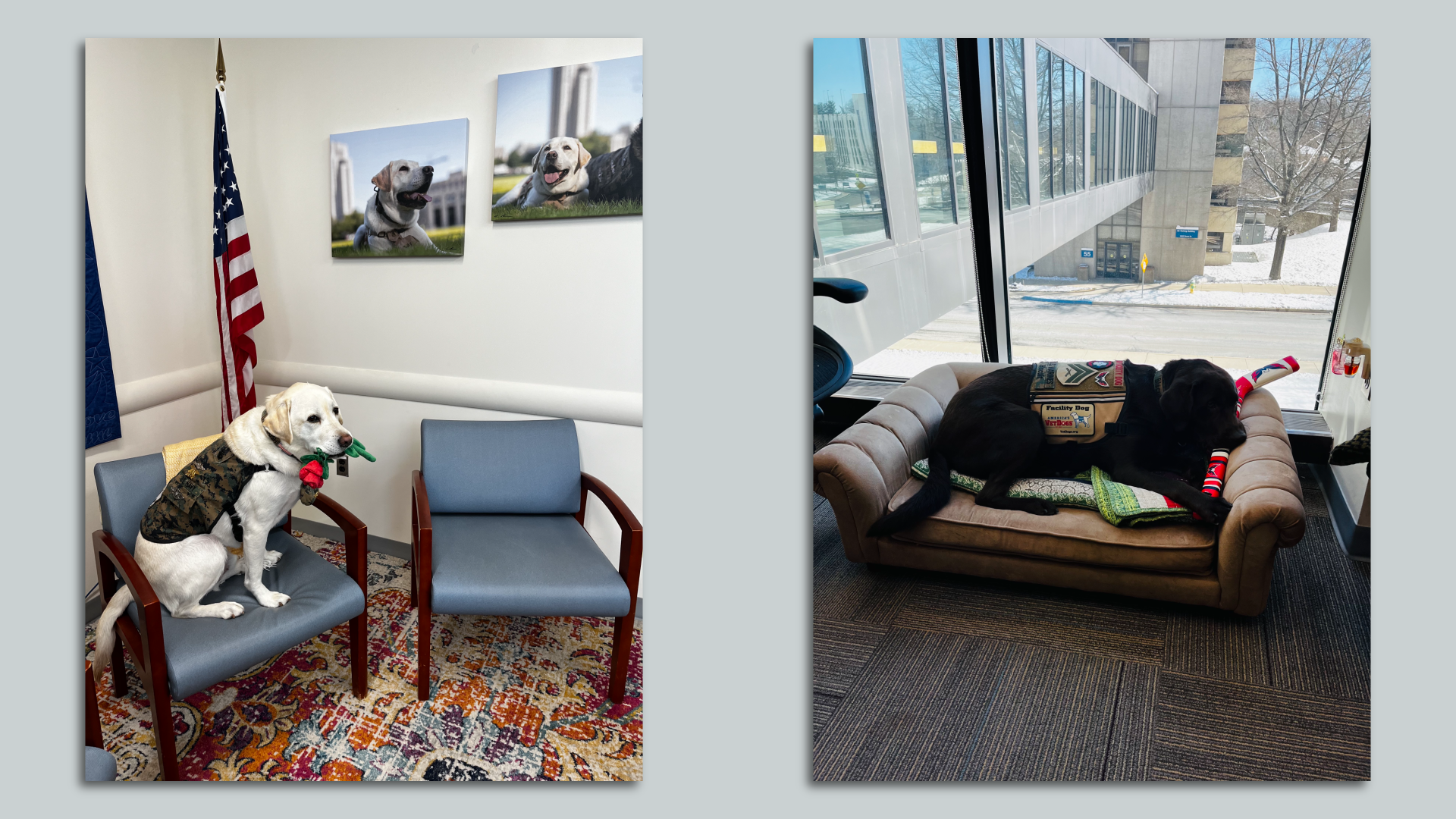
What they're saying: "We can use animal-assisted therapy to encourage patients to walk, get out of bed, or turn over," Anna Burke, a corpsman and dog handler, tells Axios.
- "The dogs do a lot that seems very minute, but it's going to help the patient a million times over. We have patients who haven't been able to leave their room, or don't want to. And we have a safe space set up with the dogs that opens up another world. They love it."
Between the lines: Each dog belongs to a branch — e.g. Marine Corps, Navy, Air Force, Army — and holds an honorary title that speaks to their achievement and seniority.
- The pups are promoted, ceremonial pomp included. Take Dillon, a black lab who recently received an honorary promotion to U.S. Marine master sergeant during a ceremony last June.
Zoom in: Having a service dog that's the same division and rank means a lot to patients, says Burke. The same can be true for breed. One of the program's founding dogs, Archie, was a German shepherd — rare for a service dog at the time, but familiar to the Marines he served.
- "It was the Iraq war, we had a lot of wounded warriors here, and he resonated with those patients," program co-founder Patty Barry tells Axios. "The Marines loved him as a Marine. He would come back with medals on his jacket that patients would place there because they had such a connection."
The intrigue: Nurse Lily Burch hand-sews custom uniforms for the dogs in all levels of formality, from a doggie green beret for Luke (he's in Special Operations Forces, after all) to a Thunderbird uniform for Air Force master Goldie and a khaki chief vest for Sully that mimics what a human chief would wear.
- It's all taken very seriously.
Yes, but: No other honorary chief petty officer has ever looked so adorable.
The bottom line: "We're here for what we call the human experience," O'Connor tells Axios. "This is no one person's job. We all work together and communicate and make sure that when someone needs a visit, we visit them; whether it be staff or patients, we're here."